


|
Getting your Trinity Audio player ready...
|
Campbell residents have scored a partial victory in a fight against a state housing law that could open the door to replacing single-family homes with multifamily developments.
The law prevents cities from standing in the way of developers who want to put up to 10 homes on vacant residential lots, but doesn’t specify the timing for when the lot must be empty. Campbell passed a policy last year that allows developers to purchase a lot with a livable home, get preliminary approval from the city for a multifamily project and then bulldoze the structure.
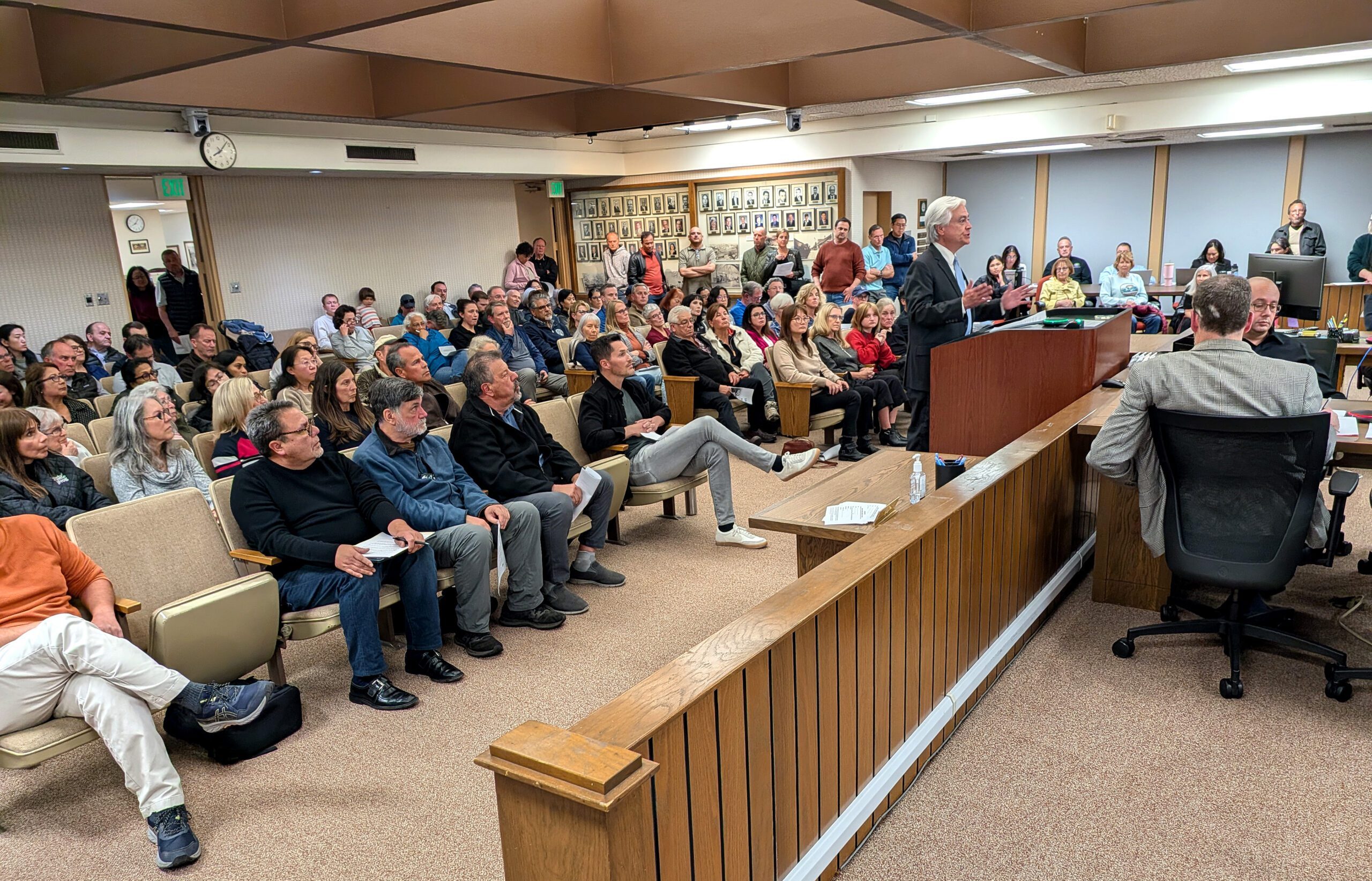
The Campbell City Council on Tuesday voted to close that loophole by starting work on a policy to require developers to build a new single-family home when they want to demolish an existing single-family home — rather than being able to declare the lot vacant to build multifamily housing. Councilmembers didn’t sign off on rolling back permission for 16 projects already approved under the loophole, which residents in the crowded council chamber called for during the meeting.
“We got a little bit of what we wanted,” resident Travis Galdieri told San José Spotlight. “Where we are not happy is the grandfathering clause.”
Galdieri and about 20 other residents have banded together to hire an attorney, Richard Drury, and are considering legal action against the city to stop the projects that are already approved, which would add 108 homes in the city. They contend the new law requires properties to be vacant before developers start the approval process.
“For these 16 projects in the pipeline, they are not grandfathered in. You cannot grandfather in an unlawful activity,” Drury said at the council meeting. “None of them are qualified (under the new law) because none of these parcels were vacant at the time of the application.”
The uproar is the latest tug-of-war between municipalities and the state Legislature, which is pushing for solutions to California’s housing crisis. The result has cities navigating complex new laws, often in face of opposition from residents who don’t want big changes in their communities.
At issue in Campbell is the Starter Homes Revitalization Act, first passed as Senate Bill 684 in 2023 and strengthened by Senate Bill 1123 in 2024, which allows starter homes — each no bigger than 1,750 square feet — on vacant lots zoned for single-family homes.
The law, which took effect July 1, 2025, defines vacant lots as “having no permanent structure, unless the permanent structure is abandoned and uninhabitable,” with a few additional protections for rental property. It deliberately doesn’t specify when the lot must become vacant. If developers can purchase habitable homes to demolish later, then the starter home law would open virtually all California single-family neighborhoods to higher density redevelopment.
Jim Sullivan, a housing developer and Campbell resident, said the city faces a tough choice between supporting more housing and avoiding high-density projects that could “stick out like a sore thumb” in the middle of residential neighborhoods.
“Starter homes work, but at certain locations such as corners,” Sullivan told San José Spotlight.
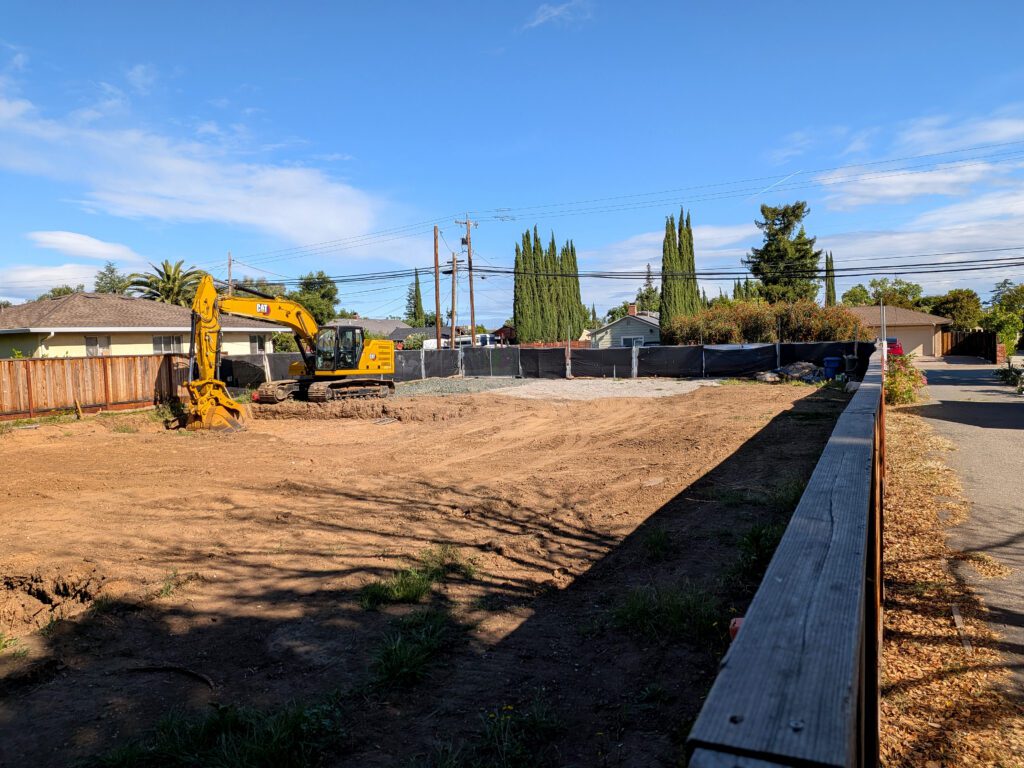
The most active pursuer of starter home projects in Campbell is AlphaX RE Capital, a Cupertino developer, and its affiliated companies, which are behind seven of the already approved projects.
In March, AlphaX organized a formal ribbon-cutting ceremony to mark groundbreaking for a six-home structure called Mercury Lane Townhomes at 300 Redding Road in Campbell.
The townhomes appear to be the first project under the starter home law to break ground anywhere in California, AlphaX said in a news release.
“This moment is about proving a scalable pathway for starter-home production across California,” CEO Stephanie Yi said in a statement. “Our goal is to help demonstrate that missing-middle housing can move from statute to shovel — and be replicated in communities throughout the state.”
Campbell is also coping with other state laws that mandate more housing construction, including provisions for high-density housing near public transit stations and reduced environmental reviews.

Nolan Gray, senior director of legislation and research for California YIMBY, a pro-housing group that helped write the starter home law, hoped for a better outcome at last week’s council meeting.
“It’s disappointing to see Campbell throwing up barriers to Starter Home Revitalization Act projects,” Gray told San José Spotlight. “This change will not prevent demolitions — it will only mean that demolitions result in bigger, more expensive homes, rather more, smaller, more affordable homes.”
Contact Mike Langberg at [email protected].
Leave a Reply
You must be logged in to post a comment.