


|
Getting your Trinity Audio player ready...
|
San Jose has slapped a $50,000 fine on a late night, downtown establishment over allegations that it has been operating illegally. But the owner said protracted efforts to bring his business into compliance have been thwarted by one bureaucratic roadblock after another.
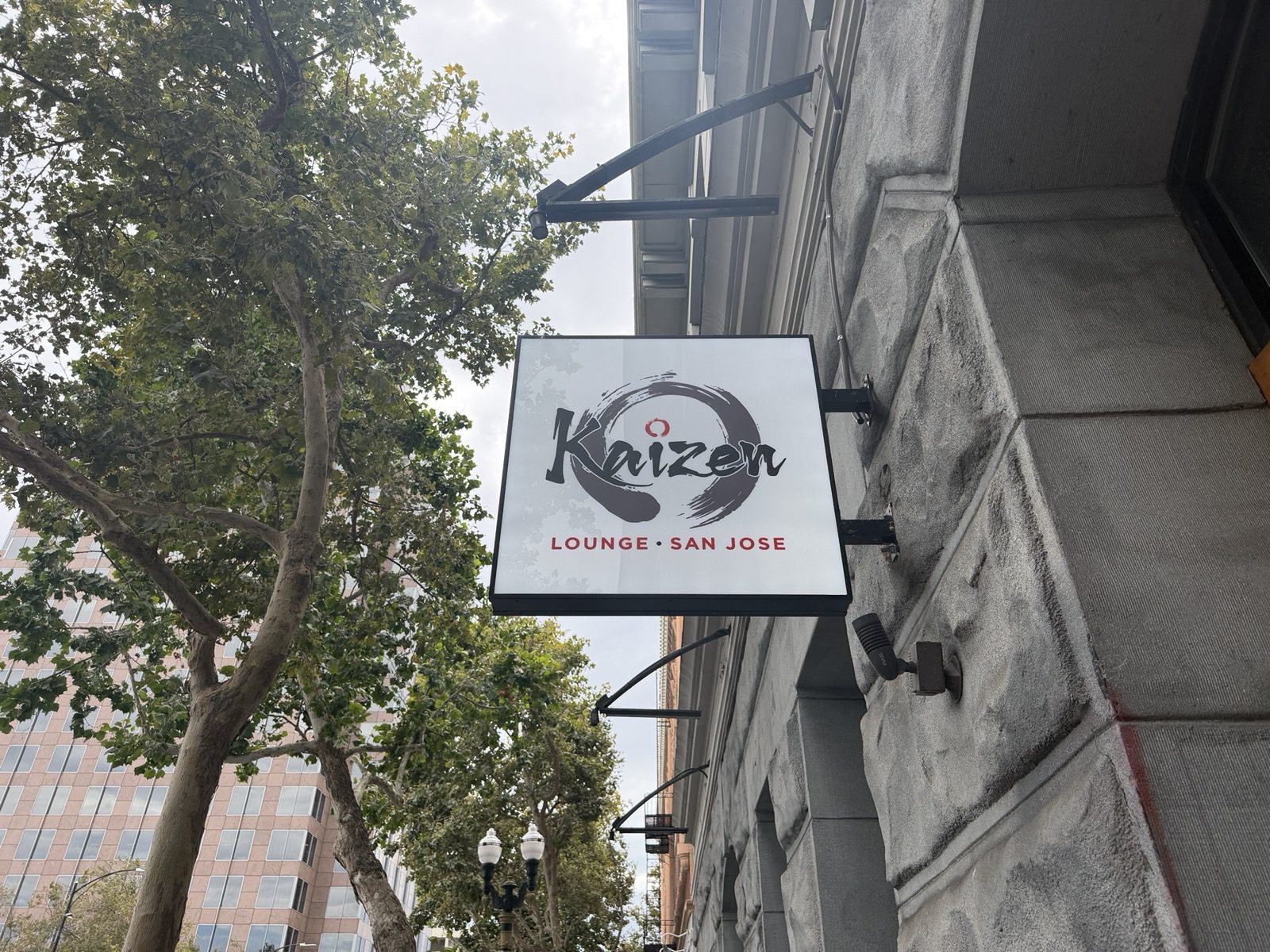
Freddie Jackson, owner of Kaizen Lounge on East San Fernando Street, said he has been wrangling with the city over permits since November 2024, shortly after the venue first opened. The longtime San Jose entrepreneur said he had been forced into the new location because his previous business was among those displaced by the downtown BART extension. As the permitting process has played out, he has been cited numerous times by city and state authorities for allegedly operating without proper permits — and now faces a lawsuit from the city over the alleged infractions.
The months of procedural back and forth came to a head Thursday during a fractious meeting of San Jose’s Appeals Hearing Board. A divided board issued the fine against the property’s owner, Green Valley Corp., a company closely tied to prominent Bay Area real estate firm Swenson. At the same meeting, Jackson agreed to shutter Kaizen until he is able to obtain a special use permit from the city.
San Jose’s Department of Planning, Building and Code Enforcement contends the business has operated past 2 a.m. despite city rules requiring downtown businesses to close at midnight unless they receive special permission. In addition, city officials argue the business has made illegal building alterations and does not meet state requirements to qualify as a restaurant — a finding that would invalidate its liquor license, which permits an eating establishment and not one that is primarily focused on the sale of alcoholic beverages.
Jackson’s attorneys contested those findings at the hearing, and Jackson himself maintained he has taken extraordinary efforts to meet the city requirements, sinking $37,000 into the permitting process and modifying his kitchen three times. Jackson said initially he had received assurances of assistance from VTA, after the transit agency in 2023 seized the Santa Clara Street property his prior business, Enso Nightclub, had operated on. But so far, no help in navigating the permitting process has materialized, he said.
“We can’t say we want business to thrive downtown and then fine people into oblivion,” Jackson told San José Spotlight. “The mayor, some high-ranking official, some councilmember, a VTA person, somebody needs to step in and be like, ‘Look, we moved this guy here. He paid for everything we needed, and we’re not giving him a fair shake.'”
A VTA spokesperson said the public transit agency had committed only to reimbursing the cost of obtaining new permits.
Late night permitting battles
Permits for late night venues are a touchy subject in a city that is seen in some quarters as unfriendly to downtown nightlife — despite city leaders’ stated intentions of reviving downtown commerce and returning businesses to blighted buildings.
San José Spotlight first reported on the issue last year, amid complaints from several downtown business owners that Kaizen and another late night spot, San Pedro Social, had operated without proper permits for extended periods. City officials told this news organization at the time that following a $5,000 fine, San Pedro Social had come into compliance.
Downtown business owners say the rule breakers gain unfair advantage when they skirt the requirements of a permitting system intended to tamp down late night disorder.
In a divided vote, the seven-member body voted to reduce the fine from the city’s recommended assessment of $235,000 to $50,000. Several expressed concern the higher penalty would put Kaizen out of business permanently. Others though said being too lenient would also be a mistake.
“I would really like a vibrant downtown, but at the same time, I look at apparent history of just non-compliance here, a very substantial history of being told and being told and being told, and then not doing it, and this is a fairly serious thing,” board member David Hook said during the hearing.
Even San Jose Mayor Matt Mahan has weighed in on the issue. He said he has been leading an effort to streamline the city’s permitting process based on input from small business owners, but also said the city cannot look the other way when infractions occur.
“All small businesses have to play by the same rules to ensure fairness for entrepreneurs and safe experiences for residents,” Mahan told San José Spotlight.

In laying out their case, city officials said city and state inspectors have visited Kaizen Lounge on multiple occasions since its opening, and have documented a pattern of blatant disregard for the city’s permit rules. They said the late night operations and unpermitted alcohol sales have persisted despite repeated warnings, including an official notice served to the establishment on May 20.
Separately, the city is also engaged in a lawsuit — against Kaizen, Jackson and Green Valley — filed last month for a similar set of alleged infractions.
“Kaizen has repeatedly failed to comply with the city’s enforcement efforts, and the lawsuit is the next enforcement step,” Marika Krause, a spokesperson for City Planning, Building and Code Enforcement, told San José Spotlight.
Krause declined to comment further, citing the pending litigation.
An attorney representing Jackson said at the hearing that while patrons may remain inside the venue after midnight, the establishment stops admitting new customers and stops selling alcohol. Jackson also made the case that Kaizen Lounge’s food service does qualify the establishment as a restaurant under state standards.

Jackson, who said he has sunk his entire life savings into Kaizen Lounge, told San José Spotlight the city’s restrictions have placed his business in a difficult bind, noting that late night sales are a crucial sources of income that can make the difference between turning a profit and closing down. He contends the dilemma is the direct product of a protracted permitting process, which he said has forced him to navigate conflicting demands through various city departments.
Jackson’s landlords echoed these complaints during the appeal hearing.
“This has been the most convoluted, confusing, disruptive process I have ever been through,” Ryan Zalucky, director of investments at Swenson, said.
A representative for Green Valley declined to comment.
Jackson said he remains hopeful that he will be able to slash through the remaining red tape and eventually reopen.
“I’m gonna come out of this smelling like roses, and I’m gonna throw the biggest party you’ve ever seen,” he said.
Contact Keith Menconi at [email protected] or @KeithMenconi on X.
Leave a Reply
You must be logged in to post a comment.