

|
Getting your Trinity Audio player ready...
|
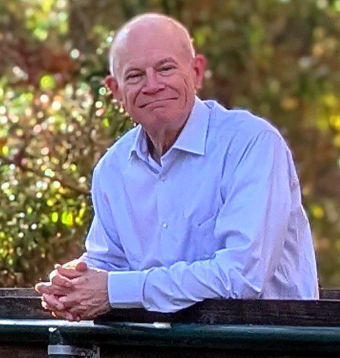
Michael Chang, a former Cupertino mayor, has spent almost 30 years building a huge network of Asian American political and community leaders — and he still isn’t satisfied.
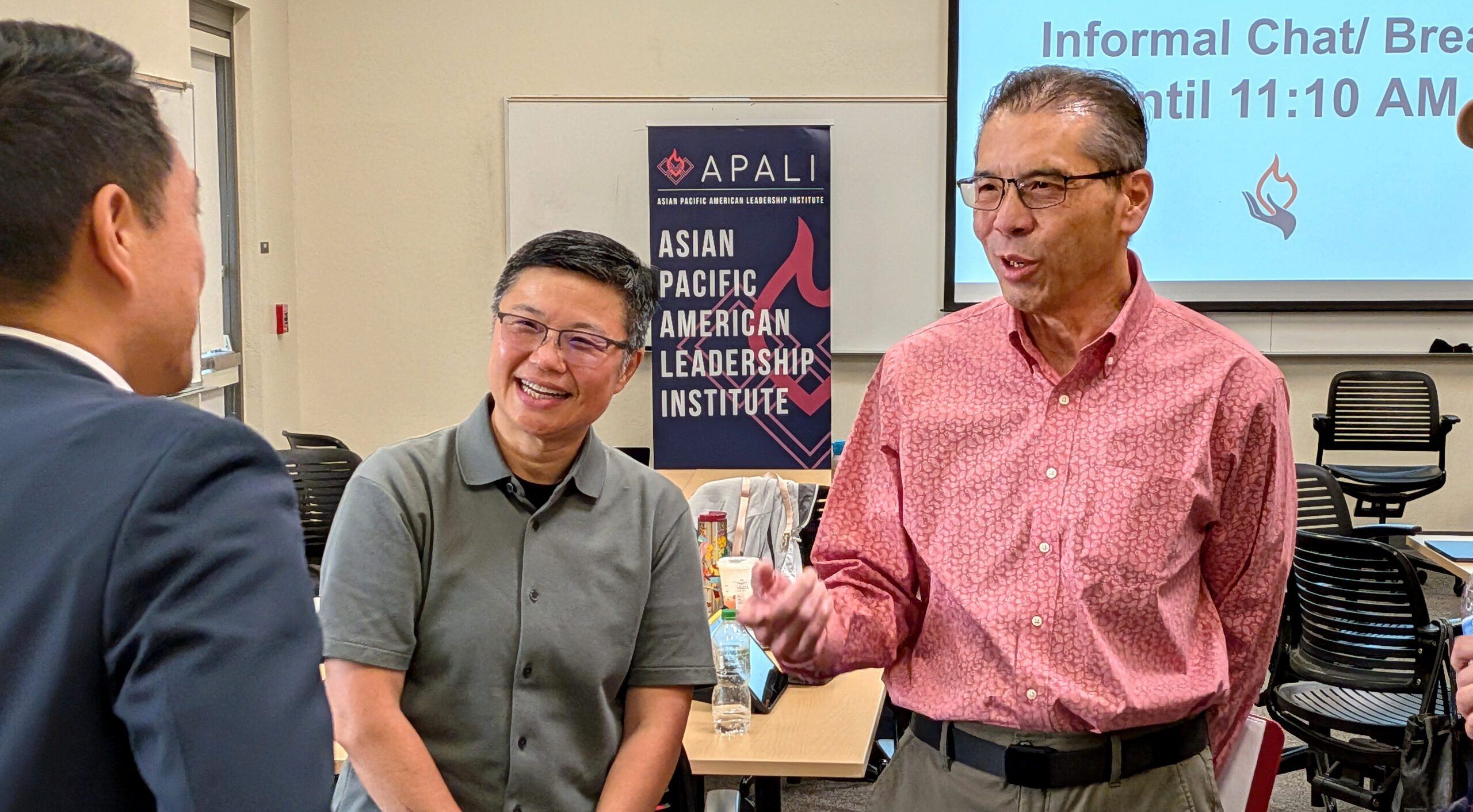
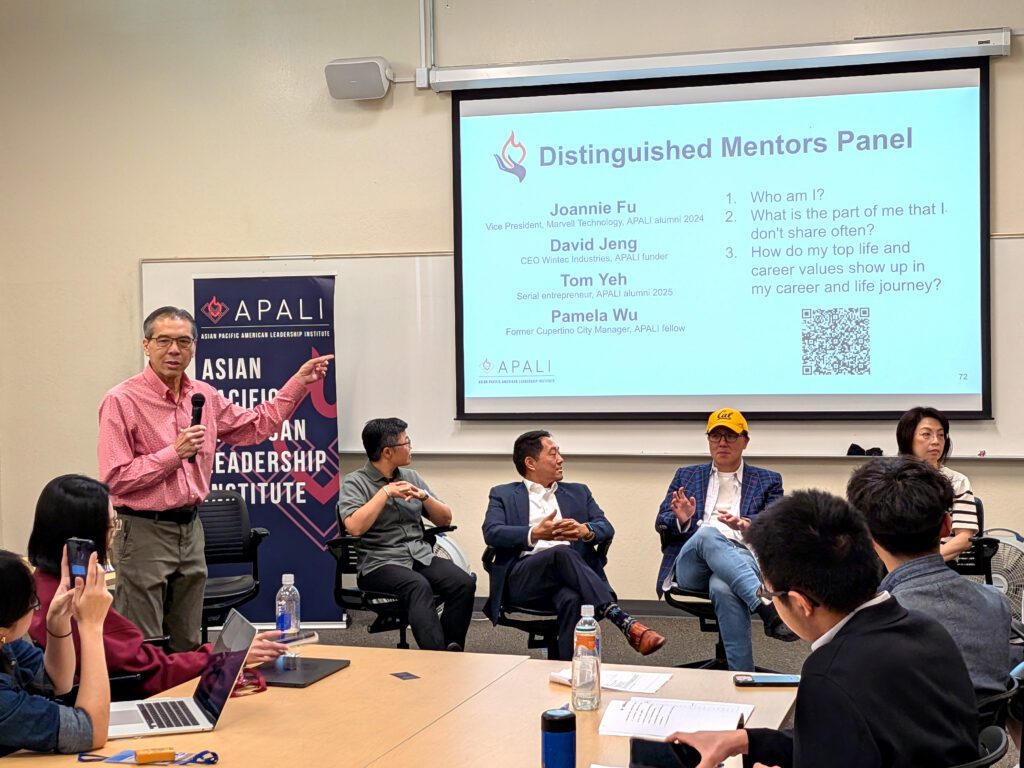
The Asian Pacific American Leadership Institute (APALI), which he founded, has trained hundreds of teens and adults who’ve moved into elected office, civil service, nonprofits and more. Three of Santa Clara County’s five supervisors — Margaret Abe-Koga, Betty Duong and Otto Lee — worked for APALI or participated in the group’s programs.
Yet Chang, 69, sees Asian Americans as “both going forward and backward” in getting a seat at the civic table.
“We must always challenge ourselves to do better,” he told San José Spotlight.
Asked about an increase in Asian American political participation in the South Bay in recent years, Chang counters by pulling out APALI’s 2026 report and pointing to sobering statistics.
A survey last year found 54% of Asian Americans and Pacific Islanders experience at least one form of discrimination per month, compared to 50% for African Americans, 44% for Hispanics and 16% for whites.
Only 9% of California state lawmakers and just 3% of supervisors in the state’s 58 counties are of Asian heritage.
Chang is constantly working to push up those numbers.
“He’s very nurturing, especially of young people,” Supervisor Abe-Koga told San José Spotlight. “His commitment, his perseverance, is impressive. He’s inspired a lot of Asian Americans to get involved in the community.”
Chang, born in Hong Kong, is proud of choosing to become American, arriving in 1977 to study at San Francisco State University. Adapting to a new culture sparked a lifelong interest in Asian studies and the history of Asian Americans.
“I grew up in a colony, which means that I learned a lot more in school about England than China,” he said. “So, of course I had to come to the U.S. to learn Buddhism from a Jewish professor.”
A formative early experience, shortly after college Chang worked as an accountant at Chevron, where he observed talented Chinese American colleagues getting fewer key assignments than a white co-worker.
“There’s something interesting in how people are sorted in different ways,” Chang said. “How people are tracked, which school, which neighborhood, which opportunity. And even more so, which communities get the opportunities.”
Leadership, Chang realized, is crucial for any group wanting to break free of roles set by others.
“What’s leadership? It’s taking initiative and it’s your mindset,” he said. “If you have a mindset that, ‘I deserve this as much as other people,’ then we should share power. It’s not an easy sell. You need knowledge. You need the mindset. You need skills. You need understanding. You need support. You need the power. You need to be impactful.”
After Chevron, Chang switched to studying education, earning a doctorate at Stanford University and becoming a professor of Asian American studies at De Anza College. He retired in 2019 after 30 years on the job.
Long before he set teaching aside, he broke through a local barrier.
In 1995 he became the first person of color to win a seat on the Cupertino City Council. Then in 1997, Chang became the first person of color to serve as its mayor. It was also the year he launched APALI as a program within De Anza College. APALI became an independent nonprofit in 2017.
Mayra Cruz, an APALI director and former De Anza College professor, described Chang as a quiet but forceful advocate with “a warrior spirit” focused on public participation.
“Over the years, I have seen him evolving into a courageous leader. A leader who does work to create the allyship and the unity that is necessary, with strength and courage and calling things as they are,” Cruz told San José Spotlight. “He’s a very special human being.”
Wendy Ho started her career in public service with the APALI civic leadership program in 2010. She later served as chief of staff to County Supervisor Lee from 2020 to 2025. She is now a board support officer for Valley Water.
“APALI gave me a network and a vocabulary to understand our local civic engagement ecosystem,” Ho, an APALI director, told San José Spotlight. “I owe a tremendous amount of gratitude to Dr. C. for opening up a lot of these doors that would not have been available to me otherwise because of the vast network that we have with APALI.”
Political and community action, in Chang’s view, are crucial in pushing back on post-COVID hate crimes against Asian Americans and anti-immigrant efforts such as the fight over birthright citizenship.
“A lot of times, people can live in a bubble. People have many survival instincts, ‘Stay down, stay quiet, don’t say anything, practice being invisible, don’t stick your neck out,'” Chang, who also served as president of the Santa Clara County Board of Education in 2017, said. “Those are not the best versions of ourselves. As a citizen and as somebody who has a stake in this, it’s not what I came to America for.”

Chang, who lives in Cupertino with his wife Barbara, wants APALI to endure and is working with the group’s board on succession plans, even as he continues running workshops and fellowship programs.
“Michael is one of these guys who has had this huge impact in the Valley, at least in the Asian American community and he’s known in that community,” Glenn Osaka, a technology executive and former APALI board member, told San José Spotlight. “But he probably isn’t as well known outside of it and he deserves some recognition.”
Contact Mike Langberg at [email protected].

Leave a Reply
You must be logged in to post a comment.