

|
Getting your Trinity Audio player ready...
|
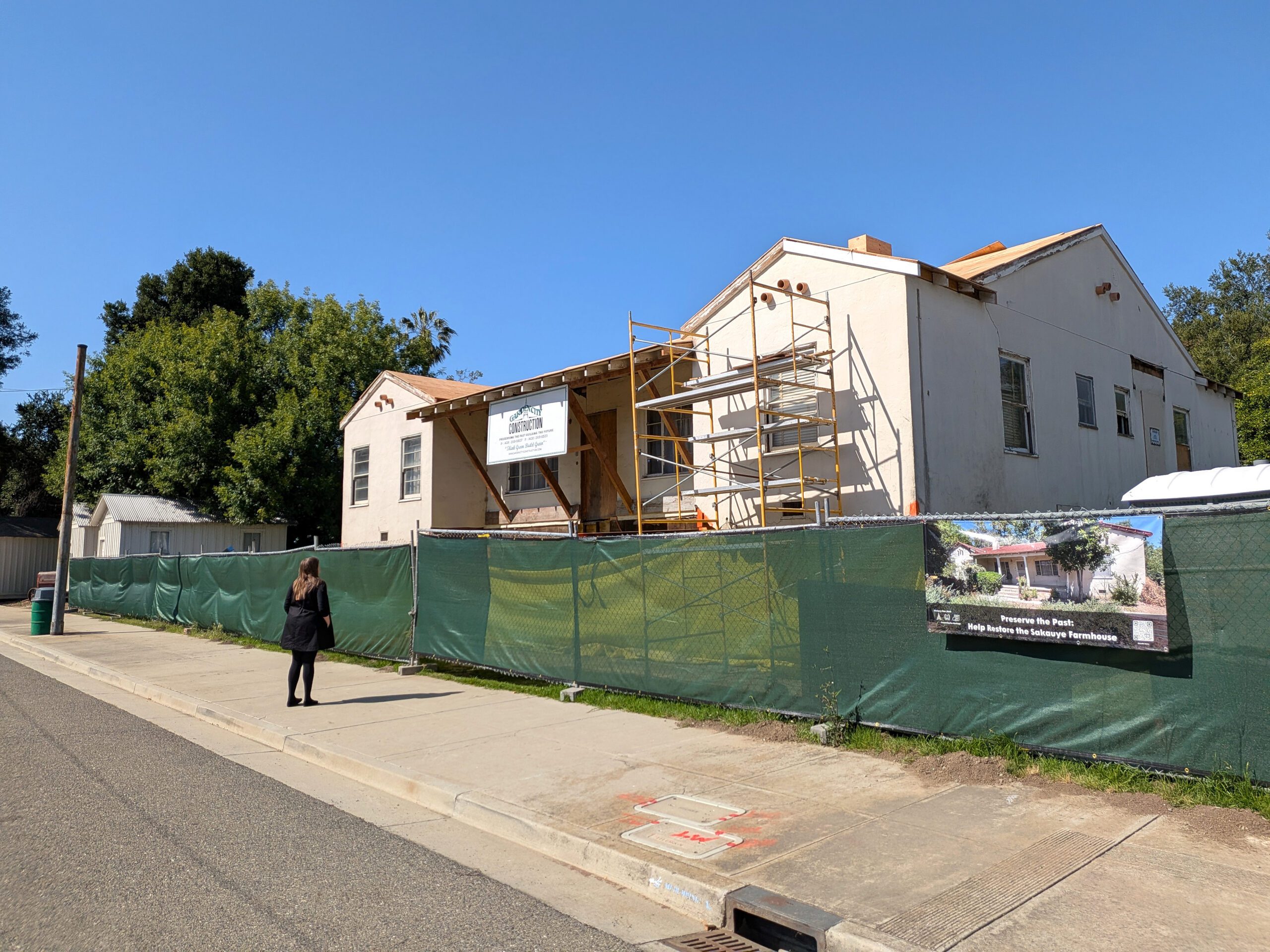
A historic Japanese American farmhouse has found a new home after an eight-mile journey from what were once the orchards of North San Jose to the city’s History Park.
A coalition of three local nonprofits, joined by San Jose Councilmember Rosemary Kamei, pushed the developer and the city to save the Sakauye farmhouse. The group celebrated their rescue efforts at an April 30 event where they said an additional $300,000 is needed to renovate the interior with exhibits, an activity space, a gallery and a small staff office.
The farmhouse, built around 1920 at the intersection of Seely Avenue and Montague Expressway, was at risk of being demolished when developers decided two years ago to put 1,472 homes on the 23-acre site.
“This is a really historic moment for San Jose in welcoming this expanded narrative of Japanese Americans,” Vanessa Hatakeyama, executive director of the Japanese American Museum of San Jose, told San José Spotlight. “Generations of kids will be able to see their story reflected in this space.”
The coalition raised $750,000 to move the farmhouse, which arrived at its new location March 30. History San Jose, which operates the History Park, expects to open the farmhouse to the public in October 2027.
The three organizations — History San Jose, the Japanese American Museum and the Preservation Action Council of San Jose — originally wanted to keep the farmhouse within the housing development as a memorial.
Kamei advocated for the preservation of the Sakauye farmhouse on the property and was disappointed not only with the forced relocation of the house, but with the city’s lack of funding for the move. But the coalition was able to raise the funds and pivot to History Park, a frequent destination for school field trips, which is next to the Happy Hollow Park & Zoo.
“This is the better solution for the hand we were dealt,” Ben Leech, executive director of the Preservation Action Council, told San José Spotlight.
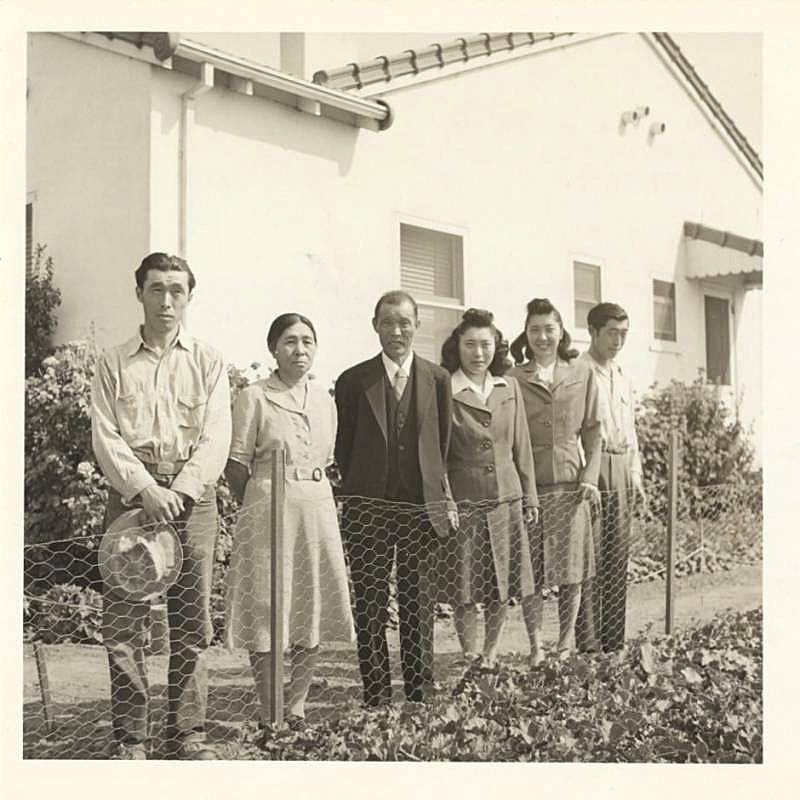
The farmhouse was built by the family of Eiichi “Ed” Sakauye, who died in 2005 at age 93. The family purchased the property in the early twentieth century before the California Alien Land Act of 1913 that banned Japanese Americans from buying agricultural land. Sakauye, who grew pear trees, was one of 120,000 Japanese American interned during World War II and – unlike many others – was able to reclaim his land after the war ended.
Councilmember Kamei, despite her earlier efforts to keep the farmhouse in place, said the coalition has made a difference.
“We’ve got some work still to do, but I’m delighted we’ve got to this point,” Kamei told San José Spotlight. “I look forward to the day when I can take my grandchildren there.”
Editor’s note: Eiichi “Ed” Sakauye’s first name was incorrectly spelled.
Contact Mike Langberg at [email protected].

Leave a Reply
You must be logged in to post a comment.