


|
Getting your Trinity Audio player ready...
|
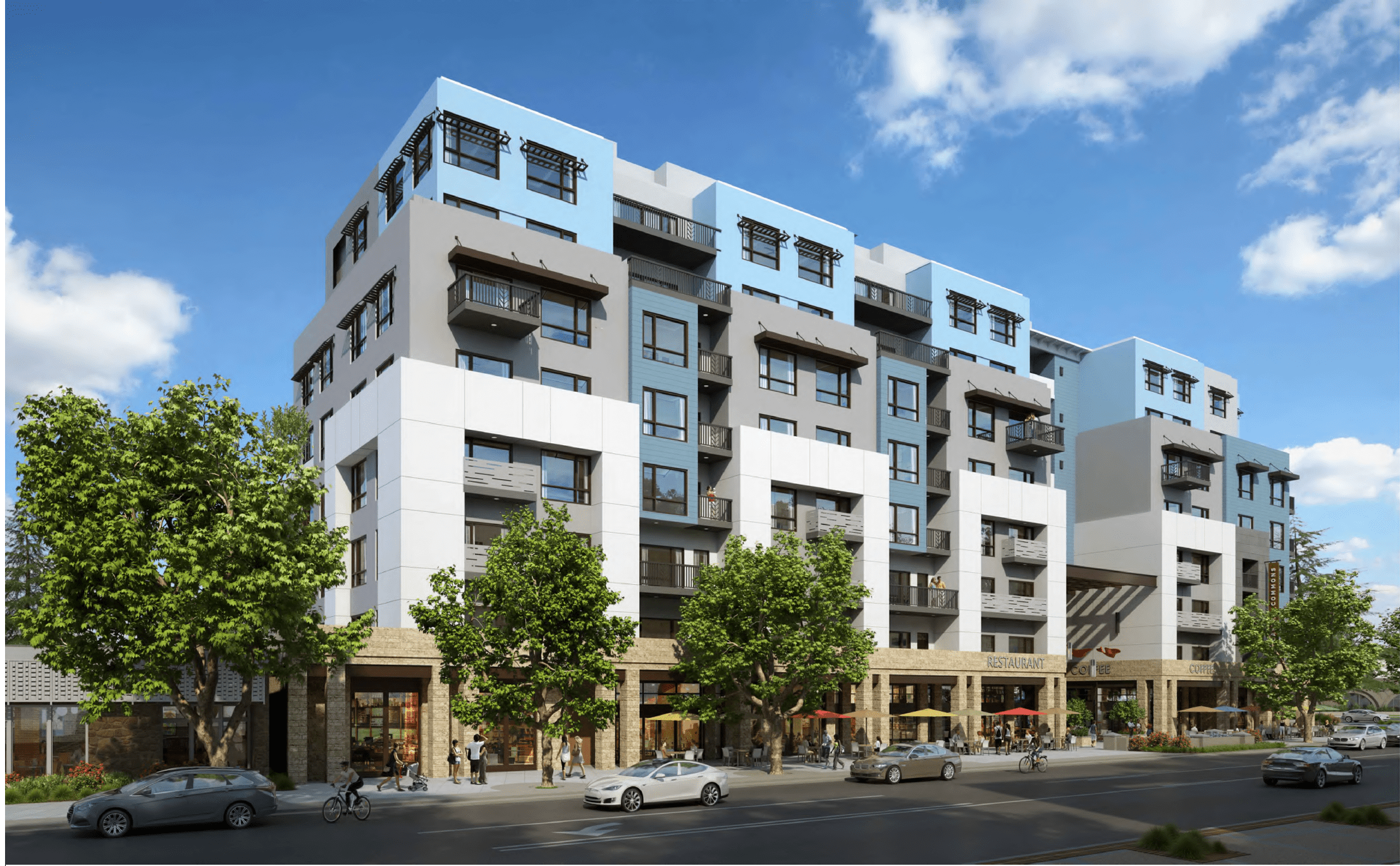
A developer’s plan to build an eight-story condominium complex at a prominent gateway to downtown Mountain View got the greenlight Tuesday evening after a legal dispute over parkland fees threatened to derail the project earlier this year.
In a split 4-2 vote, the City Council approved a 140-unit condominium project with nearly 10,000 square feet of ground floor retail space at the northeast corner of Castro Street and El Camino Real, replacing three commercial properties and four homes.
Council members John McAlister and Ellen Kamei cast the dissenting votes at the April 28 meeting while Alison Hicks recused herself from the discussion because of the proximity of her home to the property.
The vote comes after a disagreement over the amount of parkland fees that the city could charge the developer, GPR Ventures. The city had planned to charge GPR Ventures roughly $2.9 million but lowered it to $2 million, as part of the project’s condition of approval, according to an April 23 settlement agreement.
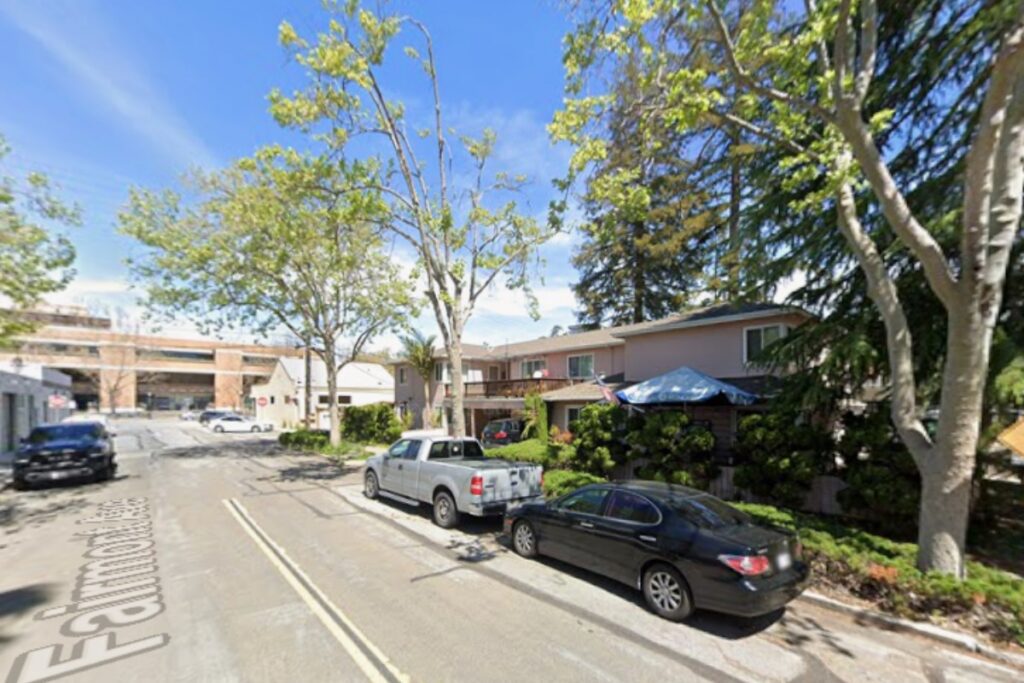
As part of the deal, the City Council also approved the $4.2 million sale of Fairmont Avenue, between Hope and Castro streets. The developer plans to close the roadway to vehicle traffic and turn it into a promenade, according to the city staff report.
For the past decade, GPR Ventures has been looking to build a condominium complex at 881 Castro St. Dubbed “Castro Commons,” the project site covers roughly 1.4 acres. It extends north for nearly two blocks along Castro Street, stopping short of Yosemite Avenue, and east to Hope Street. It also includes Gateway Park, a patch of green space at the Corner of Castro Street and El Camino Real that is frequently used for protests and other gatherings.
The project drew general praise from Ramirez who noted that GPR Ventures had worked closely with the city to uphold many community priorities.
Ramirez noted that the project met the city’s housing goals by providing more ownership opportunities, including affordable units. Of the 140 residential units, 22 have been set aside for low- and moderate-income households.
“It’s great to see the inclusion of affordable units geared towards that moderate-income household that we have not been able to meaningfully serve in many of the developments that we’ve reviewed,” he said.
The project also includes two levels of underground parking, with 33 commercial and 167 residential parking spots, according to the city staff report. Ramirez described the parking as an asset since the developer could have opted not to have provided it under state law, other than offering the 33 required commercial spaces.
However, McAlister raised concerns that the project’s home ownership component was not guaranteed, as GPR Ventures had indicated a preference to rent out the units before putting them on the market as for-sale condos.
“If the projects start one way and the developer decides that he has to go another way, that’s their right,” McAlister said. “But it’s not what I initially thought it would be.”
Glen Yonekura co-founder and managing principal of GPR Ventures said that the project needed the flexibility of a rental option because of a 10-year liability law in California. The law protects buyers from bearing the cost of fixing defects in newly built condos, but does not apply to rented apartments. Under current economic conditions, this is making it difficult to get condominium construction loans from banks, he said.
McAlister also expressed disappointment about the city giving up Fairmont Avenue, stating that he did not believe in selling city property and that there were other ways to make money.
“I think the city should maintain owning this property and that we should be able to generate funds that way,” McAlister said. “Maybe we can get a better use project that would match the needs of the city.”
Legal dispute over parkland fees
Notably absent from the council deliberation was discussion of the negotiated settlement over the parkland fees. In a closed door meeting last month, the City Council voted 4-1 to authorize a $2 million settlement with GPR Ventures.
Council member Kamei cast the dissenting vote. Hicks recused herself from the discussion while McAlister was absent from the March 10 meeting.
At the time, City Attorney Jennifer Logue said that the disagreement had been over the calculation of park fees. The city charges developers these fees to offset the cost of providing parks and recreational facilities for the residents moving into new housing developments.
GPR Ventures had wanted to reduce the parkland fees, arguing that it should receive credit for the fees with its “privately owned publicly accessible” open space areas. The city and GPR Ventures disagreed on the amount of open space credit to be applied toward the open space area, as well as whether the city’s eligibility criteria for the credit could be sidestepped, according to the April 23 settlement.
Ultimately, the city and GPR Ventures settled on $2 million as a compromise to avoid “the delay, expense and uncertainty of litigation,” the settlement said.
Editor’s note: This story has been updated to clarify that Councilmember Lucas Ramirez referred to ownership housing and parking as community priorities.
This story originally appeared in the Mountain View Voice. Emily Margaretten joined the Mountain View Voice in 2023 as a reporter covering City Hall.
Leave a Reply
You must be logged in to post a comment.