


|
Getting your Trinity Audio player ready...
|
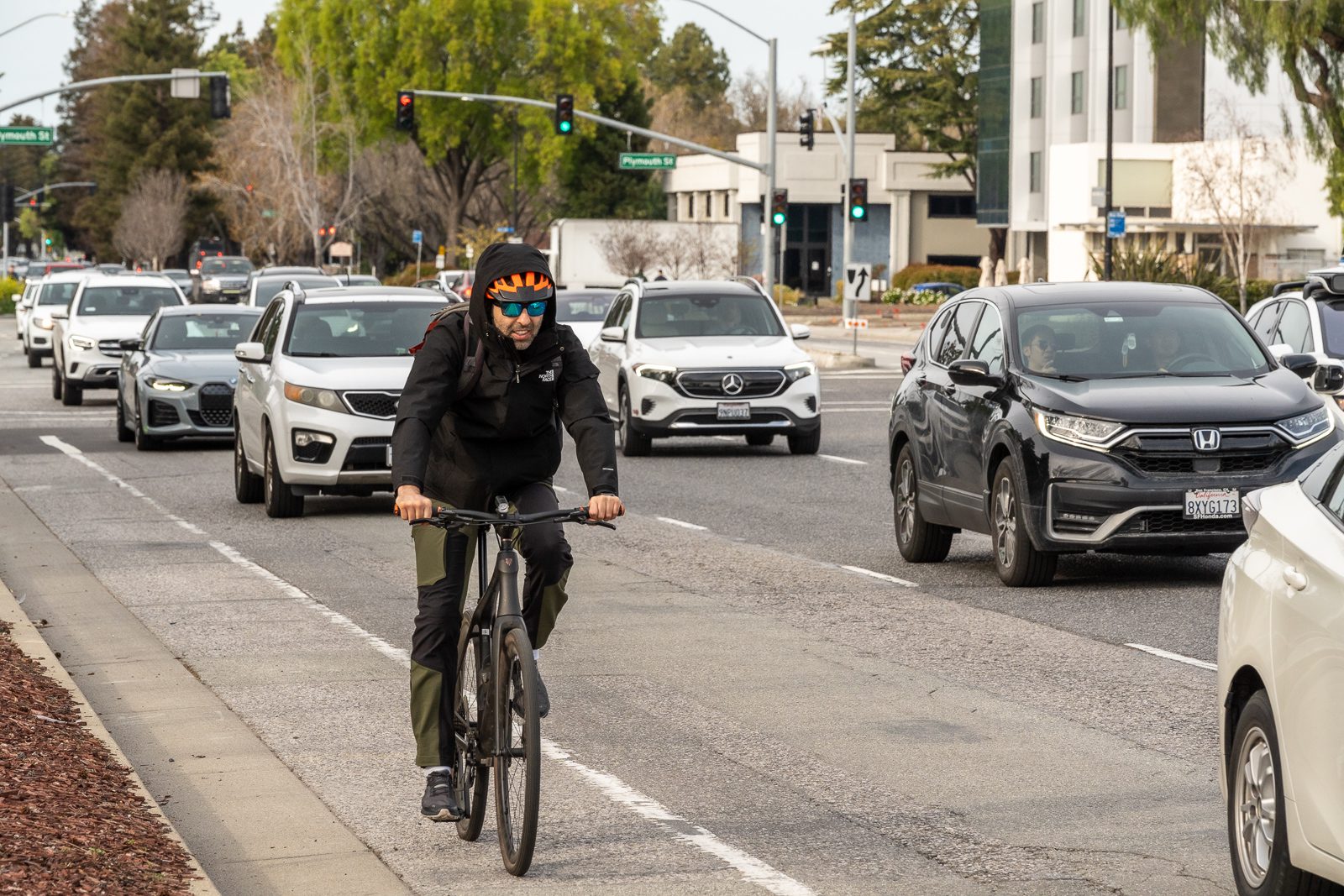
Looking to cut down on pollution, Mountain View approved a citywide policy Tuesday that seeks to reduce the number of vehicles on the road.
In a unanimous vote, the City Council backed major updates to a policy that requires developers to encourage sustainable forms of transportation, such as offering transit subsidies, bicycle facilities and carshare services.
“I hope that it will help bring our car trips down as a community and in return give us better clean air and a better environment,” Mayor Emily Ann Ramos said at the May 12 council meeting.
Mountain View first adopted a Transportation Demand Management (TDM) policy in 1994 to comply with regional and state requirements. The goal was to reduce traffic congestion and improve air quality, according to the city staff report.
The approach however was piecemeal and not always clear to the developers and employers who were tasked with meeting the requirements. Specific rules were also added for certain parts of the city, like North Bayshore, East Whisman and El Camino Real, according to the staff report.
The new policy approved this week aims to implement the TDM program consistently citywide, with the goal of cutting down on drive-alone trips, according to Assistant Public Works Director Allison Boyer.
The policy will apply to all new residential, commercial and mixed-use developments in Mountain View that are expected to generate at least 200 net new average daily trips, Boyer said. Certain projects will be exempt, including all-affordable housing developments and certain “patron-driven uses,” like childcare centers, retail and restaurants, where trips are mostly generated by customers and not employees.
To get a project approved, a developer will need to create a plan to reduce average daily trips by between 20% and 50%, depending on the project’s size, type and proximity to a major transit stop or corridor, Boyer said. Developers also will need to show how they plan to manage the program, which includes maintaining records and annual reporting requirements.
“Non-compliance may result in corrective action and or fines assessed by the city,” Boyer said.
The city has come up with a toolkit of 33 different strategies that developers can use to reduce drive-alone vehicle trips. Core strategies include options like making enhancements to pedestrian and bicycle infrastructure, as well as having cafes and retail spaces on the ground floor. Developers also can limit parking spots while offering carpool services or public transit subsidies.
The toolkit also includes “auxiliary” strategies, like helping residents or employees learn about and use public transit or providing dedicated parking for carpools, vanpools and carshares near building entrances.
“(The toolkit) is designed to offer a menu of strategies that vary in scale and cost, allowing projects to create site specific TDM plans fit for their purpose,” Boyer said.
Developers will be required to utilize a certain number of core and auxiliary strategies, based on their project’s size.
Officials and residents weigh in on new policy
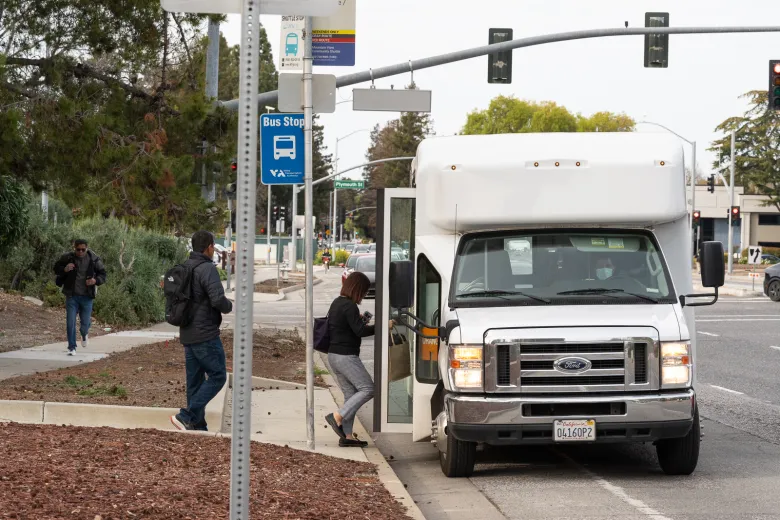
The city council voiced support for the new policy, describing the toolkit as a realistic approach for developers to incentivize sustainable forms of transportation.
“It’s just a much more robust program than what we’ve been able to deploy on a case-by-case or site-by-site circumstance,” Councilmember Lucas Ramirez said. “This is, I think, a very strong foundation for future work, and I’m very happy with where it’s landed.”
Ramirez also praised the toolkit’s flexibility, describing it as a “living document” that could be modified and revised as travel patterns change over time.
However, Councilmember John McAlister voiced concern about how the policy would be enforced, noting that nobody has been fined for not adhering to TDM goals in the past.
Leave a Reply
You must be logged in to post a comment.