


|
Getting your Trinity Audio player ready...
|
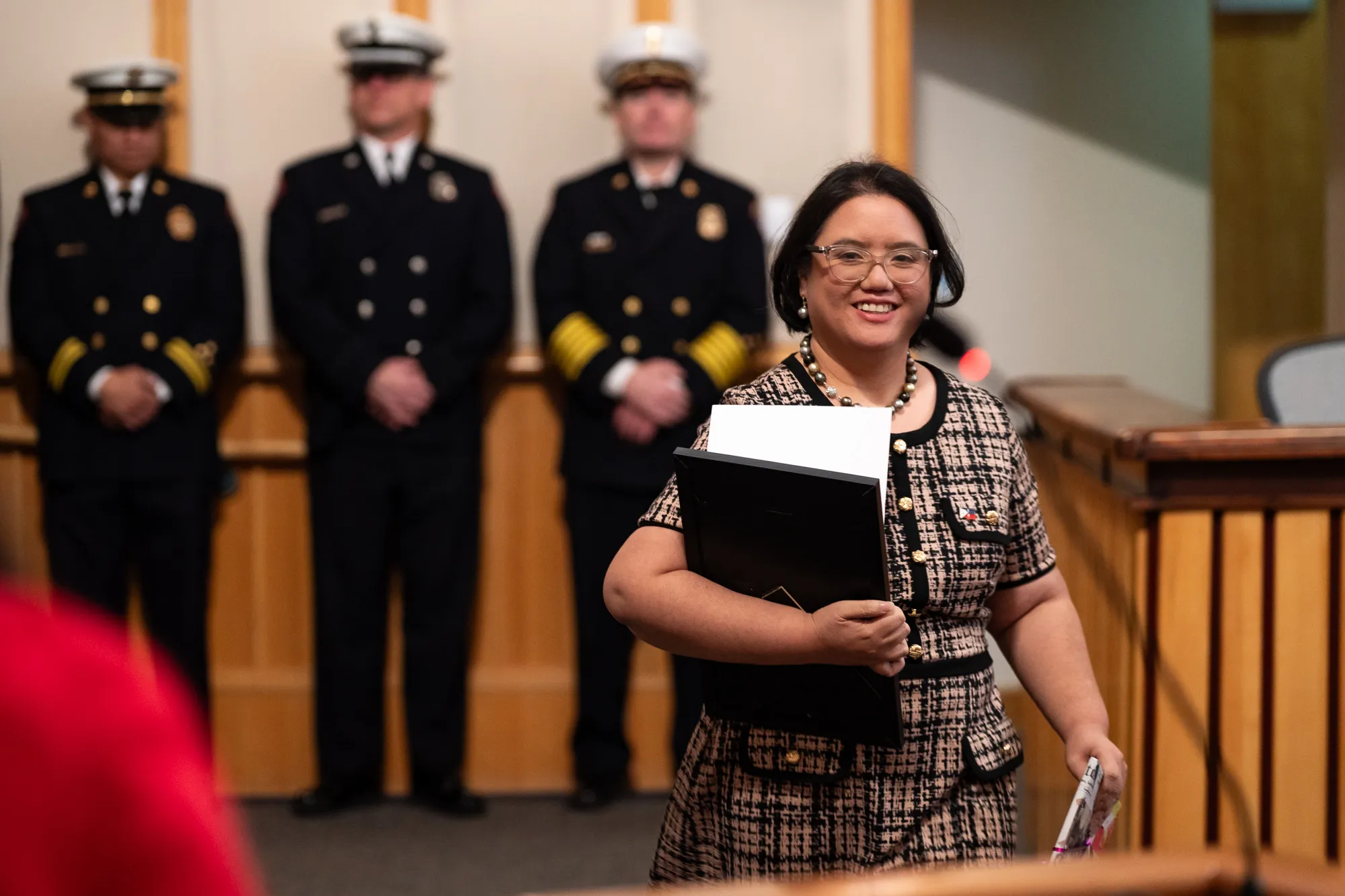
Seven months into the job, Mountain View Mayor Emily Ann Ramos is knee-deep in meetings and ribbon-cutting ceremonies while also working to stay on top of some of the city’s most pressing issues.
Since taking the helm in January, Ramos has led the City Council through major upheavals, including revelations of unauthorized access to the city’s license plate cameras and a contaminated water main that left dozens of residents without safe drinking water.
Mountain View also has been navigating the uncertainties of Trump administration spending cuts, prompting the city to join a lawsuit against federal agencies’ grant restrictions.
“We do rely on federal funds,” Ramos said. “And that has been a very delicate dance.”
While it has been a whirlwind of events, Ramos said she’s found the mayor’s duties are not so different from that of a councilmember.
“It’s the same kind of work, the same kind of meetings — just the intensity and the frequency has ratcheted up,” she said.
First appointed to fill a council vacancy in 2022, voters then elected Ramos in 2024 to serve a full four-year term. Previously vice mayor in 2025, Ramos took up the top spot this year, following a well-established protocol in which councilmembers rotate through being mayor, typically based on seniority.
In addition to dealing with moments of crisis, Ramos has been involved in the more routine work of city governance. Already this year, the council approved two major plans, both with an environmental focus. One seeks to improve Mountain View’s biodiversity and urban tree canopy while the other is focused on expanding access to city parks, trails and open space.
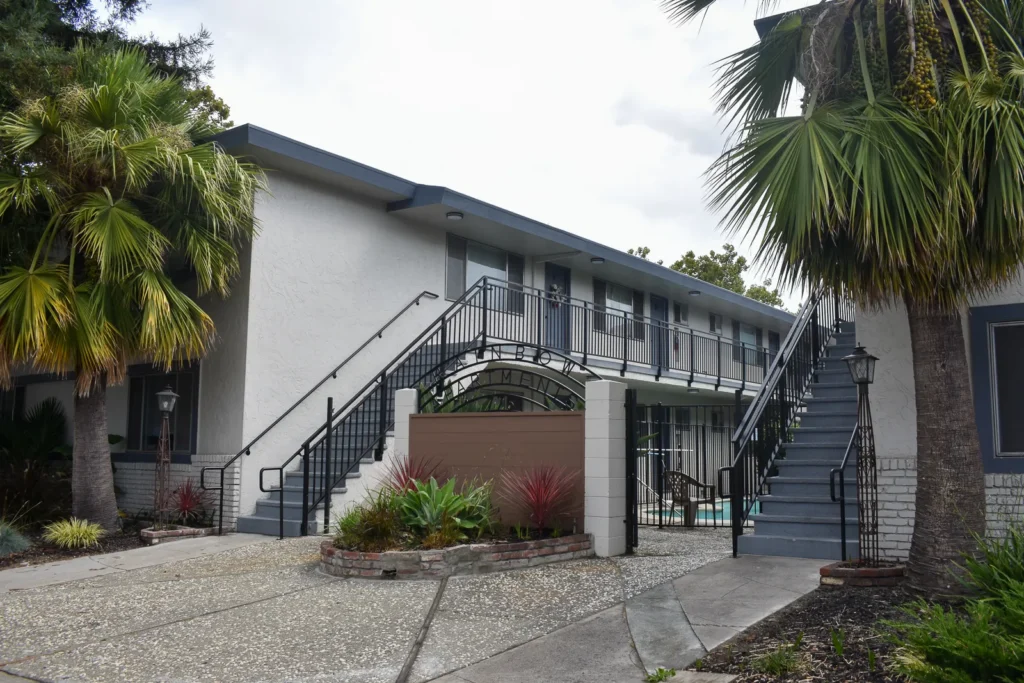
Mountain View also recently broke ground on a new affordable housing project, which will replace a downtown parking lot. For Ramos, it signals the city’s ongoing support for some of the community’s most vulnerable residents.
Not everything has gotten the greenlight though. Last month, the council decided to put a hotel tax on the November ballot, seeking to increase funding for city projects. Mountain View had been contemplating a bond measure, but polls didn’t show enough support for it.
“I do feel like there’s a sense of collective burnout, and I totally understand that,” Ramos said. “The federal level’s rough, the economy is rough and people are feeling it on the most localized level.”
Still, a self-described optimist, Ramos sees a bright future for Mountain View, one that she said includes working closely with community members.

Flock cameras and a water crisis
While some newly-minted mayors get to enjoy a honeymoon period, that was not the case for Ramos, who was thrust into the public spotlight soon after she stepped into the role.
In January, Mountain View’s police chief informed the community that Flock cameras — used to capture information from license plates — had been accessed by unauthorized law enforcement agencies throughout the U.S., without the city knowing about it. The disclosure triggered a public outcry that led the city council to terminate its contract with Flock Safety, the surveillance company that installed the cameras.
“We trusted that we would have a professional service do what they told us they were going to do in their contract,” Ramos said. “When they did not meet those requirements, it made it easier to end the contract.”
At the time, Flock said that it was continuously working to improve its systems and hoped to work with Mountain View in the future. Ramos told the Mountain View Voice it was unlikely the council would authorize the installation of license plate cameras again, unless the community wanted it.
The cameras were deactivated in February and have since been fully removed, Ramos said.
In April, a second crisis emerged. A contractor had breached a water main in the Cuesta Park neighborhood, leaving dozens of households without safe drinking water. Days later, Mountain View declared a state of emergency that lasted for weeks.
According to Ramos, her biggest priority at the time was to get clean water restored and do whatever was possible to minimize inconveniences for the affected residents. City officials have said they are pursuing options to recoup expenses incurred from the water main breach.
“The main thing that we’re probably hoping for is that we come out whole on this,” Ramos said.
The state of emergency is one avenue for the city to get reimbursed by the state and federal government. The city can also pursue legal claims against the contractor, but Ramos said it’s unknown when the city would get paid.
Despite these challenges, Ramos said council priorities did not get pushed aside.
“(It) was not that everything was smooth,” she said. “But we just had to do this and then continue on with our work.”
What’s next?
Looking ahead, big changes are coming to the city council next year, with three longtime councilmembers — Alison Hicks, Ellen Kamei and Lucas Ramirez — terming out. Before that happens, Ramos is itching to wrap up items that the current council has been working on for years. That includes updates to the R3 zoning district, an area that covers nearly half of the city’s multifamily residences.
The council wants to increase housing density — at various levels — throughout the R3 district while also maintaining local control over building projects. To do so, the council is planning to implement “citywide objective standards” that would lay out criteria for developers to follow. Ramos sees it as a collaborative effort among the city, community and developers — within reason, she added.
The city is also working to respond to Senate Bill 79, a state law allowing for more residential density near major transit stops, which took effect July 1 and could lead to more building projects downtown.
“We understand that growth will happen and we’ll decide together on (what) that will look like,” Ramos said.
“Community for all”
In addition to housing, Ramos wants to strengthen Mountain View’s commitment to inclusivity. She’s particularly interested in seeing the city update its “race, equity and inclusion” action plan, which was put in place six years ago in the wake of local protests over the murder of George Floyd.
“Is it sufficient?” she asked, referring to the plan. “Are we empowering our residents to make sure that they know that the city is hearing them?”
To this end, Ramos is eager to implement a “volunteer policy framework” that would make it easier for residents to get involved in city initiatives. People have a lot of expertise on all kinds of issues and want to help, she said.
For Ramos, volunteering can also lead to something bigger. In her case, it led to the helm of the city.
“I grew up being happy that I could just be a cog in the wheel of doing something good,” Ramos said. “To lead a city like Mountain View … it’s hard to even swallow.”
This story originally appeared in the Mountain View Voice. Emily Margaretten joined the Mountain View Voice in 2023 as a reporter covering City Hall.
Leave a Reply
You must be logged in to post a comment.