


|
Getting your Trinity Audio player ready...
|
As artificial intelligence reshapes Silicon Valley, Latino leaders are pushing for a bigger role in deciding who benefits from the technology and who might get left behind.
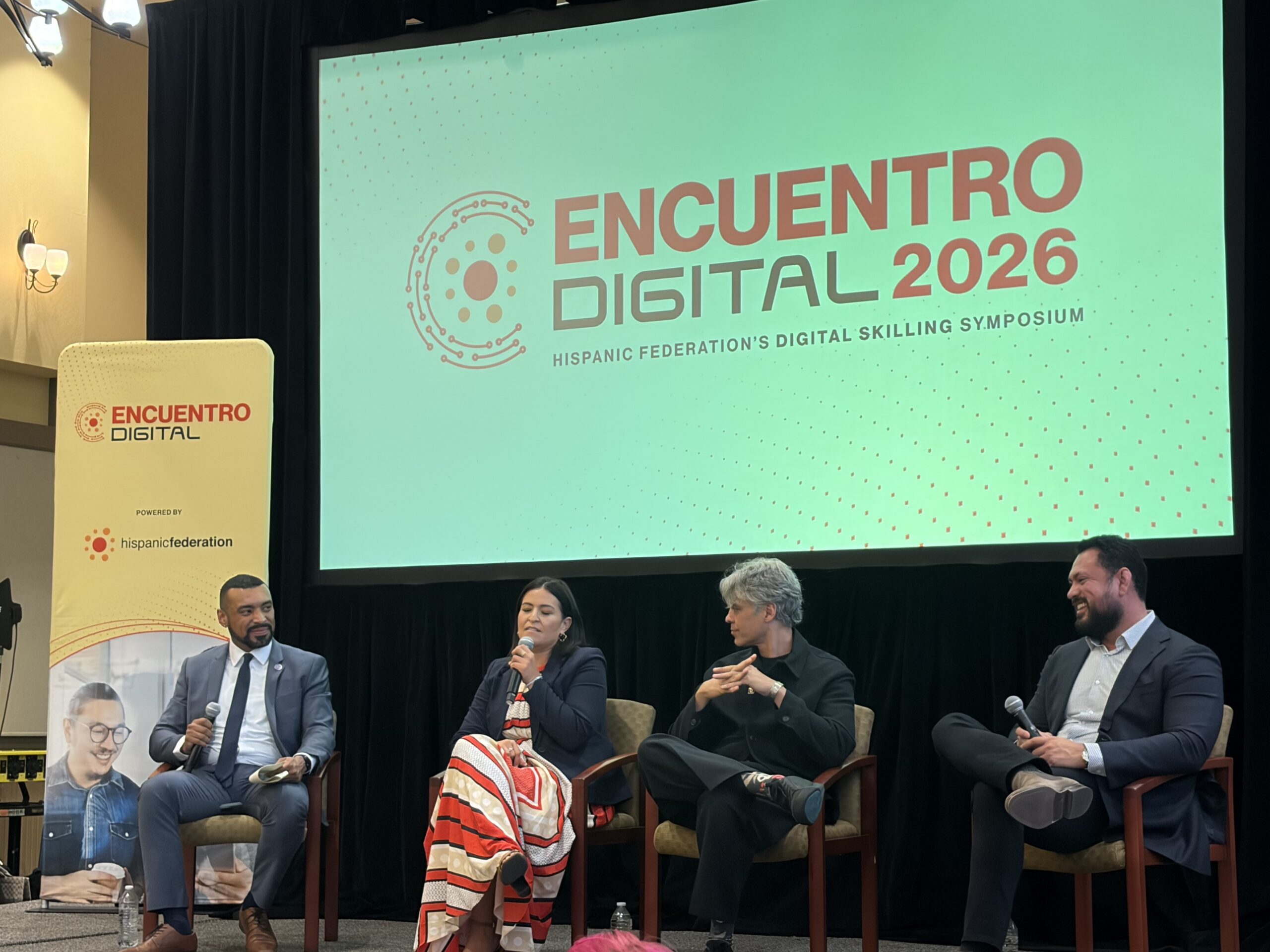
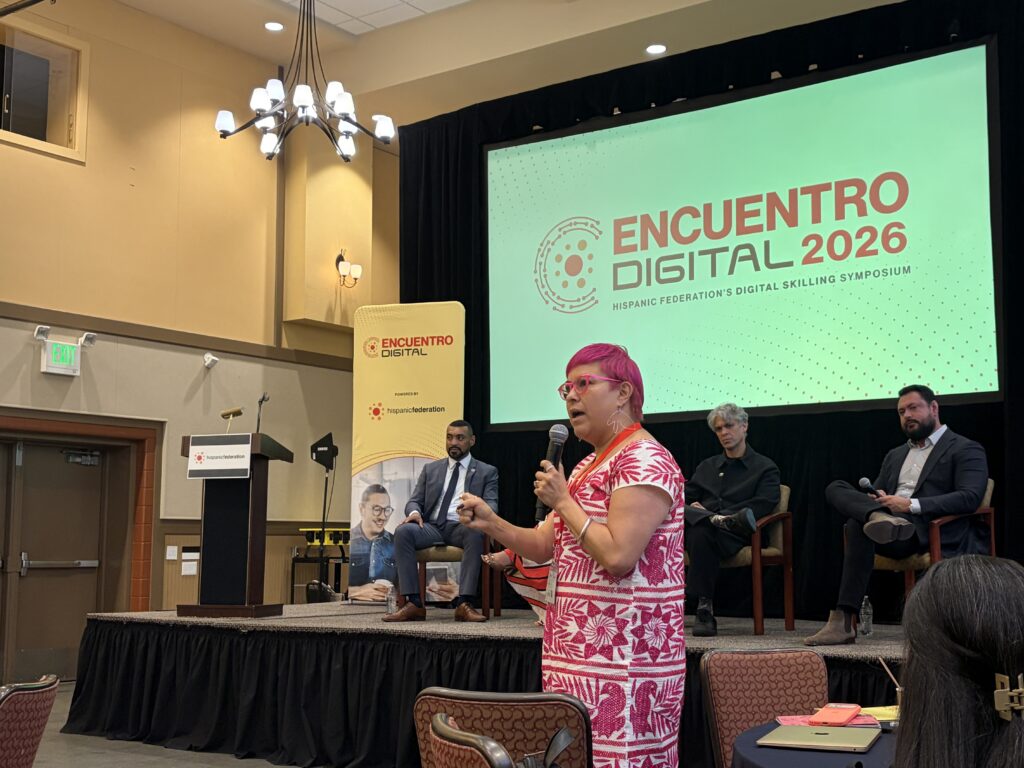
That question was at the center of a two-day conference in San Jose, hosted by the New York-based Hispanic Federation, which brought together nonprofit leaders and community advocates to discuss Latino leadership, technology and the future of artificial intelligence. The event, held for the first time in San Jose, included discussions about digital skills, education, economic mobility and how Latino communities can participate in an industry expected to create enormous wealth.
The gathering comes as new research highlights a stark divide between Latinas’ contributions to Silicon Valley and their access to its economic opportunities. A preliminary Health and Wealth of Latinas in Silicon Valley report found that Latinas make up more than 327,000 women in Santa Clara and San Mateo counties and have a 64% labor force participation rate — the highest among women in the region — but just 3% work in computer, engineering and science occupations. Nearly half work in service or office-support positions. The research is being conducted by Dr. Barbara Gomez-Aguiñaga of Comprehend.us and Dr. Vicky Gomez of San José State University, in partnership with the Latina Coalition of Silicon Valley and Latinas Contra Cancer.
“We aren’t just consumers of this technology,” Gabby Chavez-Lopez, executive director of the Latina Coalition of Silicon Valley, told San José Spotlight. “Are we going to be beneficiaries of that wealth that’s created? Are we going to be owners of some of these technologies? Are we going to be CEOs of these companies? Are we going to be the workforce?”
Those questions reflect a broader concern raised throughout the conference: Latino communities are deeply connected to Silicon Valley’s economy, but remain largely absent from many of its highest-paying industries and leadership positions.
The preliminary report found that Latinas earn a median $21 per hour in Silicon Valley, compared with $38 for the region overall. Even among Latinas with a bachelor’s degree or higher, the median hourly wage is $38, compared with $62 for college educated workers across the region.
Panelists said closing that gap will require investments beyond technology, including philanthropy, education and leadership development.
Moses Zapien, executive vice president of the Silicon Valley Community Foundation, said the foundation’s LatinXCEL Fund is designed to provide unrestricted, multiyear funding and leadership support to Latino-led organizations.
“We recognize that if we don’t invest in Latino-led organizations, there’s so much that will be lost,” Zapien said during the panel. “Those leaders will not be able to have the resources to be able to access a lot of the rooms that decisions are made.”
Enrico Ramirez-Ruiz, director of the Center for Reimagining Leadership at UC Santa Cruz, focused on another pathway to economic mobility: higher education.
He said universities need to be more accountable to Latino students and work more closely with community organizations to develop pathways into leadership.
“I think institutions of higher education mistake talent with privilege,” Ramirez-Ruiz said during the panel. “That’s a huge issue.”
He said universities often measure what students are expected to already know rather than recognizing the different educational and life experiences they bring with them.
For Ani Rivera, executive director of Galería de la Raza in San Francisco, the conversation also needs to extend beyond Silicon Valley’s traditional boundaries.
“When we think of Silicon Valley, we think of sometimes the Santa Clara, San Mateo region,” Rivera told San José Spotlight. “I believe that there’s a broader reach.”
Rivera said the nine-county Bay Area should be viewed as an interconnected ecosystem when considering how technology and wealth affect Latino communities.
“Proximity to wealth doesn’t mean that we have the equity,” she said.
The conference also explored how AI could affect that divide. German Cash, California director for the Hispanic Federation, said the organization’s digital-skills work began in 2019 through a partnership with Google. The effort initially focused on helping Latino families and nonprofits navigate technology, including telehealth and online employment resources.
Then the COVID-19 pandemic accelerated the need for digital skills as work, school and healthcare moved online.
The conference was the fifth gathering organized through the initiative. Previous conferences were held virtually and in Washington, D.C., but organizers brought the event to San Jose because of the region’s concentration of technology companies and policymakers.
Cash said the goal is not simply to help Latinos adapt to new technology, but to ensure they have a voice in how it develops.
“(Latinos are) leading the conversation on AI,” Cash said. “I think a big thing is, how do we make sure that the wealth isn’t being concentrated in just five billionaires?”
Contact Maryanne Casas-Perez at [email protected] or @CasasPerezRed on X.
Leave a Reply
You must be logged in to post a comment.