


|
Getting your Trinity Audio player ready...
|
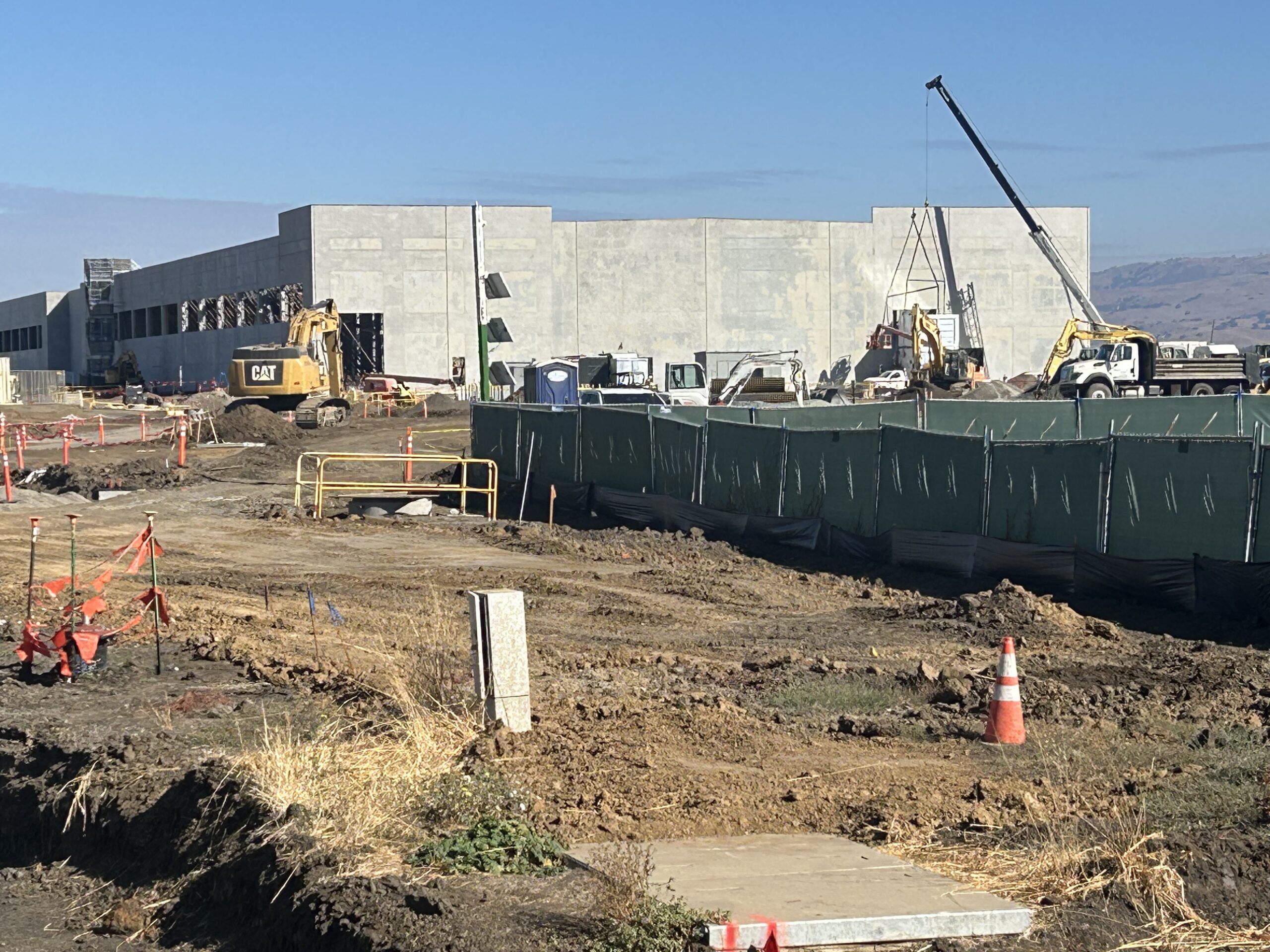
An Amazon data center under construction in Gilroy is frustrating a local transparency group and residents who are voicing concerns about the city’s lack of openness in allowing the project to move forward.
Americans for Transparency, a grassroots initiative led by Gilroy resident Georgine Scott-Codiga, filed a formal demand of violations with Gilroy asking for an admission that the land where the Amazon data center is being developed has allegedly violated the California Subdivision Map Act. City officials said they’ve looked into the claim and found no violation.
Scott-Codiga wants four issues addressed by the city attorney and Gilroy City Council: stop accepting Amazon’s water connection applications until the subdivision issue is resolved; formally investigate whether the Amazon parcel was illegally created; refer the matter to Santa Clara County for enforcement; and notify Amazon in writing no approvals will be issued until the alleged parcel defect is corrected.
Americans for Transparency said there is an environmental issue created by the more than 25 diesel-powered generators planned in an area considered a higher-pollution zone, as well as excessive water usage. Scott-Codiga said the data center won’t create many jobs and that residents support the group’s letter.
“(The city) violated the California Subdivision Map Act,” Scott-Codiga told San José Spotlight. “But it seems justice officials pick and choose which laws they enforce. By doing what they did they took the people’s voices away to comment on the Amazon data center.”
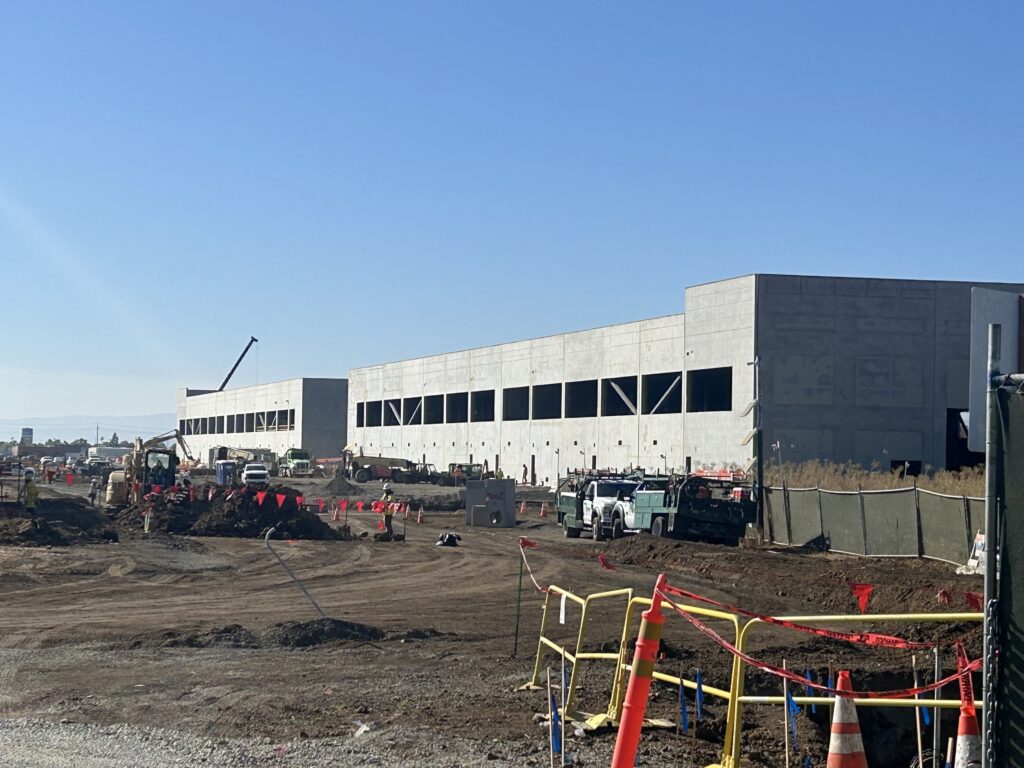
City Administrator Matt Morley said Gilroy did its due diligence looking into Scott-Codiga’s demand letter, with staff and City Attorney Andrew Faber spending hours to verify the legitimacy of the Map Act violation claim.
“There’s nothing to the complaint,” Morley told San José Spotlight. “Everything was in alignment with the California Map Act.”
Morley said in July 2020, Arcadia Associates and Glen Loma Southpoint Group owned five plots of land along Camino Arroyo Drive, where the data center is being built. The two private parties agreed to make a lot line adjustment, which made some parcels smaller and one bigger.
He said the adjustment didn’t create any new parcels as Scott-Codiga’s letter claims. The city engineer approved all the changes at the time, and Amazon Data Services purchased the larger parcel shortly after the adjustment.
Scott-Codiga confirmed the city attorney responded to her demand, stating there was no violation committed in the lot line adjustment. She remains unconvinced by the city’s response.
“(Faber) wants us to believe the city’s empty words,” Scott-Codiga said. “Providing no evidence as we look right at the evidence.”
Morley said the city has received many Public Records Act requests over the years by Scott-Codiga, with city officials spending hundreds of hours and tens of thousands of dollars looking into them, but they have not found anything substantive to support her claims.
Mayor Greg Bozzo said the 2020 lot line adjustment didn’t require any involvement from the city council or Planning Commission, which would open it up to public comment.
“We heard from the community,” Bozzo told San José Spotlight. “They want more engagement and more of an open review process. What the council responded with is that future large projects will get community engagement and future environmental impact reports will go to the planning commission.”
Bozzo detailed some of those changes that the council approved during its Aug. 17 meeting on the neighborhood social media site NextDoor. He wrote there will be community meetings with developers for new commercial projects 15,000 square feet or larger and residents within 1,000 feet of the projects will receive mailed notices. Any project that requires an environmental impact report will come before the planning commission and residents will be notified of the public hearing. No projects of that magnitude will be approved administratively. The city council retains final approval, and planning commission decisions may be appealed to the council.
But Gilroy residents such as Victor Thibeault question whether the city will change its ways, with revenue streams being an ongoing priority.
“The city chose to ignore all of these issues to increase tax revenue, which they estimate is about $4 million per year,” Thibeault told San José Spotlight. “The cost associated with having to find and build infrastructure improvements when our groundwater supplies become insufficient do not come close to being covered by the annual tax revenue.”
Gilroy projects $40 million in tax revenue from the data center within the first decade, including $1.6 million in 2028 when the first building opens, $4.2 million annually by 2032 and $6 million annually upon the full buildout in 2037.

Amazon contends the project went through a multiyear approval process that included several public notices and periods for public comment. A spokesperson said while the project followed standard approval processes for an industrially zoned parcel, the company recognizes residents wanted more engagement sooner.
“We’ve since met directly with residents and hosted an open house to hear feedback and answer questions,” Amazon spokesperson Adrienne Talbot told San José Spotlight. “We’re committed to continuing that engagement as the project progresses.”
Talbot said the Gilroy data center is designed to deliver long-term value to the community while protecting local resources, including a $2 billion investment to diversify the local economy and generate an expected $532 million in gross domestic product, 90 on-site jobs and 160 additional full-time jobs in the broader community.
She said the company is also investing in local land conservation and water replenishment projects, using 100% carbon-free energy, committing to 100% recycled water by 2030 and covering all infrastructure costs so the community bears none of them.
Contact Giovanni Albanese Jr. at [email protected].
Leave a Reply
You must be logged in to post a comment.