


|
Getting your Trinity Audio player ready...
|
Concerned about a new housing law that encourages development near transit areas, Palo Alto is considering numerous zoning changes that would blunt the impacts of the new legislation in neighborhoods like Old Palo Alto and Greenmeadow, which are dominated by single-family homes.
Palo Alto officials are looking to minimize the impacts of Senate Bill 79, a state housing bill that relaxes height and density standards for projects near public transit stops, before it takes effect on July 1.
Three public transit sites in the city would be affected by the legislation, namely the Caltrain stations at University Avenue, California Avenue and San Antonio Road. The new development standards would allow housing projects no shorter than five to six stories if they are within half a mile of the train station, and up to nearly 10 stories if the project is directly adjacent to the station.
But the law also provides cities a number of ways to limit the impacts by exempting historic sites and rezoning the transit areas to provide at least 50% of what would otherwise be allowed under SB 79 — and Palo Alto appears eager to pursue both of these avenues, according to a staff report ahead of the upcoming City Council discussion on May 4.
One of the primary concerns plaguing city officials is the numerous historic sites that are in the SB 79 “splash zone,” such as the Eichler neighborhoods near the San Antonio Caltrain station and Old Palo Alto near the downtown and California Avenue Caltrain stations. Under SB 79, only 10% of the total rezoned area can be protected through a local historic resource ordinance, which means that not all historic properties can be exempt in the longterm, according to staff’s analysis.
The city must approve an ordinance for historic properties and districts by Jan. 31, 2032, but officials plan to do so through an emergency ordinance before SB 79 takes effect in July.
“Under this approach, the default SB 79 standards would still take effect on July 1, 2026, but the City would adopt an ordinance clarifying the application of SB 79 locally and identify sites that are exempt,” the staff report states. “This approach provides additional local control and community input and allows for the temporary exemption of historic resources.”
Another avenue that city staff explored is rezoning properties subject to SB 79 to enable at least 50% of the development otherwise allowed by the legislation, subsequently exempting those sites from the full strength of the bill until 2032. If city officials opt for this path, it buys them six years to then adopt a Transit Oriented Development (TOD) Alternative Plan “to address future housing production and plan for infrastructure upgrades in anticipation of future growth,” staff wrote.
Both the historic exemptions and the rezoning are subject to state review, and the latter may also require environmental review under the California Environmental Quality Act.
“Given the uncertainty about the timeline, there may be an interim period during which SB 79 default standards would apply until the rezoning becomes effective,” staff wrote in the report.
he new state law also complicates ongoing work for the city’s Downtown Housing Plan, which was put on the back burner last year after the passage of SB 79. The plan is funded largely by state grant money and aims to spur housing development in an area of the city that has seen little residential growth in recent years. The downtown area was also mostly excluded from the city’s state-mandated plans for 6,086 housing units by 2031; south Palo Alto and the area around San Antonio Road have taken on the bulk of meeting those unit goals.
Council member Pat Burt, who sits on the ad hoc committee tasked with reviewing SB 79, noted at a public hearing last November that SB 79 would create thousands of units at a density that the city has never envisioned and with “potentially tremendous impacts on traffic and infrastructure needs.”
Now, the ad hoc committee is recommending that the city continue with the Downtown Housing Plan, “modeling the plan on SB 79 standards while addressing other local considerations,” according to the staff report.
After analyzing baseline development data and screening criteria, staff suggest that the downtown area could see about 1,600 new units over the next 25 years as a result of SB 79. The area around the Cal Ave station could see 900 units, and San Antonio could see another 200.
However, the ad hoc committee conducted its own analysis and found it realistic to assume these numbers could double due to state density bonus laws, application streamlining and other state mandates.
While Palo Alto is also pursuing a San Antonio Road Area Plan to promote housing production in the southern end of the city, staff made little mention of the overlap between those plans and SB 79. Nearly all of the development in the area plan would fall outside the half-mile radius around the train station that is subject to SB 79.
But staff noted in the report that the area around the Cal Ave station could see the biggest impact due to a large number of parcels that exceed 10,000 square feet, meaning they would not have to be consolidated to support apartment development.
Additionally, the Old Palo Alto neighborhood northeast of the station is dominated by single-family homes and potential historic sites. While city officials have been preparing for increased housing production downtown, along El Camino Real and near San Antonio Road, the area around Cal Ave. has not been identified for development to the same degree.
“New construction built to SB 79 standards may appear contextually inconsistent with the historic development pattern northeast of the Caltrain station,” staff wrote in the report.
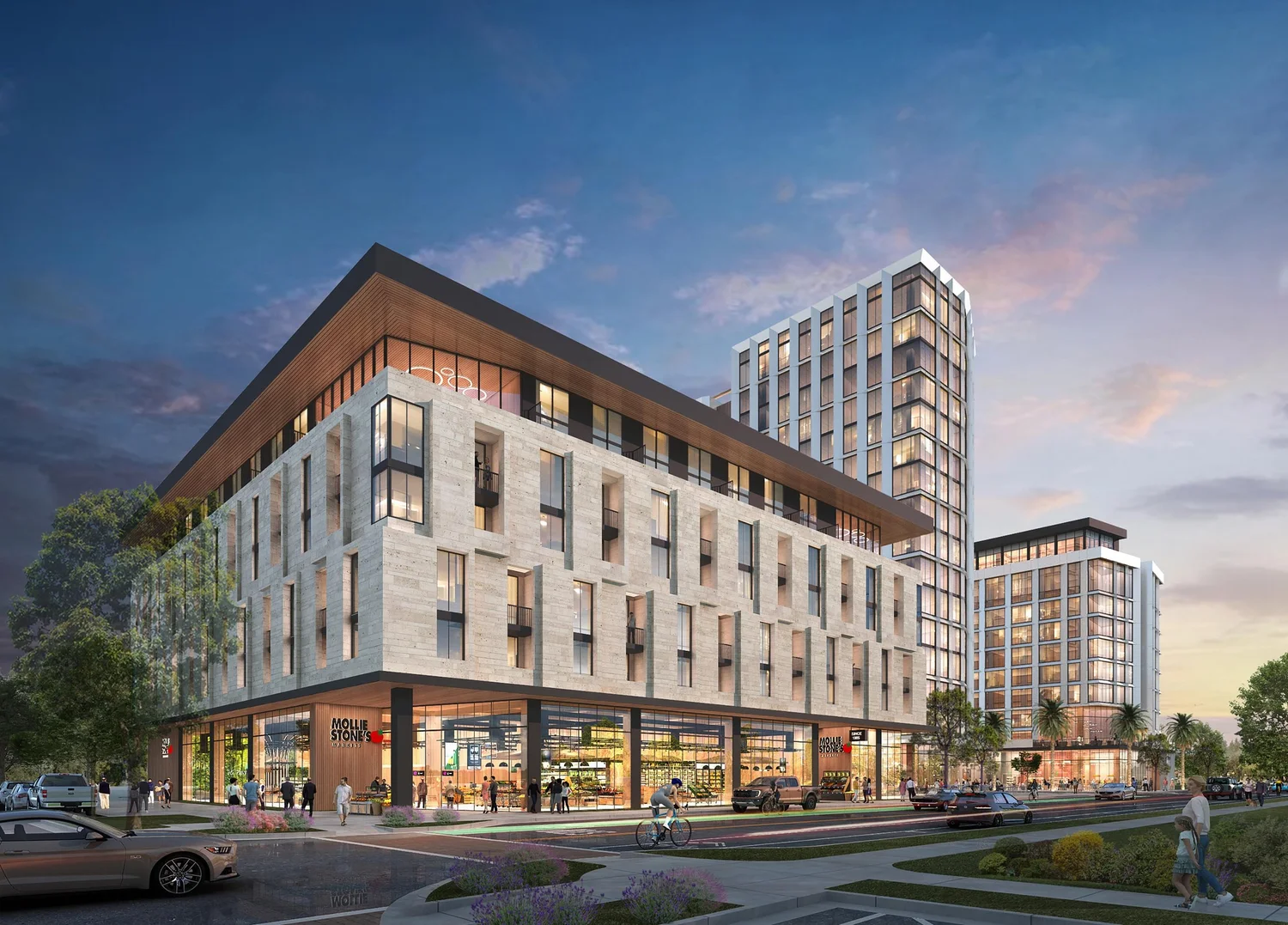
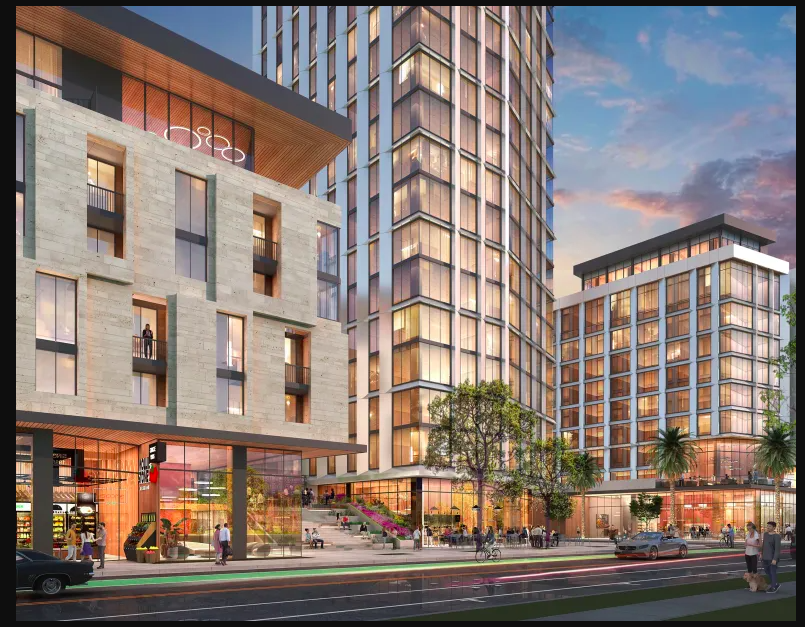
For example, a proposal for a three-building apartment complex at the site of Mollie Stone’s on Cal Ave. has been the subject of litigation between the developer and the city — as well as robust opposition from neighbors. One of the three buildings would top out at 17 stories, according to planning documents, because the developer filed the application under builder’s remedy. That process allows developers to bypass local zoning restrictions if the city has not yet approved a Housing Element — which Palo Alto had not when the developer applied back in November 2023. The council plans to discuss the project at 156 Cal Ave. in a closed session next week.
Leave a Reply
You must be logged in to post a comment.