

|
Getting your Trinity Audio player ready...
|
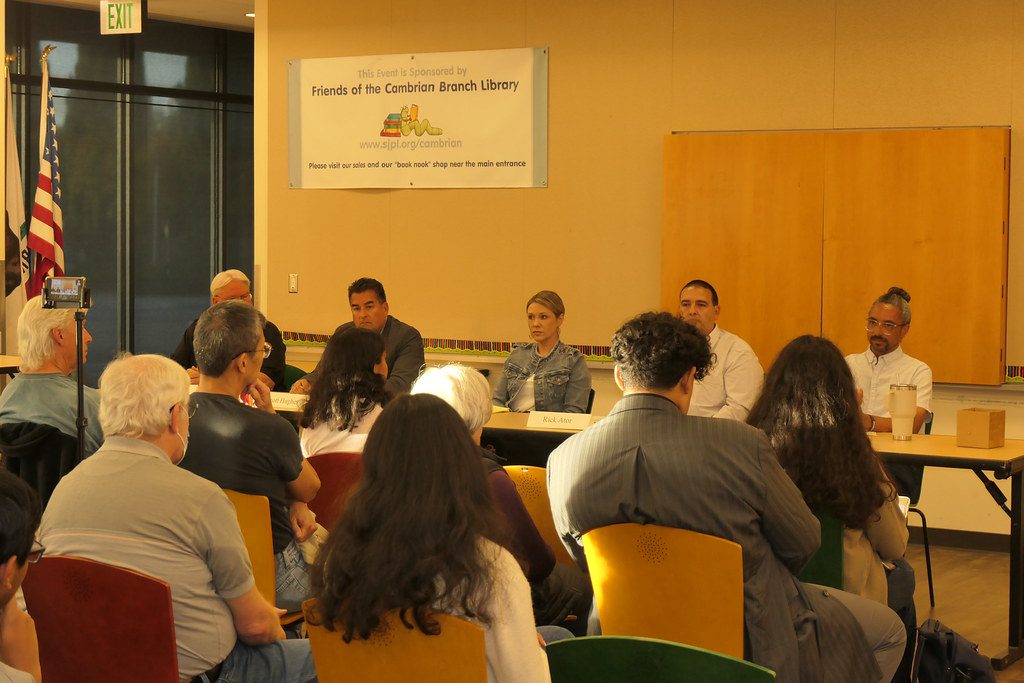
Ambitious plans to reduce greenhouse gas emissions mingled with concerns about San Jose’s daunting fiscal challenges and potential overregulation during a climate-focused election forum quizzing the candidates running for District 9’s City Council seat.
The race’s five candidates spent an hour at the Cambrian Branch Library Saturday answering questions and sharing their visions for how the city should meet its goal of net carbon emission neutrality by 2030. The candidates vying for the District 9 seat are Scott Hughes, who serves as chief of staff for terming out incumbent Vice Mayor Pam Foley, serial entrepreneur Mike Hennessy, longtime city employee Gordon Chester, licensed marriage and family therapist Genny Altwer and tech worker Rick Ator.
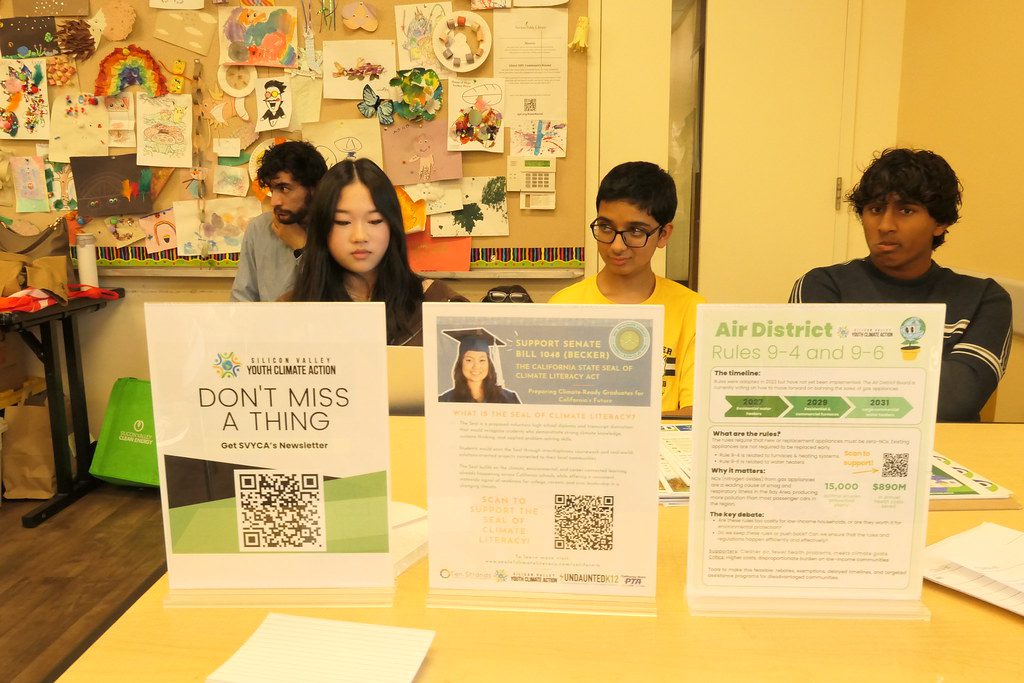
During the forum — organized by the Silicon Valley Youth Climate Action student group and several other local civic organizations — all of the candidates expressed broad support for climate-friendly initiatives, such as the city’s efforts to accelerate the adoption of electric home appliances through subsidies. However, with a punishing budget crisis forcing San Jose to roll back services, the candidates also uniformly declined to commit to maintain funding levels for those programs, which are executed under the umbrella of the city’s Climate Smart San Jose initiative.
Altwer said the city’s climate programs fit neatly into her broader campaign priorities.
“My biggest platform is keeping you safe, and whether that is through staffing the police department or keeping you safe from things like pollution and emissions, to me it all goes together,” she said at the forum.
But Altwer and her fellow candidates also voiced concern that placing restrictions on gas appliances could saddle residents with extra financial burdens that would be difficult to bear.
Such worries echo a growing debate around local climate policy as San Jose’s 2030 net zero target date gets closer — and as the Bay Area prepares for a looming regional ban from air regulators targeting gas-powered water heaters and radiators.
San Jose saw impressive emission reductions following its 2021 adoption of its net zero target. Such gains have been driven by a wide variety of city-backed programs, including the establishment of San Jose Clean Energy, a public utility that sells power largely derived from carbon-neutral sources.
But more recently, leaders have acknowledged the city is off course. San Jose’s most recent greenhouse gas inventory found emissions increased slightly between 2021 and 2023.
Meanwhile, San Jose has backed away from some of the more ambitious climate-related proposals that have gone before councilmembers. Last September, a divided council rejected proposed building code requirements intended to hasten the installation of electric heat pumps and electric-ready wiring in homes.
Asked for their stance on such home electrification requirements, most District 9 candidates expressed only qualified support.
“My concern is making sure we’re not pushing unexpected costs onto existing homeowners,” Ator told San José Spotlight in response to a follow-up inquiry after the debate. “If the code is structured to apply only at the natural point of replacement — when someone’s already swapping out a broken (air conditioner) — that’s a reasonable ask.”
Altwer was the only candidate to express outright opposition to such code requirements.
Meanwhile, Hughes said he has supported efforts to bring more trees to parks and roadways over his seven-year stint in the District 9 office. That includes a $20,000 rebate program to encourage residents to plant trees on the sidewalks in front of their properties.
“I think that there’s a lot of positives around funding more trees, not only in our parks but along our roadways,” Hughes said at the forum. “It cleans our air. It also is a natural traffic calmer.”
Candidates also weighed in on the city’s plans to support the development of new data centers in San Jose. This effort has faced pushback from residents who are concerned about the potential strain the facilities could place on local water and electrical infrastructure.
“I’m not the biggest fan of data centers, generally,” Chester said at the forum. “We don’t need these data centers. I am okay with seeing them be far away … We can build better things here in San Jose until we know that they are completely safe.”
Hennessy expressed a greater openness to the expansion effort, but also said the city should ensure the rollout benefits residents.
“We’re Silicon Valley. They need that to keep Silicon Valley alive,” Hennessy said at the forum. “This part of California is the largest innovator, really, of the electronics world, like it or not. We’re going to have to find a way to work with it, and I think we can work together when problems pop up.”
Some of the candidates’ answers disappointed event organizers, especially their reluctance to pledge funding support for Climate Smart San Jose. The most recent city budget proposal includes a $1.8 million allocation for Climate Smart programs. If approved during upcoming budget negotiations, that figure would mark a roughly 18% decline in spending from the prior fiscal year.
“I would say on balance, a lot of the answers were noncommittal,” Anika Khanna, the event’s moderator and a sophomore at Lynbrook High School, told San José Spotlight. “It wasn’t the response that we hoped to see.”
Still, Khanna, who is also a Silicon Valley Youth Climate Action member, said she is glad the forum, which drew an audience of about 80 people, put climate concerns firmly on the candidates’ radars.
“It shows the candidates … their constituents really do care about climate,” she said.
Contact Keith Menconi at [email protected] or @KeithMenconi on X.

Leave a Reply
You must be logged in to post a comment.