


|
Getting your Trinity Audio player ready...
|
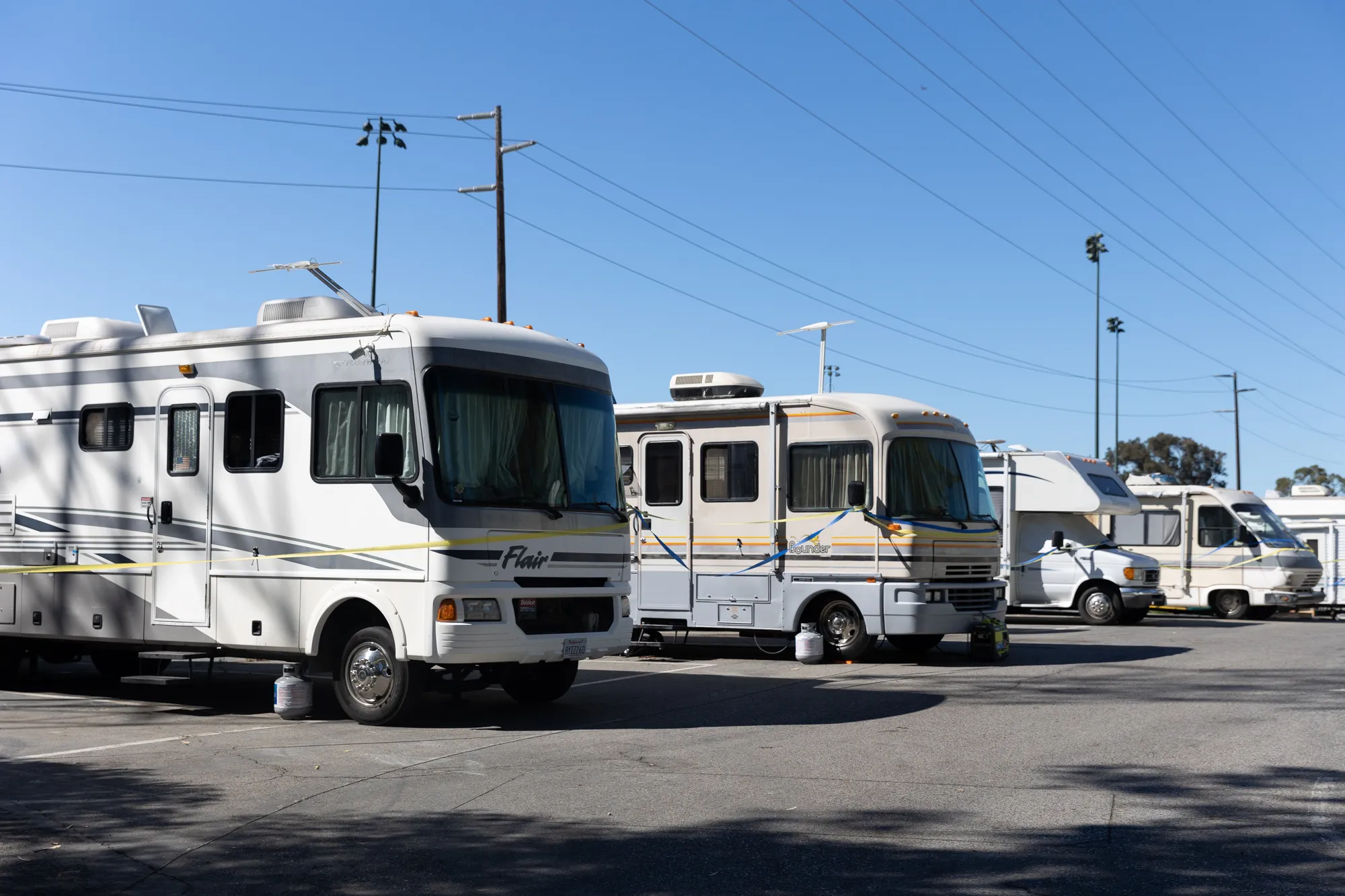
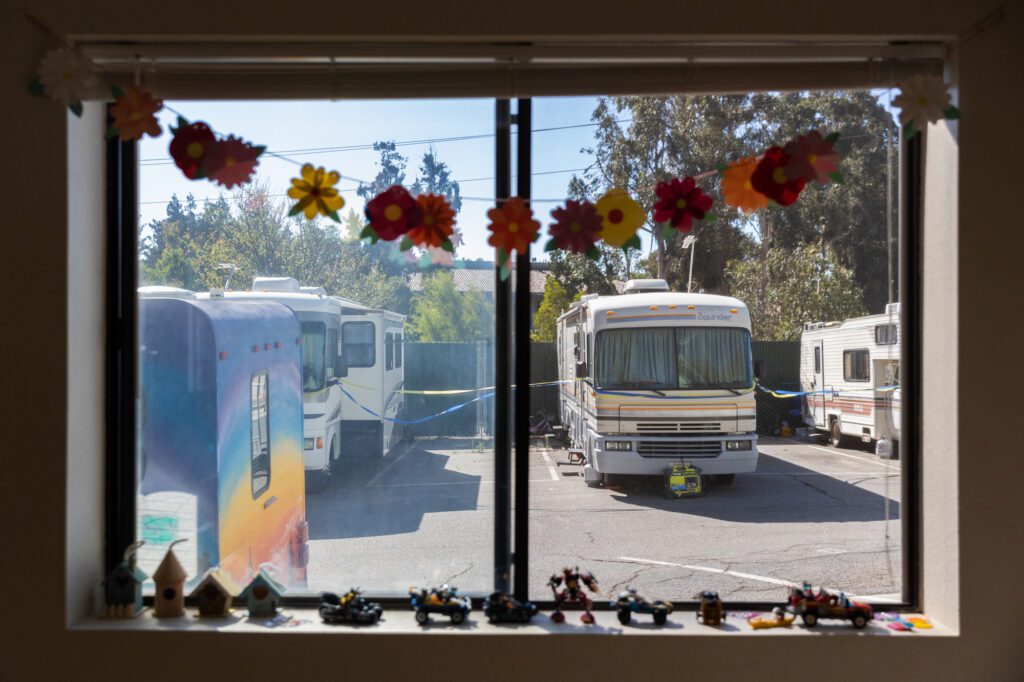
At a parking lot near the Palo Alto Baylands, 23 vehicles serve as the homes of more than 40 individuals.
The city’s first safe parking site for people who live in their cars has been around since 2021, where clients access case management, showers, a kitchen and laundry services. In theory, the residents are there for short-term stays before they are transitioned to permanent housing. But people often stay there for more than a year before being able to secure more permanent housing, according to a semiannual update provided to the City Council this week.
The report covers the second half of 2025 with data about who stays at 2000 Geng Road — and for how long. From July through December 2025, the nonprofit operator Move Mountain View reported that just 11 households associated with Palo Alto exited the program, of which only three managed to transition to permanent housing. Four others left to stay with family or friends temporarily, and the remaining four returned to living on the street or in their vehicle somewhere else — a “place not meant for habitation,” as the report categorizes it.
“Securing affordable housing in Santa Clara County remains challenging due to limited housing inventory, rising rents, strict housing eligibility requirements, and documentation barriers,” the report states. “These conditions contribute to longer program stays despite participant progress toward housing readiness.”
The average length of stay for Palo Alto-affiliated households at the safe-parking site was around 450 days for the second half of 2025, or about one year and three months. Combined with the few clients who exit the program, a person walking past the site over the course of a year would notice little if any turnover in the vehicles or people who live there. This also explains why the program is almost perpetually at capacity: There were only three vacancies for the entire second half of 2025, which were quickly filled.
Clients have the option to join a waitlist, and as of December 2025 six households signed up.
“Operationally, it’s common for interest lists to shrink naturally over time — some people will ‘drop off’ if they learn the wait will be lengthy, if they self-resolve, or if they choose another option,” the report states.
Move Mountain View aims to prioritize Palo Alto-affiliated households for entry into the program. Affiliation is determined by responses to several questions on intake, such as where someone lived prior to becoming homeless, where their job is located or where their children attend school, according to another report about the city’s homeless population from Santa Clara County.
The semiannual update on the Geng Road site lists demographic data for households in the program. For the second half of 2025, more than 80% of individuals maintained a Palo Alto affiliation.
Palo Alto’s contract with the county to lease the site for safe parking is set to expire in September, and the summer budget process could determine whether the city continues to fund the program.
The site at 2000 Geng Road was first leased to Santa Clara County in 2020, and the county partners with Move Mountain View to operate and facilitate case management. Since then, the site has expanded from 12 parking spots to 22. The county still funds the initial 12 spots, but Palo Alto covers the additional ones at around $266,000 per year, according to previous reporting. This expansion contract is also set to expire in September.
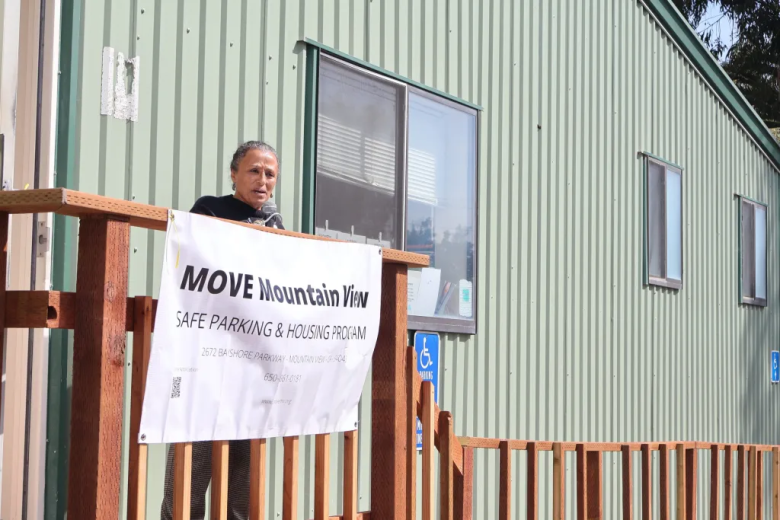
Since the safe parking site opened, city leaders have consistently supported the organization’s activities and recent upgrades. During an event at the Geng Road site, then-Mayor Ed Lauing called the expansion of the safe parking program “a significant step for the city in continuing our efforts to address homelessness in the city and the surrounding areas.” The organization has also received more than $200,000 in donations, about half of which came from large foundations.
But Move Mountain View may find difficulty convincing the city to authorize further funding.
Each year, Palo Alto distributes money to various organizations from the Community Development Block Grant (CDBG), a federal funding program from the U.S. Department of Housing and Urban Development (HUD) to assist low-income individuals and prevent urban blight. The report on the accomplishments of the 2024-25 cycle, which ended on June 30, 2025, showed that $1,107,757 was available for the city to dole out to organizations that apply with specific goals for how they would use the funding.
Move Mountain View was one of these subrecipients, with the goal of assisting 37 individuals with intensive case management. The nonprofit reported only helping six people between July 1, 2024 and June 30, 2025.
Move Mountain View received around $126,000 in CDBG funds from the city for the latest program cycle to pay for the salaries of two full-time case managers at the Geng Road site, according to public records obtained by this publication. Palo Alto spokesperson Meghan Horrigan-Taylor confirmed both positions remain vacant, and staff wrote in a report last month that “despite active recruitment efforts, this vacancy has limited the program’s ability to meet its anticipated goals.” A social worker/case manager position at Move Mountain View is being advertised on job boards like Indeed as of April 15.
“If a subrecipient does not meet the anticipated performance outcomes identified in the funding agreement, the City may require corrective actions, modify the scope of services, or reallocate unspent funds to other eligible activities,” staff continued in the report. “Continued underperformance may be considered in future funding recommendations.”
Move Mountain View did not respond to multiple requests for comment or more information. But in a previous interview with the Palo Alto Weekly, the nonprofit’s Executive Director Amber Stime touted case management as the key to the organization’s success. By learning about each client’s particular needs and limitations, case managers can help Geng Road residents find new jobs or locate family members who can assist them with permanent housing, Stime said in March 2025.
“You know what the possibilities are, where they have been in their life and you begin a conversation in terms of, ‘If not this, then how about this?'” Stime said.
Its failure to retain case managers may prove costly. As the city prepares to file for additional CDBG funding, it must approve a new list of subrecipients. The Human Relations Commission discussed the list on April 9 for fiscal year 2026-27, which includes many of the same clients as the past cycle — but notably does not include Move Mountain View.
Horrigan-Taylor said Move Mountain View did not apply for funding this cycle, and the city is currently looking at options to reallocate the unspent money that was distributed to the organization.
Palo Alto leaders will discuss and approve the list of subrecipients and associated annual action plan later this year before submitting to HUD.
This story originally appeared in Palo Alto Weekly. Riley Cooke is a reporter at Palo Alto Weekly and Palo Alto Online focusing on city government.
Leave a Reply
You must be logged in to post a comment.