

|
Getting your Trinity Audio player ready...
|
As school districts in Santa Clara County transition from at-large elections to specific trustee areas, it may also be time to consider shifting to term limits.
The county has 31 school districts that serve about 265,000 students. Only one district, Palo Alto Unified School District, established board term limits in 2018, capping it at two, four-year consecutive terms. Board members in the other 30 districts have no cutoff dates. Still, as school closures increase and parents grow frustrated, the moment may have arrived.
The school boards of today are no longer working in tandem with parents and administrators the way they did decades ago. The K-12 landscape has changed dramatically — after contending with COVID-19, the shutoff of federal funds and reduction in state dollars, fears of federal immigration enforcement keeping students at home and the threat of active shooters on campus.
Today the majority of local school districts start with one, four-year term before a trustee is up for reelection, allowing the same person to be reelected for decades. Palo Alto Unified is the outlier in the county.
Maybe two terms is too short for term limits — since the first term is the learning curve and the second term is when experience takes hold. Then just as they figure it out — they are out.
Three, four-year terms or 12 years might be the solution. That’s more than a decade in the decision-making seat. One school district in Southern California, South Bay Union School District, voted for this approach in 2020. It passed by close to 87%, although Palo Alto’s initiative passed easily with 73%.
Proponents point out term limits eliminate incumbency and open the door to enable more people to consider running. New trustees mean fresh ideas and more opportunities for diversity, shaving off stagnation from long-term board members whose energy levels have waned.
Opponents argue term limits erase institutional knowledge, which is critical when addressing complicated problems such as school closures and accountability. Without it, decisions would fall into the hands of appointed superintendents and administrators, although they too could be booted out if the board doesn’t agree with their agendas.
Families in a number of South Bay school districts might be ready for term limits.
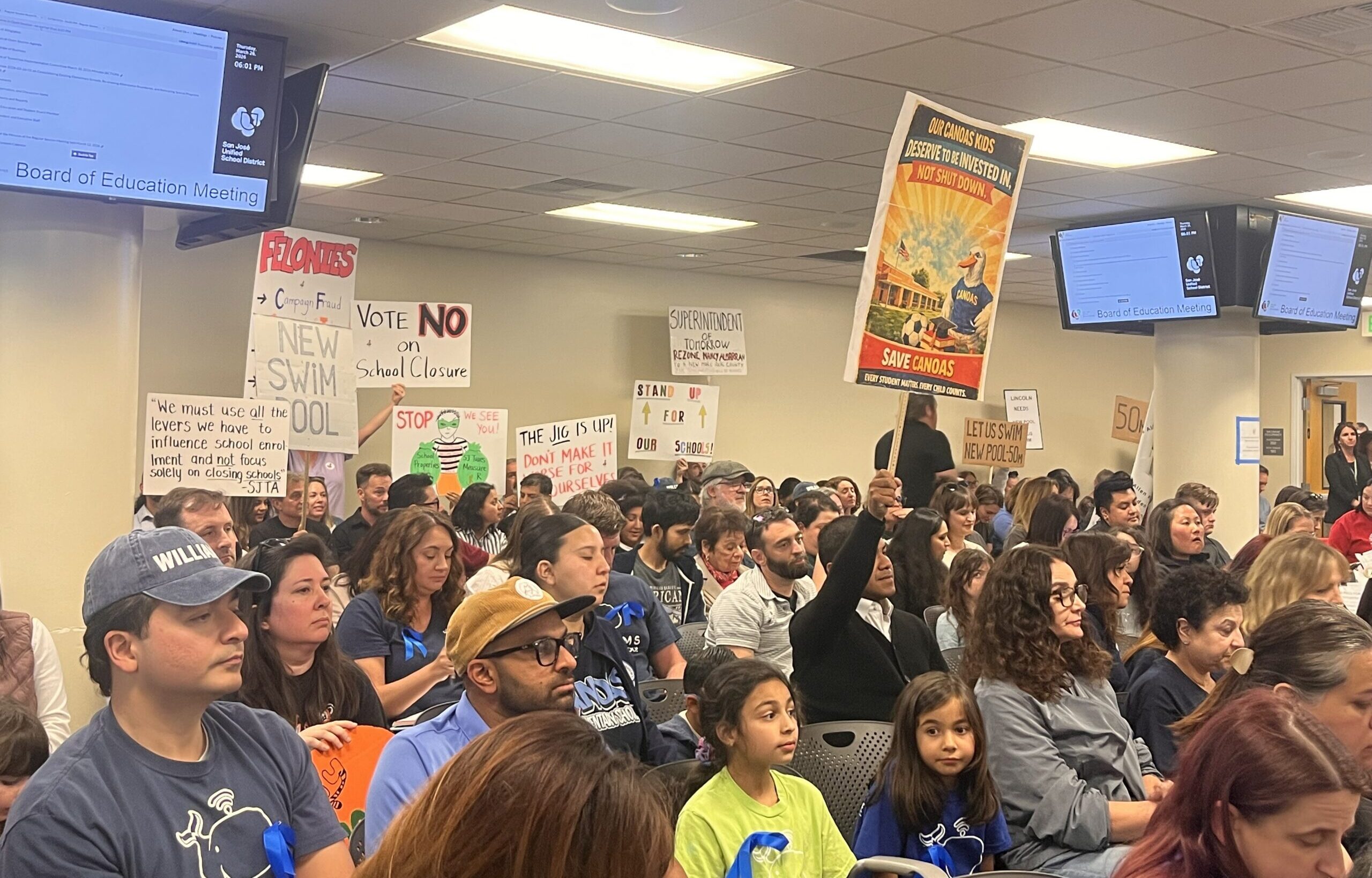
Parents in the San Jose Unified School District, the largest in the county with roughly 25,000 students, were in an uproar when the board voted to close five schools in March, yelling “shame on you” to the trustees. They vowed to vote for trustees who listen and push the others out.
SJUSD isn’t the only school with disgruntled families. Three other districts — Alum Rock Union which closed six schools, Berryessa Union which closed three schools and Franklin-McKinley which closed three schools — are being pressured as well. All have declining enrollment and financial constraints.
School board seats are one of the last remaining elected positions that don’t require term limits in California. The state has term limits for the governor, state senators and assemblymembers, county board of supervisors and most local city councils.
The decision is ultimately in the hands of dissatisfied parents, who live in the school districts that are not in alignment with their beliefs or goals. If they are unhappy they can vote out the trustees and change the board’s dynamic.
But the problem is most people pay little attention to school board elections other than the parents engaged in their schools — and even then, turnout is often low. Most of the time incumbents win because they have the name recognition.
Change is likely limited without term limits. Twelve years on a school board should be sufficient, especially a healthy board committed to its mission — putting children first.
Moryt Milo is an editor at San José Spotlight. Contact Moryt at [email protected] or follow her at @morytmilo on X.
Leave a Reply
You must be logged in to post a comment.