

|
Getting your Trinity Audio player ready...
|
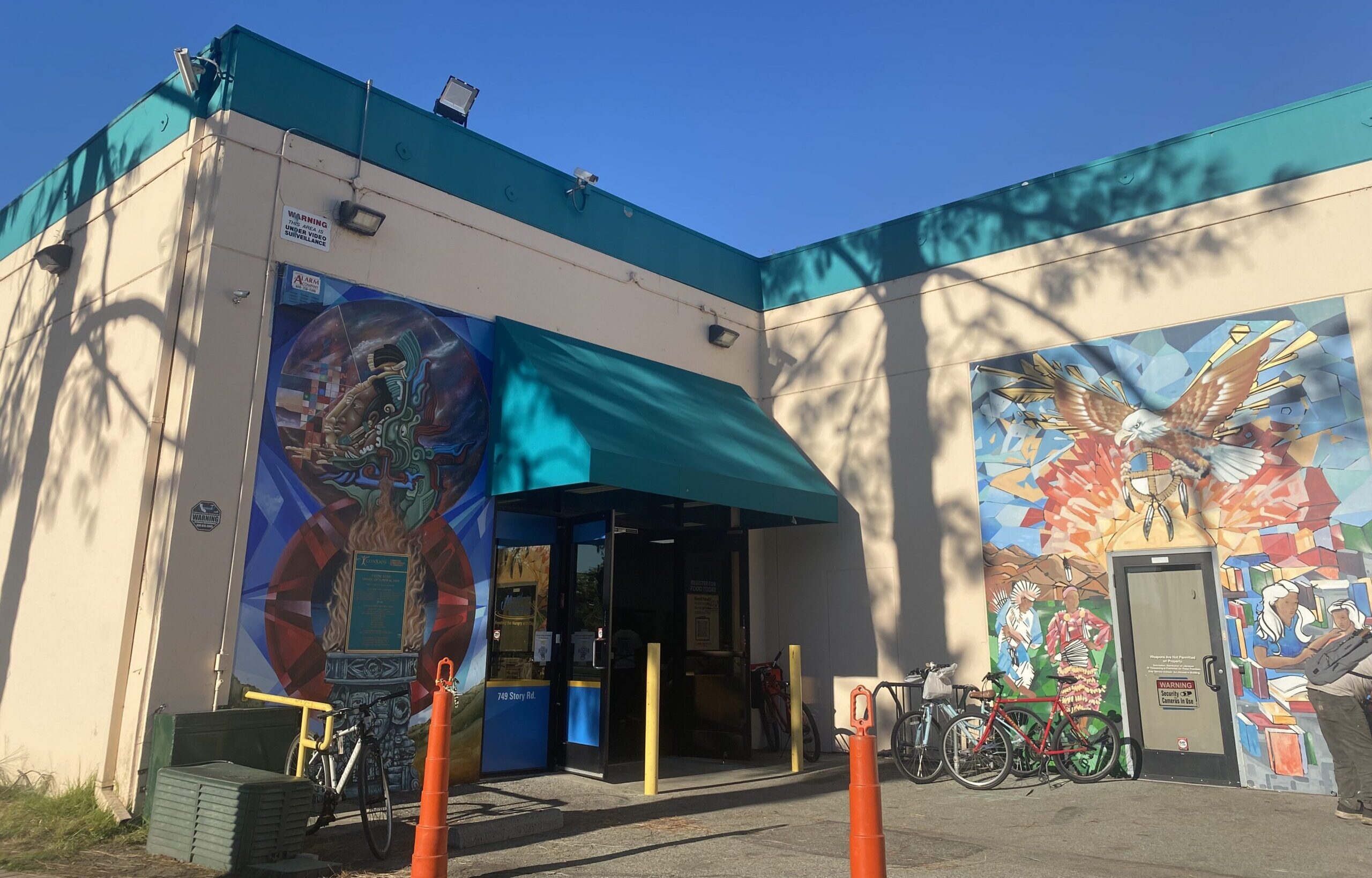
Two community murals connected to San Jose youth and the city’s Indigenous community were painted over after a building was sold, sparking a dispute between the former and current owners over whether the artwork was supposed to remain.
A lack of communication may have been at fault, resulting in no written agreement between the building owner ConXión to Community and the buyer Martha’s Kitchen about what would happen to the murals during the sale last October. A dispute arose on Aug. 8 when ConXión President and CEO Lori Ramos Chavez saw the murals had been painted over. She claims a verbal agreement with Martha’s Kitchen had been discussed to keep them in place. But Martha’s Kitchen sent ConXión a letter dated Oct. 27, 2025 that said the building was going to be repainted — including the murals.
@sanjosespotlight Residents in East San José are upset over the removal of two murals they say represent the community’s history and culture and should have been preserved or replaced through community input. Regional Reporter Maryanne Casas-Perez takes a look. Story 🔗 in our bio.
Bill Lee, executive director of Martha’s Kitchen, said the organization had planned to repaint the building because the exterior paint was faded and peeling, and they wanted to waterproof the building to prevent leaks. He said it had nothing to do with racial or cultural issues.
“I realize that (the murals) represented those things for them, but we’re in a business solving hunger,” Lee told San José Spotlight. “That’s the entrance to our dining hall, and that doesn’t represent what we’re all about.”
Lee said Martha’s Kitchen plans to have a new mural created by students at a local high school. The planned mural will depict food being grown, prepared and consumed, reflecting the work of Martha’s Kitchen, he said.
But Ramos Chavez said her organization had asked Martha’s Kitchen during the sale to preserve the murals because of their importance to the community. She said Martha’s Kitchen’s leadership agreed during multiple walkthroughs of the building.
“We considered (putting it in writing), but it was a gentleman’s agreement,” Ramos Chavez told San José Spotlight. “We said, ‘We really like these. They’re part of the community. They’ve been here for a while,’ and (Bill Lee) said, ‘Oh yeah, I agree. If they’ve been here for a while, they should stay.’”
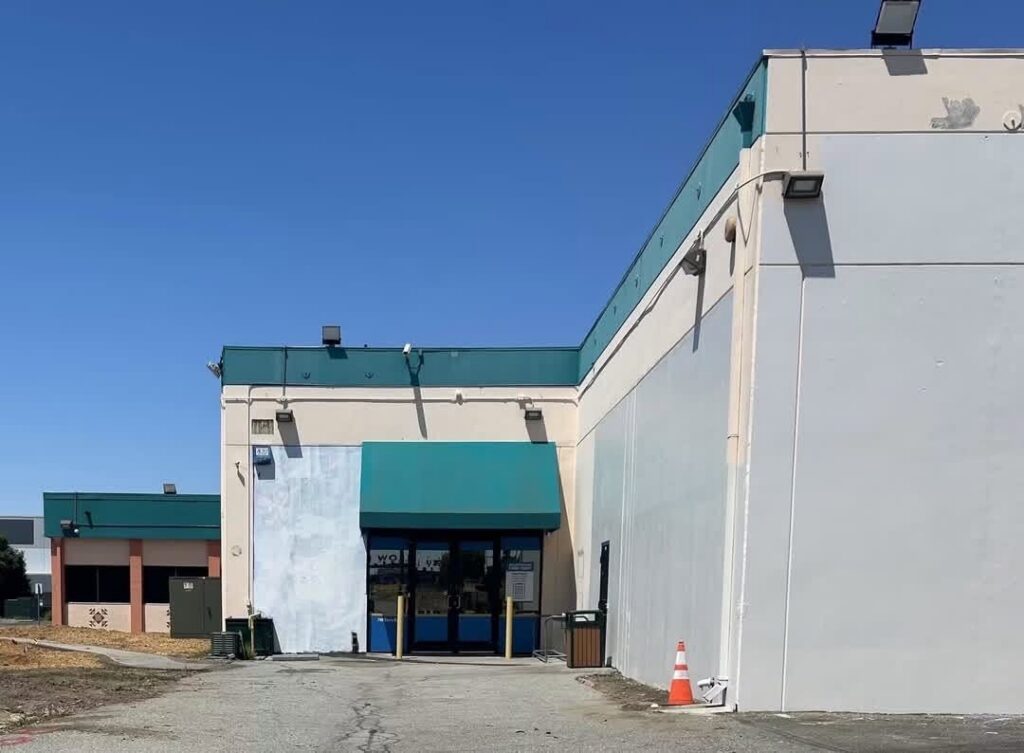
ConXión sold the 32,000-square-foot building to Martha’s Kitchen, but continues to operate there after leasing back about 10,000 square feet for 10 years, Ramos Chavez said. The organizations continue to work together on some community programs despite the mural dispute.
The murals were created by artists Carlos Rodriguez and Jimmy Fonseca. Rodriguez created one mural, while Fonseca worked with children ages 6 to 12 on the other as a community project, according to Ramos Chavez.
The other glitch in the sale pertains to ConXión and Rodriguez. They had an written agreement in 2020 that Rodriguez would receive $6,500 if the mural was ever removed. Ramos Chavez said that since Martha’s Kitchen purchased the building it is responsible for compensating Rodriguez.
Lee disputes ConXión’s interpretation of the agreement. He said Martha’s Kitchen did not receive the mural agreement during the sale and was only handed the agreement after the organization told ConXión it intended to repaint the building.
Rodriguez said he and his wife contacted Martha’s Kitchen before the mural was painted over and offered several alternatives, including compensation for removing the mural, having Rodriguez create a new mural or incorporating portions of the existing work into a new design.
Rodriguez said they also provided information about the legal protections they believed applied to the artwork, but he said he did not receive a response from Martha’s Kitchen before the mural was painted over.
“It was funny, cause maybe a week before it (was painted over), I looked at the mural,” Rodriguez told San José Spotlight. “We passed by there, and I looked at my wife, and I was like, ‘You know what? I’m hella glad that they didn’t go over the wall and they just decided to leave it.'”
Rodriguez also went a step further and sent a Nov. 7, 2025 letter to the city asking whether the mural could receive historical recognition. An employee in the city’s Office of Cultural Affairs responded on Nov. 19 and said because the mural was on private property, the city’s Public Art Program did not have jurisdiction and there was no process to register artwork on private property through the program.
The cultural affairs employee said the office had consulted the Planning Department about other forms of protection and pointed Rodriguez to San Jose’s Historic Resources Inventory, which includes a small number of murals. But the city noted that inclusion in the inventory “does not provide protection from demolition on private property.”
The dispute has generated a broader conversation about what happens to community artwork when it is located on privately owned property.
Ramos Chavez said the community’s concern is also about whether culturally significant artwork should be preserved when ownership changes. She said native-created artwork can carry significance tied to history, identity, culture and connection to place.
La Raza Roundtable has also gotten involved in the dispute. In an Aug. 13 letter sent to San Jose Mayor Matt Mahan and the City Council, the group called the murals “cultural landmarks” that honored the history, identity and experiences of Indigenous and Chicano communities in San Jose. A sage plant on the property used by members of the local Indigenous community was also removed, according to La Raza Roundtable and Ramos Chavez.
“Erasing them without community consultation was a callous and insensitive action that sends a painful message that their stories are disposable and unworthy of preservation,” La Raza Roundtable Co-Chairs Craig Pasqua, Rose Amador and Raul Colunga wrote.
Despite the dispute, Ramos Chavez said ConXión and Martha’s Kitchen have continued collaborating to provide food for ConXión’s National Night Out event earlier this month and sandwiches for ConXión’s employment program.
Contact Maryanne Casas-Perez at [email protected] or @CasasPerezRed on X.
Leave a Reply
You must be logged in to post a comment.