


|
Getting your Trinity Audio player ready...
|
The future of the Silicon Valley BART extension has once again been thrown into doubt, after transit officials revealed this week the multibillion-dollar project is not on course to meet its budget targets.
The plan to bring BART service to downtown San Jose and Santa Clara has faced increasing financial roadblocks caused by a variety of factors, including a nationwide spike in construction costs as well as project delays, according to officials with VTA, the public transit agency overseeing the effort. The cost increases make it unlikely VTA will be able to deliver the four-station extension under the current budget target of $12.7 billion — prompting the project’s backers to consider major revisions.
Tom Maguire, chief megaprojects officer for VTA, said it is too soon to provide an updated cost estimate, but that more details will be presented in December to the full board — comprised of elected officials from throughout Santa Clara County.
“The project is facing challenging budget pressures, but we’re also confident that there are a lot of creative ways we can move forward with this,” Maguire told San José Spotlight.
The revelation has opened the possibility that VTA may pursue alternatives to the current plan, which calls for all four stations along the 5-mile extension to begin service by 2037. While no concrete proposals have been brought forward, officials at a Thursday VTA board committee meeting suggested they may opt to delay portions of the work until more funding can be secured. For example, this could mean identifying a number of stations to complete first, and returning to the rest at a future date.
San Jose Mayor Matt Mahan, who serves on the VTA board, said while he still wants to see the full four-station extension completed eventually, he believes a phased approach may now be the best option.
“I think the full project vision that was promised to the voters has really been … the right vision,” Mahan said during Thursday’s meeting. “But cost escalation is such that it does feel to me pretty clear at this point that we’re not going to be able to deliver the whole thing in one fell swoop.”
Over the course of Thursday’s committee deliberations, some board members also raised the possibility of pivoting to less expensive transit technologies than a full rapid transit buildout, such as light rail — if only on an interim basis.
“It’s important for us that any cost-effective solution is on the table, so we’re taking a pretty open-minded approach to this,” Maguire said.
The original plans for the Silicon Valley BART extension, unveiled in 2014, projected a $4.7 billion cost and 2026 opening date. But since then, the effort has faced a series of setbacks, as well as fierce pushback against its single tunnel design.
VTA officials said an array of factors have combined in recent years to drive construction costs ever higher, including the Trump administration’s tariff policies, competition from the massive data center buildout and the war in Iran, which has driven up energy prices. They pointed to several other major transit projects across the U.S. that have also faced delays and budget increases as a sign that the BART extension is not alone in feeling the economic pressure.
However, even had construction costs stayed in place, the project still would have faced a budget shortfall. For the past year and a half, VTA has been working to fill a roughly $700 million funding gap created when a federal transit grant, approved under the Biden administration, came in lower than anticipated. That effort has identified some cost savings, but not enough to make up the difference, officials said.
Meanwhile, the grant process has not yet been completed, and balancing the project’s budget will be key to a successful application, VTA officials said.

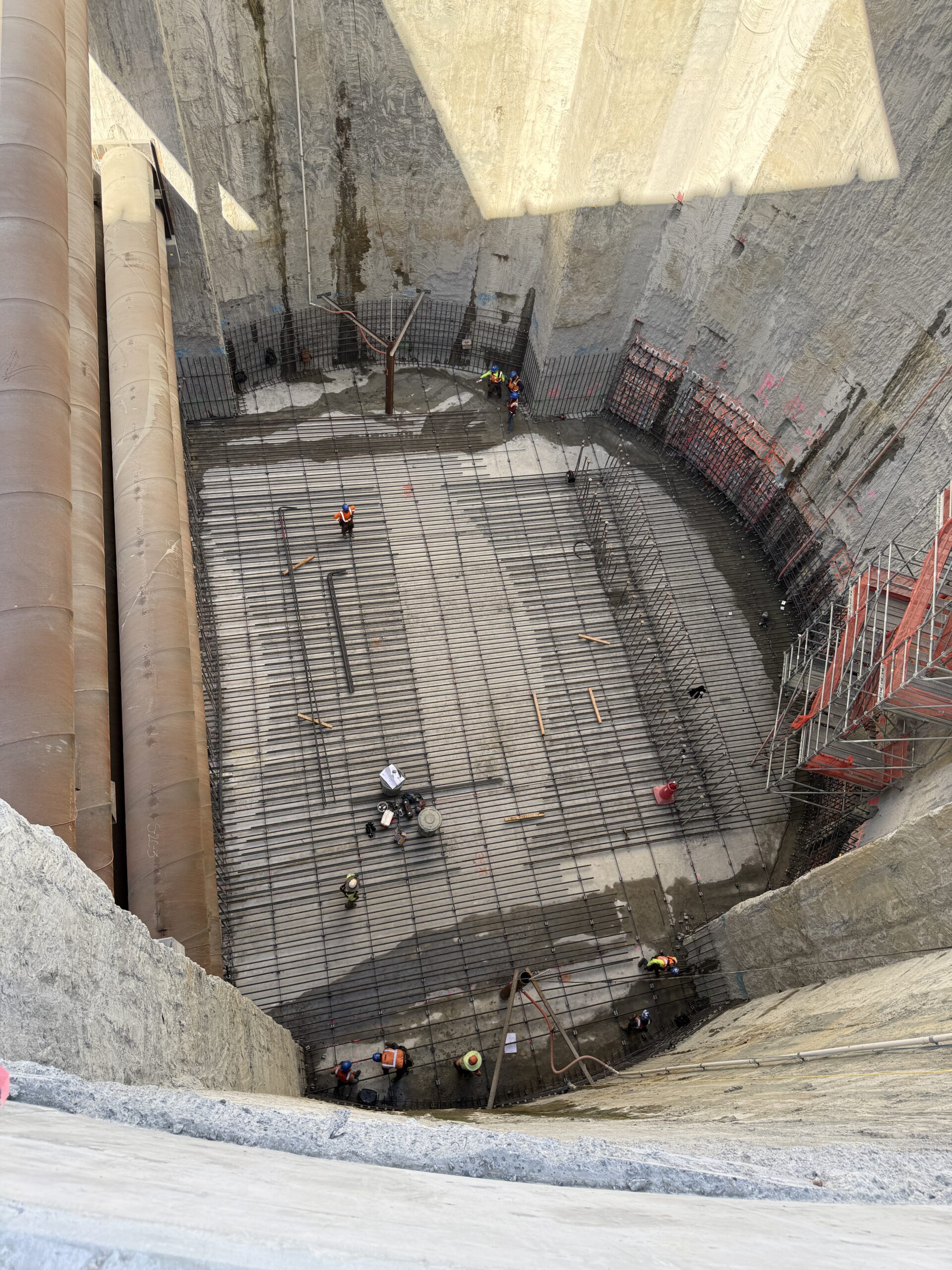
VTA officials said for now, all of the alternative options for the project under consideration assume it will move forward with plans to excavate a 5-mile, 53-foot diameter tunnel. The transit agency recently completed work on the underground structure that will be used to launch the boring machine, and tunneling work is still on track to commence in early 2028, Maguire said.
The latest revelations have further sharpened long-standing frustrations over VTA’s handling of the project, including criticism the agency has not been fully transparent as financial realities have shifted.
Santa Clara Councilmember Suds Jain, who serves on the VTA board, questions why the agency has waited until now to raise the budget alarm.
“They’ve known, but they’re not telling us,” Jain told San José Spotlight. “They’re just leaving the board in the dark.”
Contact Keith Menconi at [email protected] or @KeithMenconi on X.

Leave a Reply
You must be logged in to post a comment.