

|
Getting your Trinity Audio player ready...
|
Access to the Dr. Martin Luther King Jr. Library room housing archives of San Jose and Santa Clara County’s rich history is about to become more limited if proposed cuts to the city’s budget pass.
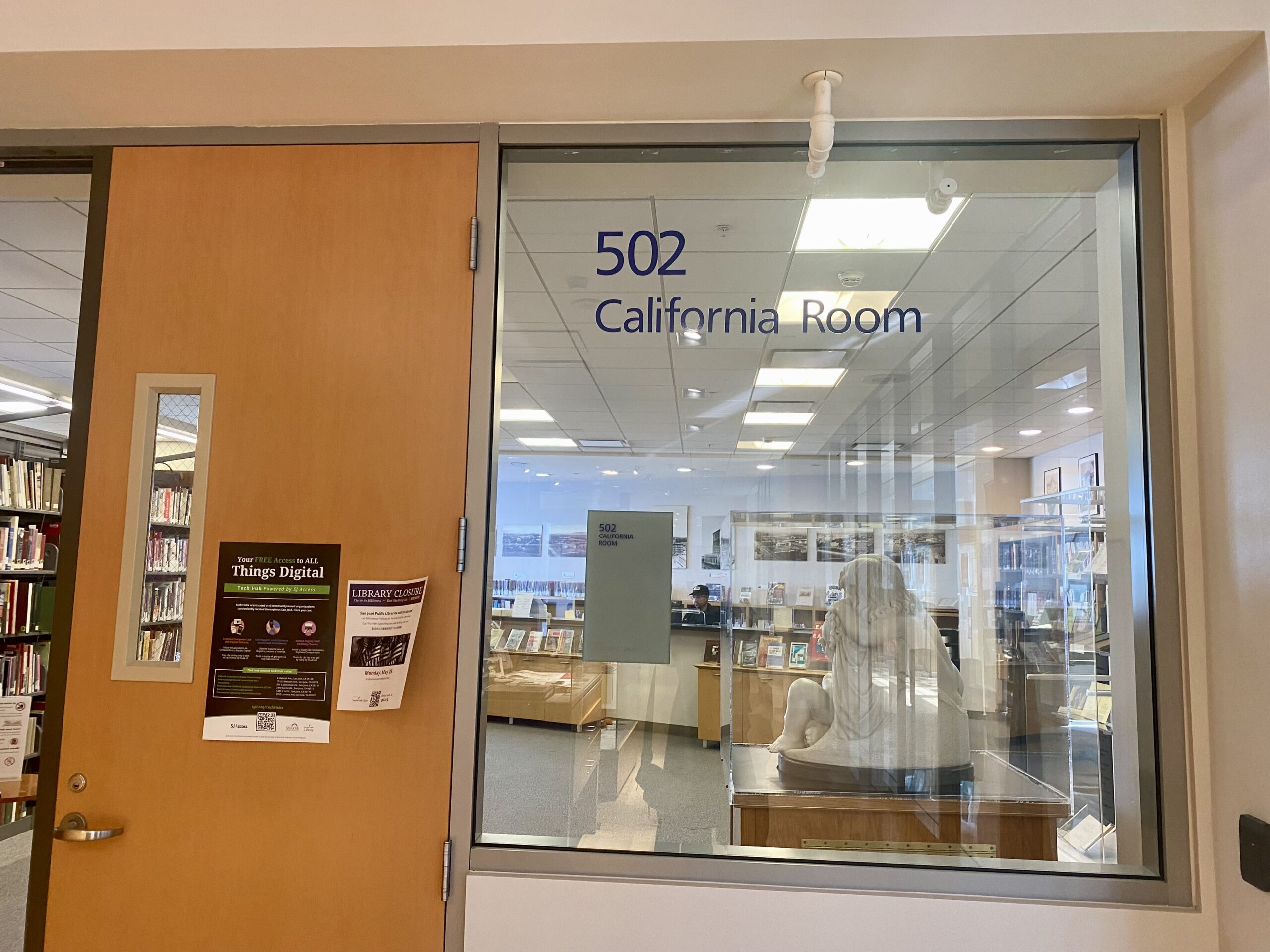
The California Room inside the library may close its services to the public as the city looks for ways to tackle a $50 million shortfall, according to San Jose’s proposed operating budget for the upcoming fiscal year. The budget would eliminate the librarian and clerk positions, as well as two part-time positions to save the city nearly $400,000 annually.
While retrieval of physical materials may be available by appointment, advocates and local historians have decried this move, claiming it will severely limit access to the archives. By eliminating the librarian and clerk positions, people will lose essential guides to the room’s resources and curated exhibits.
“A lot of the exhibits that they do are untold stories of our own area, of our own community, things that (we) have not learned in (our) schools,” Darlene Tenes, board member at nonprofit History San Jose, told San José Spotlight. “Everything in there is very delicate artifacts, and you can’t necessarily find stuff online because you have to know information. You need a person to speak to.”
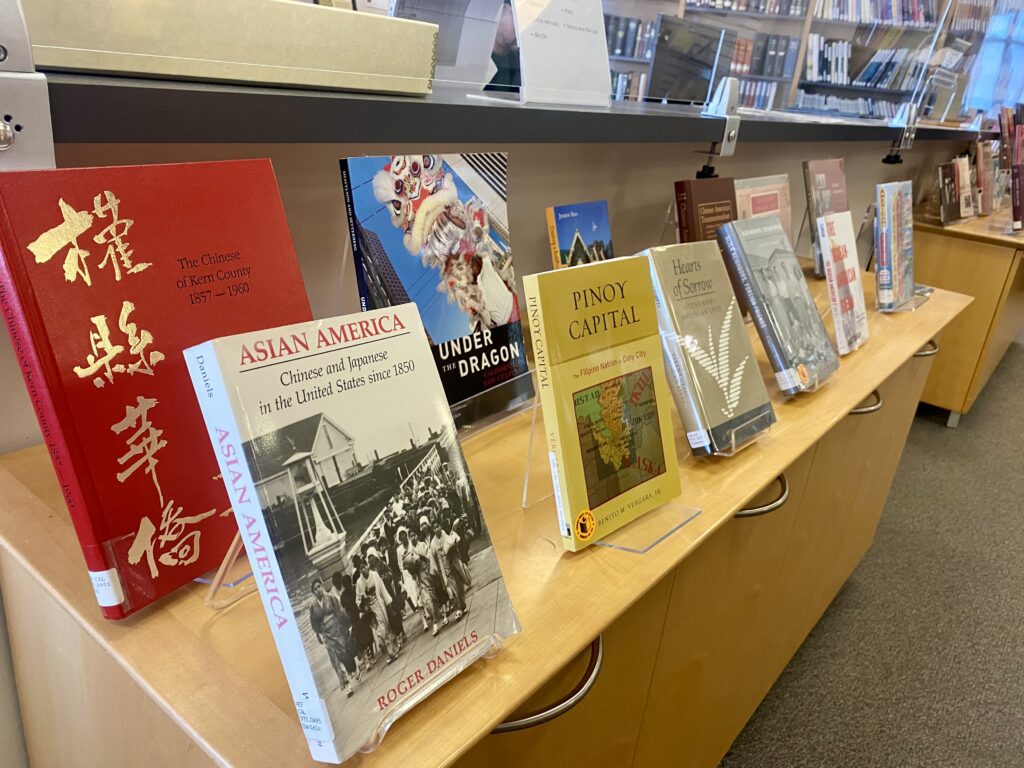
The room houses a trove of books detailing the various cultural groups who make up Santa Clara Valley, maps that show what San Jose was like decades before high-rises dotted downtown, resources that spell out which neighborhoods were redlined to prevent people of color from access to financial services and more. Last year, nearly 5,500 people stepped through the doors to sink into a snippet of the region’s history.
A library spokesperson was unavailable for comment.
Lisa Marie Avila, board president of the Portuguese Historical Museum, said she’s learned more about her Portuguese heritage not only as a California native, but as a San Jose resident, while poring through resources in the California Room. The archives have given her more insight than any classroom, she said.
Portuguese immigrants began arriving in the region in the 1850s, picking fruit in orchards and tending cattle in dairy farms. Avila’s dad and uncle worked on the last dairy farm in San Jose.
“I think it’s important to understand where we’ve come from, and how the foundation of which this valley was built, which our state was built,” she told San José Spotlight. “The true history — not the history that people want to feed to us.”
As the person in charge of the Portuguese museum, the California Room offers an invaluable resource for curating exhibits, Avila added. As local historians on the museum’s board of directors die, along with the knowledge they carried with them, the library’s archives will be even more pertinent.
“Not being able to have access to the California Room, that’s going to make my research a lot more difficult,” Avila said.
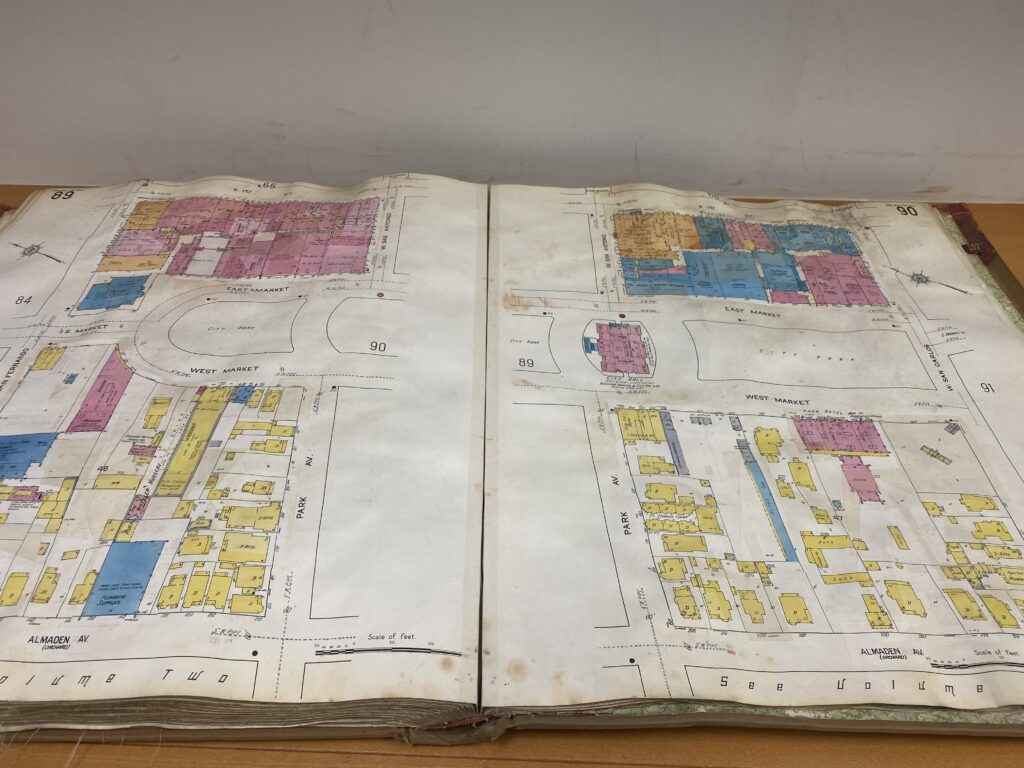
Rosanna Alvarez, a San Jose State University Chicano Studies professor and co-founder of East Side Magazine, has relied on the California Room for local information, starting in her youth to her career as a lecturer and organizer. The room holds old newspapers, leaflets and original materials showing curious learners what the region was like in the past and what issues plagued the community.
“During these very specific kinds of times, we’ve seen so much erasure of our public archives, whether its research centers, archival centers, creative hubs, defunding of the arts,” Alvarez told San José Spotlight. “With this particular situation, it’s a travesty for so many reasons.”
Not only does the California Room house sensitive materials, the staff also curate and add to the collection, she said. They are there to direct curious minds with a wealth of information. The room is an evolving exchange of ideas and resources that highlight nuanced narratives.

Alvarez points to how communities are reeling from recent allegations of how Cesar Chavez sexually abused women and how to make sense of his legacy. While schools honed in on one individual’s efforts in the farmworker rights movement, Alvarez sees the California Room as the counterbalance to providing people with a bigger picture of community leaders and movements as a whole.
“Curriculum is a way of allowing us to tell our history through a particular lens,” she said. “The power of the California Room (is) it holds so many moving pieces of that living history in ways that are often overlooked as necessary and essential. (To limit it) would totally erase access to many essential parts of our story that do more than just echo big narratives.”
Contact Joyce Chu at [email protected] or @joyce_speaks on X.
Leave a Reply
You must be logged in to post a comment.