


|
Getting your Trinity Audio player ready...
|
Santa Clara County officials attempted to be as strategic as possible with the services they slashed due to a $787 million deficit predominantly caused by deep federal cuts. The shortfall forces nonprofits on the front line to constrict their services.
Nonprofits across the board will be particularly hampered in prevention efforts in order to preserve core services. Financial aid to domestic violence survivors has been reduced, while other programs such as mentoring at-risk youth and therapeutic support for uninsured people have been cut altogether. Community leaders say these services are still essential.
“Because of Measure A, and because the county was very careful with belt tightening and their prioritization of the safety net services, it could have been worse,” Kyra Kazantzis, CEO of the Silicon Valley Council of Nonprofits, told San José Spotlight. “I would say the most impacted departments and services are in the public health arena, in the behavioral health arena and in prevention services of different sorts, (including) youth.”
A critical part of preserving services came after county voters approved Measure A, a five-eighths cent sales tax increase, last November. The measure adds $337 million in annual revenue, which officials have said will be used to bolster local public hospitals.
The H.R. 1 federal spending bill creates $1 billion in annual losses for Santa Clara County, slashing funding for things such as Medi-Cal and food aid. Adding to the challenges is the county’s slow growth in property tax revenue, where expenses continue to outpace money coming in.
Nonprofits serving domestic violence survivors will see a 10% reduction in county funding this fiscal year, down from an initially proposed 19%. The cuts will come primarily from financial assistance programs that help pay for rooms, transportation and food while survivors are in hotels.
“We’re prioritizing responding to crises, when people need crisis services or hoteling to get out of an unsafe situation,” Rachel Montoya, CEO of Community Solutions, told San José Spotlight. “But the length of time we’re going to be able to support that client is going to be impacted.”
This could increase homelessness for survivors, or it could mean the victim returns back to their perpetrator because there’s not a safe place for them to go, Montoya said.
Colsaria Henderson, CEO of Next Door Solutions to Domestic Violence, said cuts will not only affect the work they do, but also the group’s ability to refer people to other medical and homeless services, since many nonprofits work hand in hand.
“The cuts to our community are a domino effect,” Henderson told San José Spotlight. “Our client assistance funds are not a ‘nice to have.’ They’re a necessity in the work that we do.”
The instability of government funds has caused organizations such as Fresh Lifelines for Youth (FLY) to rethink its funding strategy and regroup on what core programs it wants to maintain in spite of the winds of political change. That includes reaching out to philanthropy groups for funding.
As an organization that focuses on diverting youth from the school-to-prison pipeline, FLY Managing Director Kristopher Scott said the impacts may be seen a few years down the road with more people in the juvenile justice system.
“I’ve been doing this for a while, and I don’t know what else these schools can go to that will be comparable to what we and a couple other nonprofits were doing on campus,” Scott told San José Spotlight.
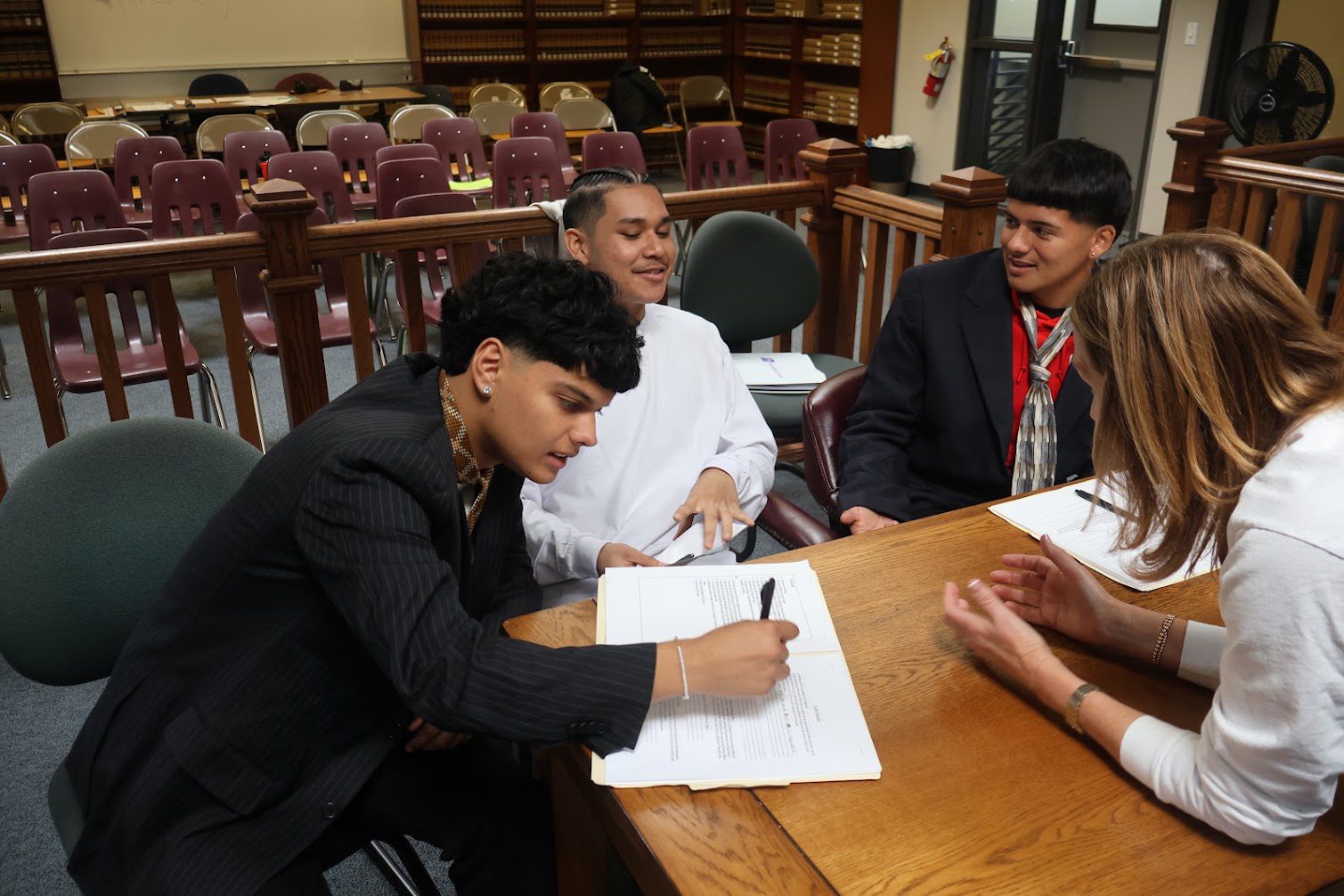
This year, FLY has had to cut about half of its programming in the county, including its middle school program providing one-on-one mentorship to at-risk youth and a popular legal education program that encouraged civic engagement. These programs served about 500 youth annually.
“Having done this for so long, the funding landscape ebbs and flows all the time,” Scott said. “I hear from my predecessors that things (that happened) in the early 2000s are very similar.”
Don Taylor, CEO of Catholic Charities of Santa Clara County, said these cuts are happening during a time when demand for services grows as more people are pushed off Medi-Cal and other safety nets.
“Providing prevention services will better support folks from having to use the higher cost crisis services,” Taylor told San José Spotlight. “When those prevention services aren’t there, the needs tend to build and build, and then access happens at a much later point.”

Catholic Charities also had to stop its school programs supporting at-risk youth, in addition to therapeutic services for uninsured people, a wellness program encouraging healthy socialization among older adults and more.
Overall, the nonprofit will see a reduction of about $500,000 from county funding out of the $30 million of government contracts.
What keeps Taylor and others going in challenging times is knowing the services they provide are making a difference, he said.
“We’re focusing on serving families who are at risk of becoming unhoused, seniors on fixed incomes, immigrants, low-income workers,” Taylor said. “It’s our mission to do all we can to combat poverty, to create neighborhoods in the county where anybody has the potential to thrive. We see the impact. So that drives everybody.”
Contact Joyce Chu at [email protected] or @joyce_speaks on X.
Leave a Reply
You must be logged in to post a comment.