


|
Getting your Trinity Audio player ready...
|
For homeless people in San Jose, sweeps are a fixed part of their lived experience — the stress of packing up their belongings, the fear of losing their valuables and the hunt to secure another corner to camp until they are kicked out and forced to start all over again.
But for residents such as Carlos, who is preparing for his camp to be swept by Caltrans next week, the impending instability stings more than usual.
He previously lived in a large, unsanctioned encampment in East San Jose called “the Jungle,” which the city dismantled earlier this year. About 100 homeless people had been living along Coyote Creek around Story Road, across from Happy Hollow Park & Zoo.
Before the city cleared its last large homeless encampment this spring, officials promised to provide shelter for all Jungle residents. But Carlos, 48, said outreach workers missed him and a handful of others. When the city swept the Jungle, many of the homeless residents living there moved further down the creek by Olinder Park, to the trails behind the Interstate 280 overpass on Caltrans land.
“I felt deceived,” Carlos, who asked not to be identified by last name for privacy reasons, told San José Spotlight through a Spanish speaking translator. “We weren’t taken into account … being forgotten here, it feels bad.”
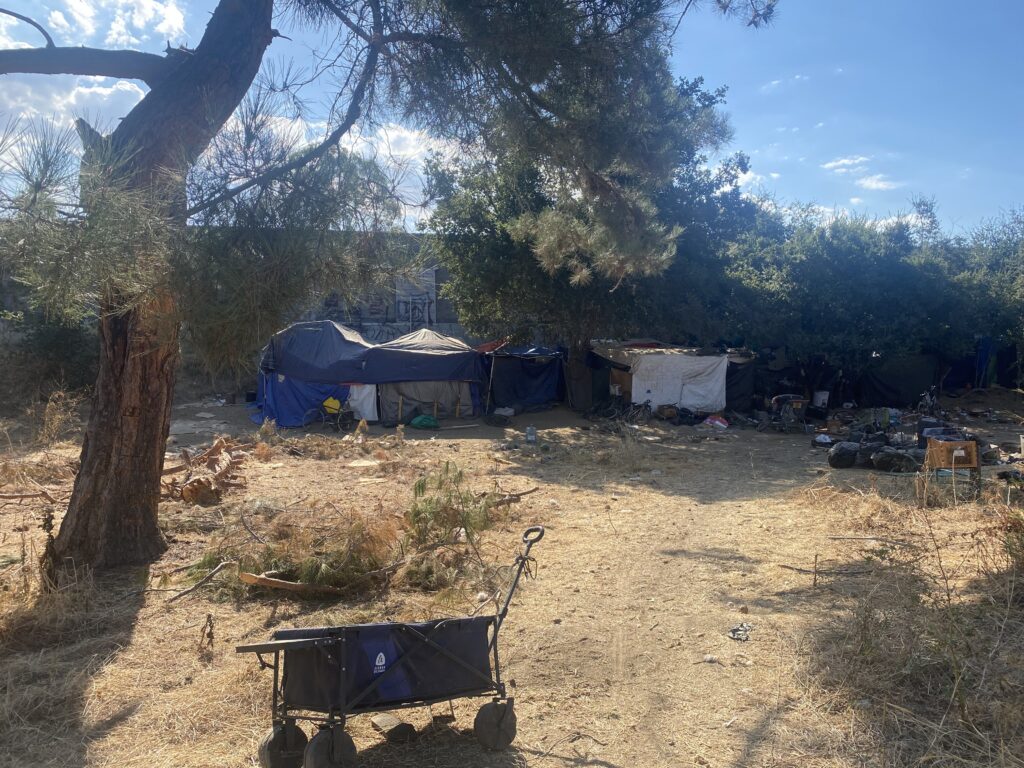
Caltrans plans to start sweeping the area north of I-280 on Monday at McLaughlin Avenue, Woodborough Place and Olinder Park until the end of October.
Emma Hartung, an organizer with Showing up for Racial Justice, estimates the Jungle sweep left about 40 residents without shelter, contrary to the city’s claim that it housed everyone. Last week, she counted 45 homeless people living by Olinder Park, many of whom came from the Jungle, she said. This week, she saw 36 people at the encampment. A Caltrans spokesperson gave a count of 20 people in the area.
Hartung is among a group of advocates who have been working to secure them services. She brought about a dozen of the homeless residents to the San Jose Housing Department office last week to see if city officials could provide them housing ahead of the Caltrans sweep. When she returned the next day with six residents, she said housing officials called the police, which prompted them to leave.
“We’re disappointed city housing sent (the San Jose Police Department) instead of meeting with their own constituents who they had promised housing to in March,” Hartung told San José Spotlight. “But (homeless) residents and their supporters remain ready to meet with city housing and Caltrans to arrive at a solution that will enable them to stay here or stay somewhere stable while they wait out this rainy winter and wait for their housing.”
Housing spokesperson Sarah Fields said the department couldn’t comment on the history of people engaged in homeless services.
“However, it is worth noting that the city practice when a large-scale encampment abatement is scheduled is to provide significant outreach and engagement prior to the start of the abatement,” she told San José Spotlight. “That was the case at Coyote Meadows.”
While Mayor Matt Mahan claims people who reject shelter don’t want to be housed, leading him to push for citations and arrests of those who repeatedly refuse housing, Assemblymember Ash Kalra said these residents want to be housed. His district covers East San Jose and South Santa Clara County.
Kalra’s office has been involved with helping these homeless residents obtain identification cards, and has been pushing for the sweep to be delayed until people are housed.
“I think sweeping someone away from a place where they have some degree of stability without offering them housing is cruel,” Kalra told San José Spotlight. “There are things (San Jose) can do to make the conditions there better for both themselves as well as surrounding neighborhoods, like restrooms or dumpsters. I would encourage that until they’re able to find them housing. But to suggest that somehow these folks have rejected housing is simply not true.”
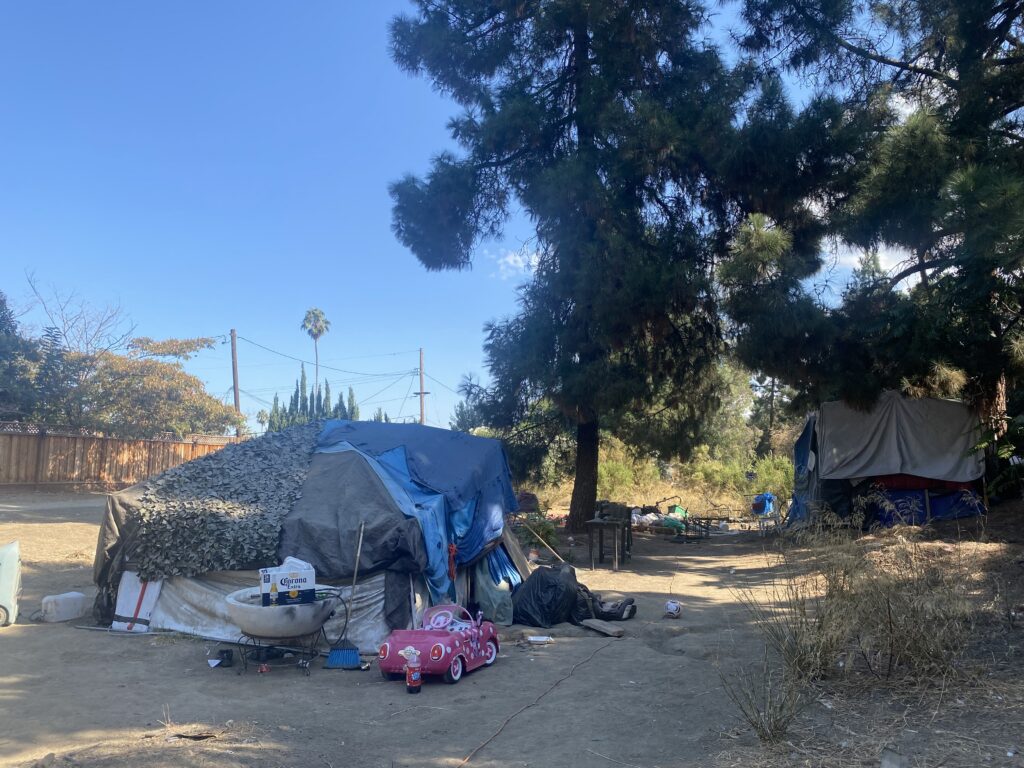
Caltrans spokesperson Pedro Quintana said they work with local agencies to help people find shelter options.
“When Caltrans prepares to remove an encampment that presents a threat to infrastructure or people, Caltrans notifies social service providers and local governments of the estimated removal date and time so that those providers can conduct outreach to connect people experiencing homelessness with essential services and available shelter (or) housing options that can be used now or in the future,” Quintana told San José Spotlight.
Not everyone at the camp went under the radar when outreach workers first contacted residents ahead of the Jungle sweep. Some homeless residents such as Jobino Medina Sarabia received a shelter placement in the Cerone tiny home village in North San Jose. But he said he couldn’t accept it because it was too far from the things he needed, including his doctor in East San Jose.
“There’s nothing close by,” he told San José Spotlight through a Spanish speaking translator. “That isn’t housing, they basically made a new prison and sent people there.”

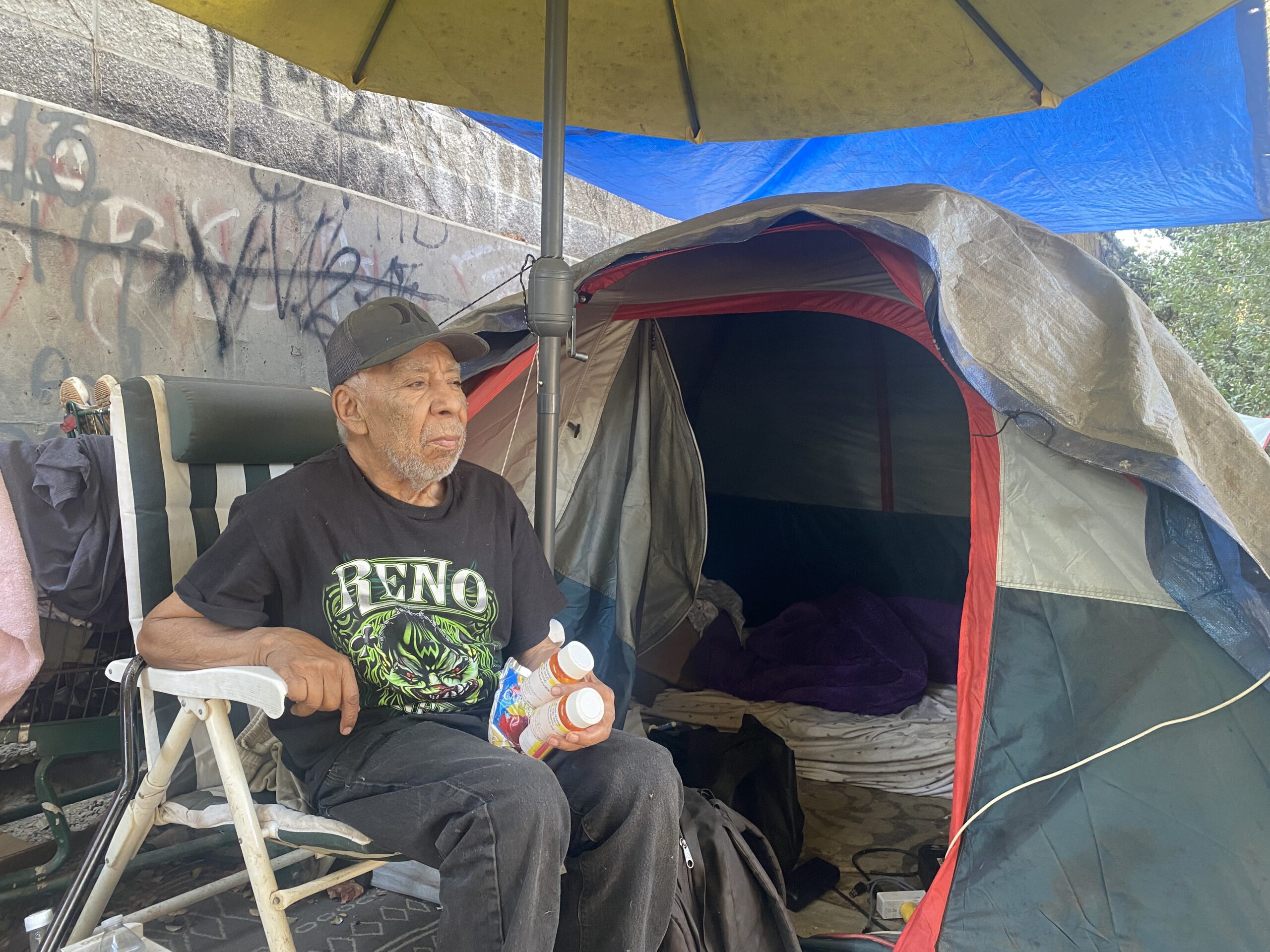
Sarabia, 77, sits on a foldable chair underneath an umbrella outside his tent on a scorching October day. Creases are etched around the corners of his mouth and bags hang under his eyes. He limps when he takes a few steps and needs a walker to get around.
He has been homeless for more than a decade when his brother died and he could no longer keep up with rent. He has been living in and around the Jungle since.
Sarabia uses his walker to go to a nearby store and takes the bus to a Valley Health Center clinic on Tully Road. He sees the doctor regularly for his health conditions, including issues with his prostate. He said he’s on the housing waitlist, but it’s not clear when he’ll get a placement since the shelters are full — but it would have to be somewhere close by, he said.
He moved further down the creek when San Jose cleared the Jungle, and said he will need to find another spot to camp when Caltrans clears his current location.
“I felt bad because I didn’t have anywhere to go, and it’s not like I’m gonna feel good about being kicked out,” Sarabia said. “(My ideal situation is) to not have to boil my water, and then when it rains, to have secure housing.”
Contact Joyce Chu at [email protected] @joyce_speaks on X.
Leave a Reply
You must be logged in to post a comment.