


With scams targeting the pocketbooks of older adults on the rise, Santa Clara County is working to educate its residents on how to recognize and avoid financial fraud.
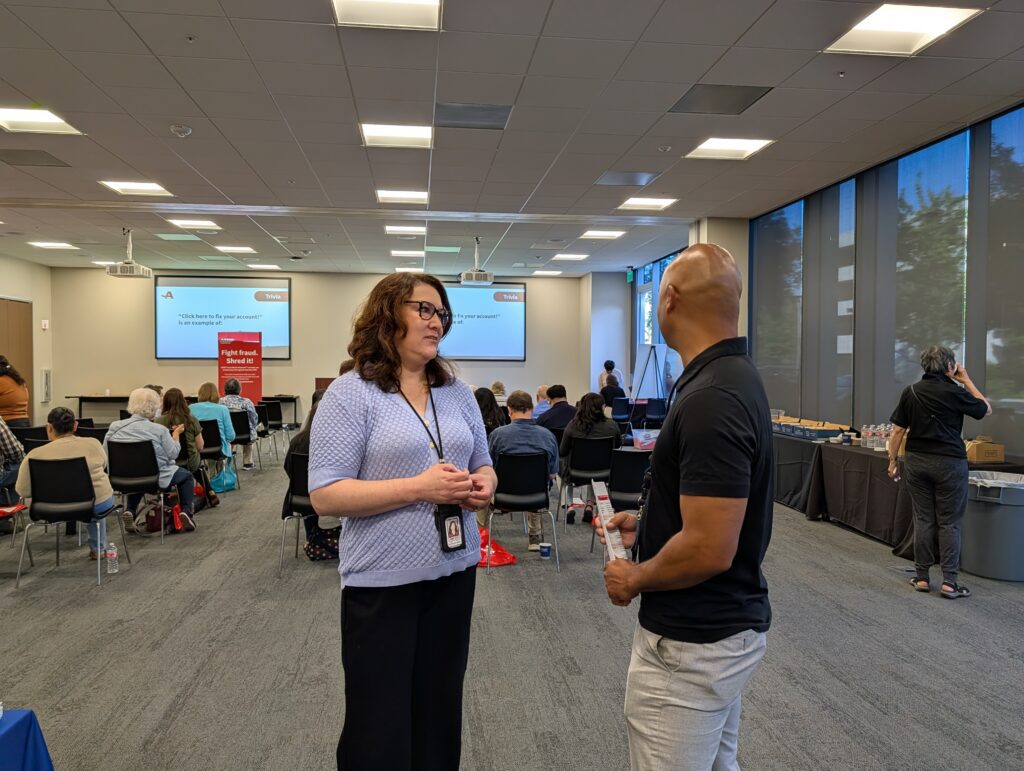
The county’s Department of Aging and Adult Services teamed up with AARP for a June 16 “scam jam” forum, where fraud prevention experts talked about current scams — such as scammers posing as the IRS requesting back taxes, or a bank asking for account and Social Security numbers to resolve an issue. A 2025 county report shows Adult Protective Services received 4,226 reported allegations of financial exploitation, with nearly half involving scams. Sixty-five percent of those reports were substantiated.
“(The county) is seeing more instances of undue influence and sophisticated scams that specifically target vulnerable older adults,” the report said.
Deputy District Attorney Jonathan Beardsley sees “quite a bit” of elder fraud. As older adults have more equity in their homes, they are more often victims of real estate fraud, he said. People experiencing declining cognitive abilities can be tricked into transferring assets or signing documents granting a power of attorney, which allows someone access to bank accounts.
Beardsley said people should be leery of unsolicited contact from a financial institution, and can call the number on the back of their credit cards for help. He suggests families have a code word to use during unusual phone calls and people should feel free to shut the door on solicitors or just take their business cards. He said scams should be reported quickly.
“We were able to seize … over $500,000, that was still in the suspect’s account, froze that money and we were eventually able to give that money back to the victim as restitution,” he told San José Spotlight. “Once the money is gone, it’s very difficult to get it back.”
In Santa Clara County, real estate fraud is investigated by the District Attorney’s Office, while elder financial abuse cases are handled by a Financial Abuse Specialist Team (FAST) made up of Adult Protective Services, a public guardian, the DA’s office, County Counsel and law enforcement, Beardsley said. FAST safeguarded and recovered more than $67.5 million for victims in 2025, according to the county report.
“The FAST team is so important because even where law enforcement and the DA’s office can’t prosecute … there are still these other resources that can help try to mitigate the likelihood of future losses,” he said.
Scams skim billions of dollars
It’s not just older adults who fall victim to financial fraud. Referencing a Federal Trade Commission report, AARP said in 2024, Americans lost $12.5 billion to scams and fraud. People in their 30s reported losing $810 million, and those in their 60s lost $1.18 billion. Investment scams netted $5.7 billion in reported losses.
Dawn Angelo, Northern California regional director of AARP California, said scams can be financially and emotionally devastating.
“The personal price of fraud … can’t be measured in dollars alone,” she said at the event. “Nearly two in three victims report serious health or emotional impacts. Younger people report fraud losses more often than older adults, but older adults have so much more to lose when they are targeted.”
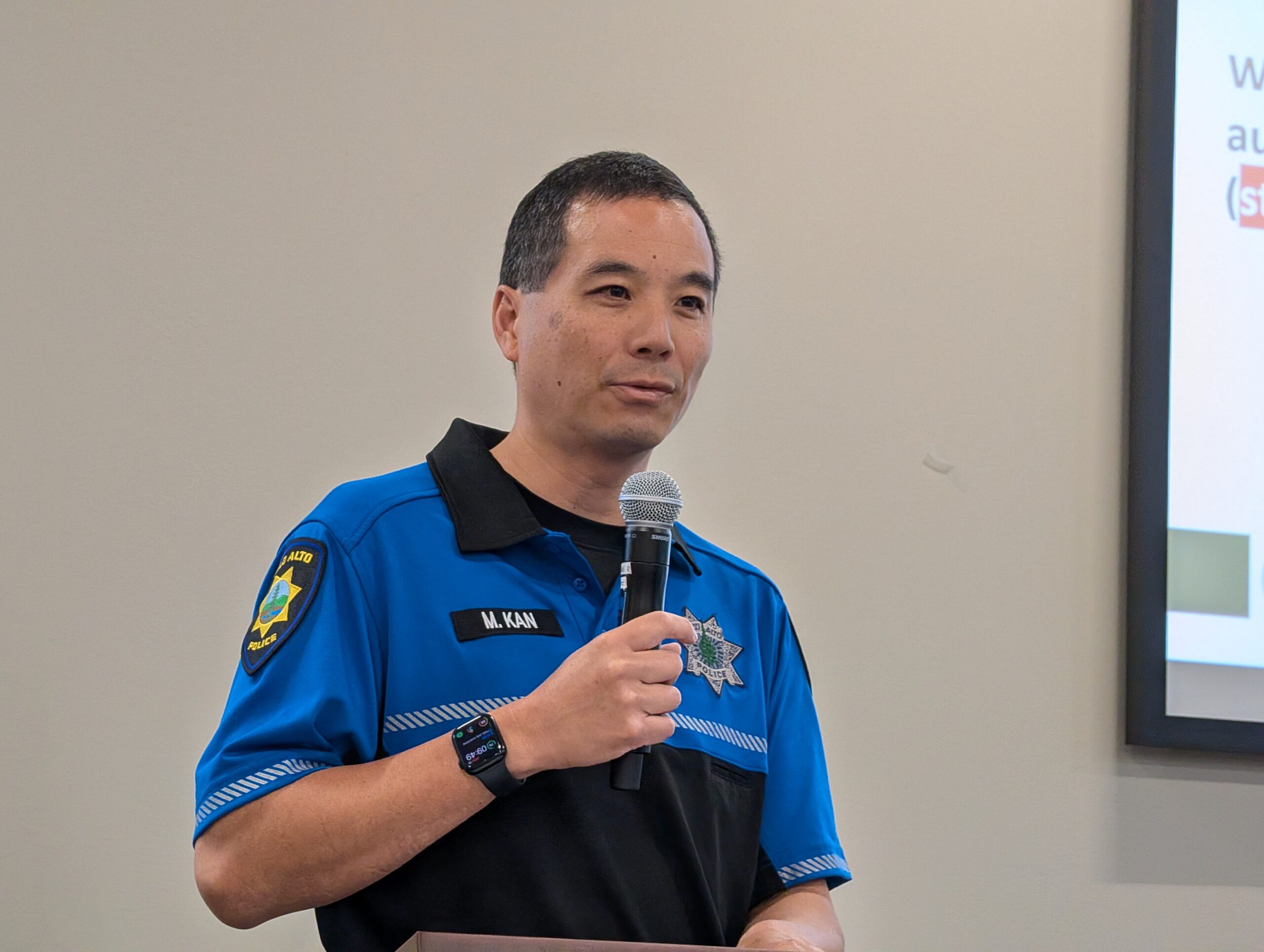
Michael Kan, a former detective with the Palo Alto Police Department, said when people are aware of scams, they’re more likely to avoid them. He said romance scammers are convincing because they take the time to know their victim and gain their trust. Eventually, the scammer asks for help with medical bills, rent or suggests an investment.
“If you’re getting attention from somebody, even if it’s on the phone or online, that can be very addictive,” he said at the event.
In another scam, after making unauthorized charges to a credit card, the scammer calls pretending to be the bank and suggests transferring funds to another account. If a grandparent receives a call saying their grandchild needs bond money, he suggested putting the caller on speaker and texting the child’s parents or providing a fake name of the grandchild and seeing if the caller repeats it.

Alfredo Cardenas, with the state Department of Financial Protection and Innovation, said cryptocurrency scams promise high profits and initially make people money.
“Then you start telling all your family members … then, your family is also investing. Later, that company disappears,” he said at the event.
He urges people to work with legitimate financial advisors and be wary of online scams using pop-up windows reporting computer viruses and fake invoices. When sending money to the DMV or utilities, double check the website address — as close fakes exist, he said.
Martha Jaquez, social services program manager with Santa Clara County Adult Protective Services, said the department sees numerous cases of investment scams involving cryptocurrency.
“It’s impacting people’s ability to pay their bills, to pay their mortgage,” she told San José Spotlight. “These are folks in retirement with fixed incomes.”
Contact Lorraine Gabbert at [email protected].

Leave a Reply
You must be logged in to post a comment.