


|
Getting your Trinity Audio player ready...
|
Santa Clara officials are moving forward with plans to update the city’s policies governing data center development, but have stopped short of considering a moratorium on new projects coming through the pipeline.
The City Council on Oct. 6 unanimously approved a plan to prioritize new water and air quality standards for data centers and directed staff to conduct a more comprehensive policy review to examine health and safety impacts, siting, community benefits and other issues. City officials previously anticipated completing the broader work of this review by the end of 2027, but said it could bring water and air standards forward sooner.
District 3 Councilmember Karen Hardy was frustrated that a potential moratorium on new data center projects, the next item on the agenda, was not heard due to the meeting being adjourned at 1 a.m. But she plans to bring it back to the Oct. 20 meeting with a focus on new standalone data centers.
“I’m being very strident, but I was frustrated that we couldn’t even bring it to a vote,” Hardy told San José Spotlight.
The city’s existing rules require new developments to maximize the use of recycled water, but the requirement does not establish a specific amount of recycled water a data center must use. The city will consider whether to establish numerical standards and if newer, more water-efficient cooling systems should be required for future facilities. Officials said about 65% of data centers use recycled water and account for 26% of the city’s current recycled water use.
City Attorney Glenn Googins clarified at the meeting that most new data center developments in Santa Clara would require discretionary conditional use permits and city council approval. The city could also potentially include conditions requiring projects to comply with future water regulations, though the city attorney said the details would need to be worked out.
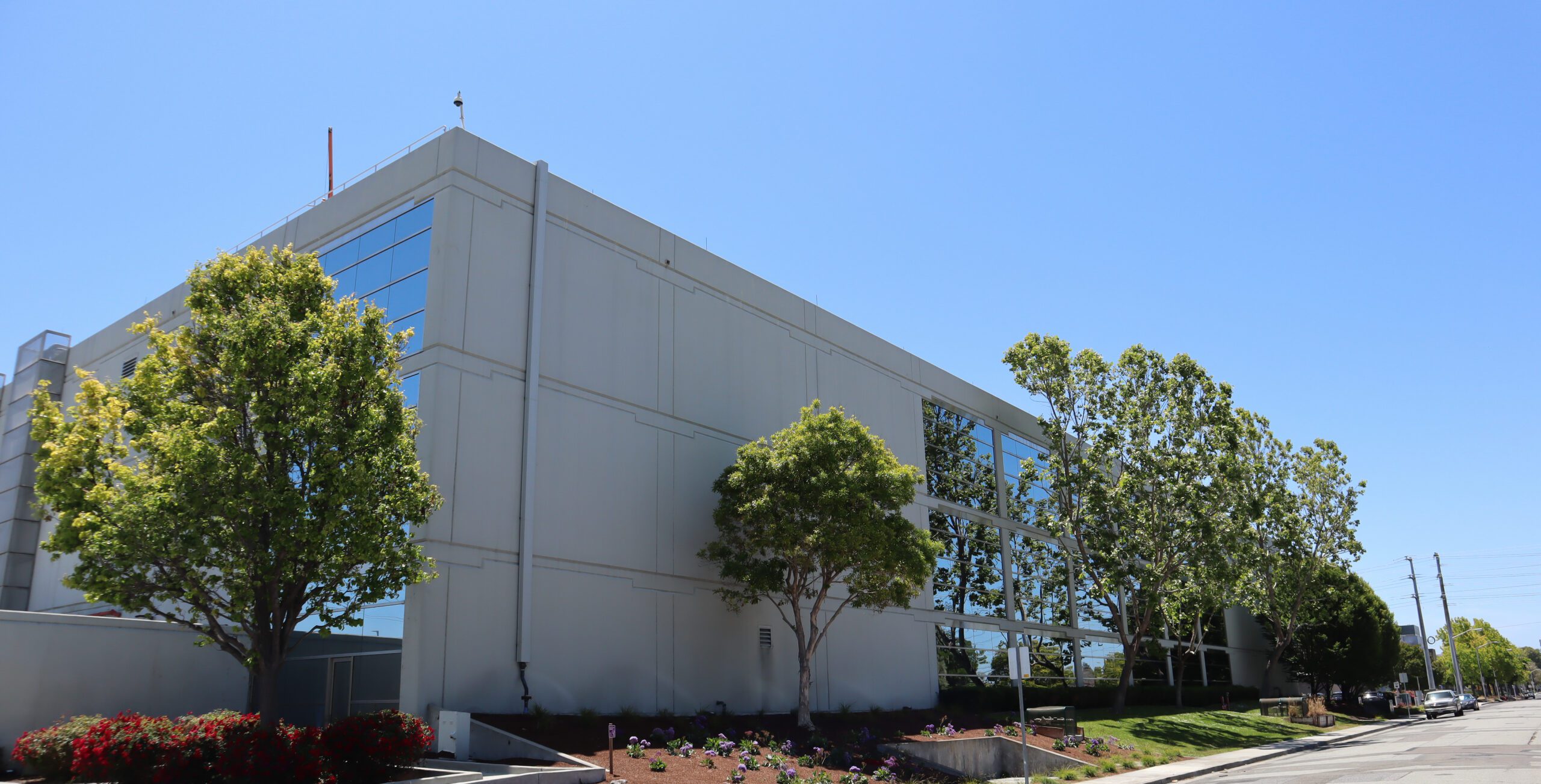
Santa Clara is home to 56 active data centers, with two additional approved projects that have not begun construction. Santa Clara had 55 data centers in operation and three in the pipeline in 2025, according to the city. Santa Clara receives $40.9 million annually from its data centers through property and sales taxes, as well as payments from Silicon Valley Power, the city-owned power utility.
Silicon Valley Power stopped accepting new large-load applications in 2023 because of capacity constraints, but that does not mean every data center project has stopped moving through the city’s development process.
“We did stop the ‘will-serve letters’ in 2023, but we actually do have eight entities that went through the system impact studies, so they kind of made it through the process,” Nico Procos, director of Silicon Valley Power, said at the meeting.
Eric Crutchlow, a Santa Clara planning commissioner and District 3 candidate, said the city should examine water use and air quality first across data centers. Crutchlow said he saw two data center projects rejected by the Planning Commission that the city council approved after appeals, which he said showed the need for the two bodies to have clearer, shared standards.
“The commission and city council are not on the same page,” Crutchlow told San José Spotlight. “We need to agree on what these standards are.”
Those standards also include concerns about electricity and how much power is needed per data center.

Mayor Lisa Gillmor acknowledged developers face a difficult choice pursuing land use entitlements, which can be costly without a commitment from Silicon Valley Power to receive the electricity needed.
That distinction prompted concerns from District 4 Councilmember Kevin Park, who said developers could continue advancing portions of their projects while waiting for power. He argued that could leave the city in a similar position to the Related Santa Clara project, which has a statutory development agreement and vested rights under state law. This has left the city with no leverage to push the project forward, leaving it stalled for 10 years.
“I would like to do a moratorium,” Park said at the meeting. “Because even though we’re stuck, we have developers stuck on power, (even though) they’re moving forward with land entitlements and other things.”
Contact Maryanne Casas-Perez at [email protected] or @CasasPerezRed on X.

Leave a Reply
You must be logged in to post a comment.