


|
Getting your Trinity Audio player ready...
|
Imagine graduating from high school and hearing, “We’ll pay you to continue your education and have steady work building tech campuses, hospitals, schools, data centers and clean-energy projects. You’ll earn enough to buy a house in the San Francisco Bay Area, raise a family and retire with dignity.”
It may sound like a pipe dream — or a scam. It’s neither. It’s the construction trades.
I entered the five-year apprenticeship with the International Brotherhood of Electrical Workers (IBEW) after military service in 2003. That decision allowed me to raise a family in one of the most expensive regions in the world. Somewhat ironically, it also made it possible for me to spend thousands of dollars to put my daughter through college — once considered the golden ticket to financial stability. Like so many recent college graduates, she struggled to find meaningful work.
When I was growing up, the trades were often looked down upon as a fallback for kids who couldn’t hack it in college or business. The stereotype was that construction was for “dummies and dropouts.” This couldn’t be further from the truth. Our country desperately needs to rebuild its infrastructure, and we need skilled craftspeople to do that.
It’s time to change the narrative around the construction trades.
Blue-collar jobs in the skilled trades have become blue chip careers with world-class technical education, pay and benefits. And getting into an apprenticeship is as competitive as getting into top universities.
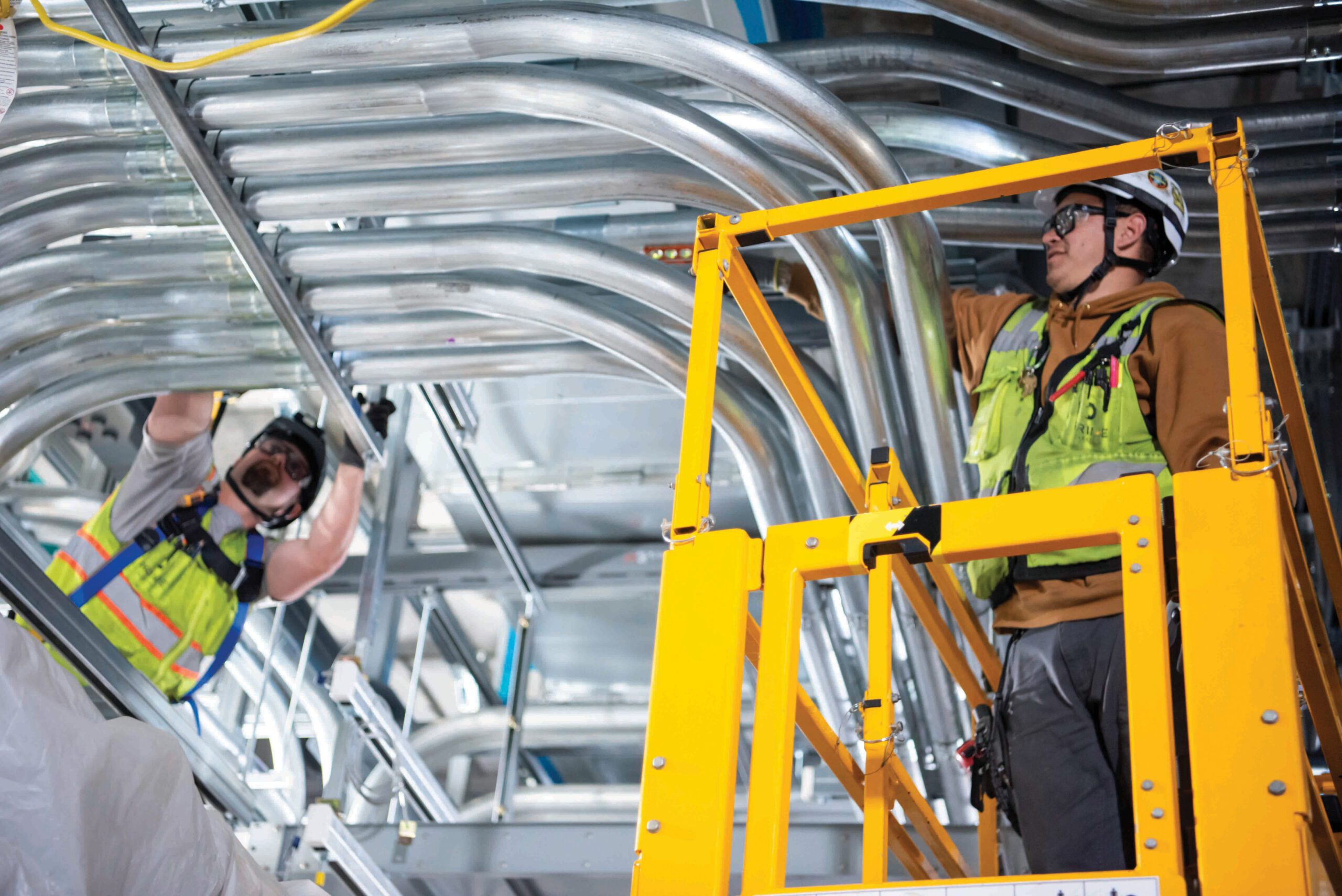
IBEW Local 332 electricians built Silicon Valley generations ago, and now we’re powering the next wave of tech: AI data centers, the West Coast electric vehicle charging network and the renewable energy infrastructure fueling the green economy.
To build at that level, we need state-of-the-art skills, advanced math, digital modeling and safety training that rivals anything in a university engineering lab.
IBEW apprentices earn while they learn with a five-year, debt-free education and hands-on training. A starting wage is about $75,000 a year with full benefits. Each year, wages rise as skills deepen. After graduation, journeymen earn a solid six-figure income with family healthcare and a retirement plan that can make them millionaires by the time they hang up their tool belts.
As student loan debt tops $1.7 trillion nationwide, and many grads like my daughter struggle to land even entry-level positions, it’s time to acknowledge that expensive college degrees are not for everyone.
We need to reintroduce technical education in our public schools as a first-class pathway to economic stability for students who want to work with their hands and heads. We should be investing in pre-apprenticeship programs, expanding partnerships between unions and school districts and celebrating the trades as the high-tech, high-reward professions they are.
It’s been a brutal time for the workforce with a shifting labor market, massive federal cuts and thousands of people receiving pink slips or pushed into gig work and second jobs. With AI rapidly changing traditional business needs, many workers are agonizing about their place. However, the construction trades — particularly commercial electrical work — are booming.
We can’t modernize our infrastructure, decarbonize our grid or address the housing crisis without skilled tradespeople. And those jobs aren’t going anywhere. In fact, the U.S. Department of Labor estimates we will need 80,000 additional electricians each year over the next decade to meet the demand for our high-tech economy.
In a world where college degrees promise more debt than security, the union trades are one of the few sectors still offering what everyone deserves: a fair day’s pay for a fair day’s work. Someone has to wire the future, and we’re hiring.
Pete Seaberg is the business manager and leader of IBEW Local 332, the Silicon Valley electricians union. He is a longtime electrician, an Air Force veteran and father to a recent college grad.

Leave a Reply
You must be logged in to post a comment.