


|
Getting your Trinity Audio player ready...
|
After delays due to a lost federal grant, San Jose is rolling out a long-anticipated speed safety camera pilot program intended to save lives by convincing drivers to slow down.
Testing and installation of a new network of 33 cameras is already underway, as the city prepares for a Dec. 14 launch. For the first 60 days of the program, speeding motorists caught by the cameras will receive warning citations. After that, the fines will range from $50 to $500 depending on the severity of the speeding violation.
Over the program’s five year duration, San Jose will monitor how it’s affecting roadway speeds, the number of traffic citations issued and whether the citations are disproportionately going to low-income drivers or members of minority groups.
Vice Mayor Pam Foley, a longtime backer of the initiative, said she is glad to see the city reach this milestone.
“We know that speeding is the No. 1 cause of fatalities on our streets, and having these cameras operating will cause people to slow down and save lives,” Foley told San José Spotlight.
The program is an outgrowth of Assembly Bill 645, a 2023 law that cleared the way for five other California cities — including San Francisco and Oakland — to launch such programs as well. Outside of these pilot initiatives, California law does not permit the use of speed cameras for traffic enforcement.
San Jose’s five-year program is expected to cost roughly $16 million, including installing and maintaining the camera network, as well as managing the program.
The effort hit a stumbling block when the Trump administration pulled an $8.5 million federal grant officials had been counting on to defray the program’s costs.
“It was a significant blow to the program, and is the main reason we’re starting so much later than our peer cities,” Colin Heyne, spokesperson for the city’s Department of Transportation, told San José Spotlight.
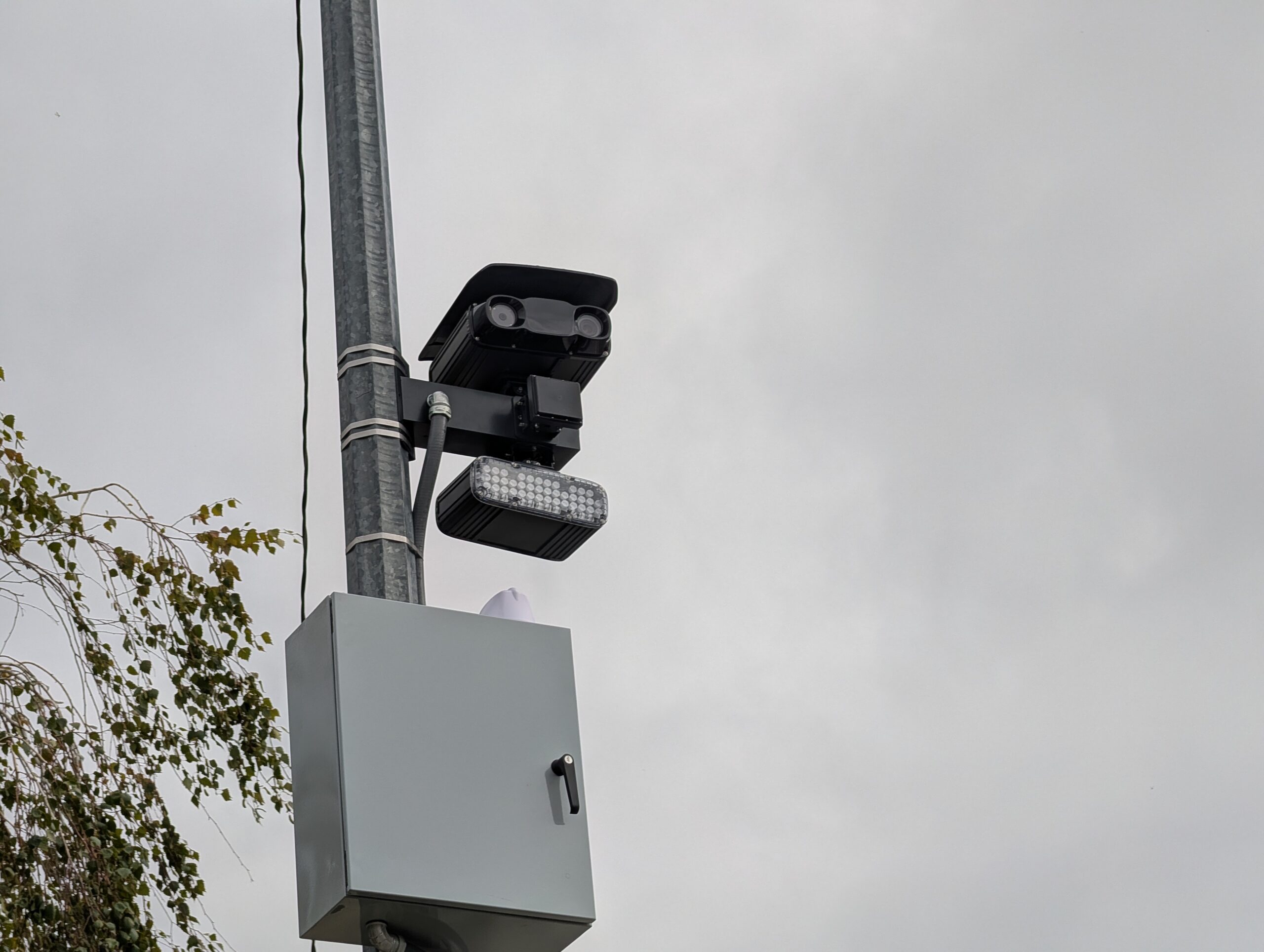
The city chose locations for the cameras that have high volumes of speeding and crash incidents, especially those nearby schools, parks, hospitals and senior centers, officials said. When the devices sense a speeding motorist traveling at least 11 mph faster than the speed limit, they will take a photo of the car’s license plate. Following a review by a Department of Transportation official, the city will then mail a notice to the vehicle’s owner.
As of Friday, the city had installed four of the devices, each of which has two stationary cameras, one for each direction of traffic. Three of these devices are located along Saratoga Avenue and a fourth is on Curtner Avenue.
Revenue from the traffic citations will first go to pay for the program, officials said. Any remainder will be used for traffic safety improvements.
San Jose’s new traffic safety cameras will complement a smaller network of four red light cameras operated under a separate pilot program launched last fall.
The speed cameras have run into pushback from civil rights advocates, who warn they could become tools of surveillance used to police low-income and minority communities. But San Jose officials said the program comes with safeguards to prevent misuse. They maintain the cameras will take only still photos of vehicles’ rear license plate, and the data will not be shared with any other government agency except under limited circumstances, such as in response to a court order.
Meanwhile, traffic safety advocates are welcoming the launch.
“Speeding is the main factor that determines if someone survives a crash or not,” Silicon Valley Bicycle Coalition Executive Director Clarrissa Cabansagan, told San José Spotlight.
Between 2021 and 2025, speeding was cited as the primary cause of more than 5,300 traffic collisions in San Jose, according to city figures. Those crashes resulted in 41 deaths and 265 severe injuries.
Alarmed by a years-long surge in deadly collisions, in 2015, San Jose adopted a Vision Zero program with the goal of eliminating traffic deaths through a combination of roadway improvements and public outreach.
Since then, conditions have improved somewhat. In 2025, the city marked its lowest number of traffic fatalities, 41, of any year since 2012.
“That number is still not zero, so we believe this is a crucial step in getting our cars to slow down, and people to understand that they hold someone’s life in their hands when they get behind the wheel,” Cabansagan said.
Contact Keith Menconi at [email protected] or @KeithMenconi on X.
Leave a Reply
You must be logged in to post a comment.