


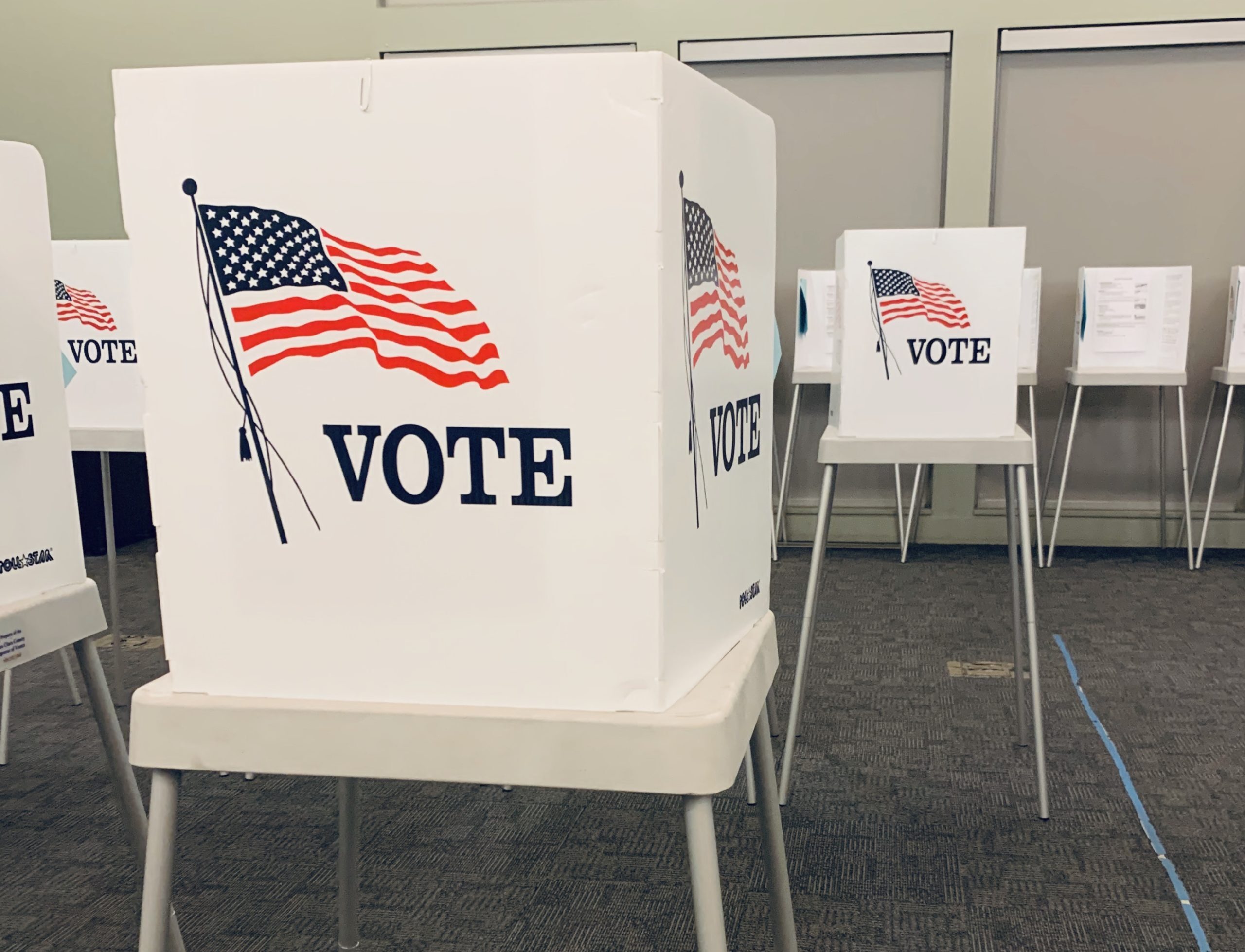
A proposition going before California voters in November could make it more difficult for local governments and agencies to get funding from tax measures by raising the approval threshold.
Proposition 43 would require a two-thirds majority vote for citizen initiatives pertaining to sale taxes — such as real estate, utilities and transit — which under current law only need a simple majority. This would make it more difficult to pass any sales tax measures. The possibility for its approval has created concern among local government and transit leaders, who worry the measure would impact funding avenues amid already strained budgets.
While not in effect, one area of concern is how the such a proposition would impact measures such as Senate Bill 63, a regional, 0.5% sales tax increase on the Nov. 3 ballot that would raise $1 billion annually for public transit across five Bay Area counties. SB 63 only needs a simple majority to pass and is seen as a possible way to fund transit agencies in the region, such as VTA — which would receive about $264 million until the tax sunsets after 14 years.
“Had (Proposition 43) been in place, we would have pursued a different strategy (with the regional tax measure),” VTA Board Chair and Campbell Councilmember Sergio Lopez, speaking for himself, told San José Spotlight, adding the majority of VTA’s funding comes from previous sales taxes that will have to be renewed in the coming decade.
Lopez said he opposes requiring a two-thirds vote from a democratic standpoint, and that the measure would significantly affect future funding for cities and agencies.
“It would empower a super minority, giving them veto power over the will of the majority to enact the kind of policies that they want to see,” he said. “It would definitely cause agencies to look at different funding mechanisms.”
Prior to the possible two-thirds requirement making it on the ballot, local governments in the region passed tax measures that would have faced steeper climbs to voter approval.
Facing a $50 million deficit, San Jose placed a 2% hotel tax increase before voters in the June primary that was approved with a simple majority. City leaders said the expected $10 million in annual revenue will be critical to avoiding cuts in core services like public safety and libraries.
There’s also 2025’s Measure A, a countywide five-eighth cent sales tax increase approved by voters last November. That measure will bring about $330 million in annual revenue, which county officials have said will be used for hospitals and healthcare — and will help avoid hospital closures. At the time, the measure received criticism for being placed on the ballot as a general tax instead of a special tax, which would have required a two-thirds approval or 66.7%, like what Proposition 43 aims to do. It would not have passed, since voter approval came in at 57%.
But Proposition 43 is not without its supporters. Susan Shelley, spokesperson for the Howard Jarvis Taxpayers Association, said in 1978 and again in 1996, California voters put in the state constitution that all special taxes required a two-thirds vote to pass. In 2017, the California Supreme Court said if a tax increase is put on the ballot by a citizen’s initiative, the two-thirds vote may not be necessary.
“That was a total reversal from the way previous court decisions had interpreted the constitutional provisions,” she told San José Spotlight. “There were a number of citizen initiative tax increases up and down the state that were said to pass with a simple majority instead of a two-thirds vote. And these were all challenged in the courts. They said the simple majority is fine. We don’t think it’s fine. We don’t think it’s what the voters put in the constitution, and we’ve been trying to close what we consider a loophole ever since 2017.”
Other groups that support Proposition 43 statewide include the California Taxpayers Association, Family Business Association of California and the California Hispanic Chambers of Commerce. State groups who oppose it include California Professional Firefighters, California Federation of Teachers and Nurse Alliance of SEIU CA.

Santa Clara County Executive James Williams, a legal expert in revenue and taxation, said the principle behind the 2017 California Supreme Court decision was allowing citizens initiative power and majority rule.
“What this proposition would do is take that power away,” he told San José Spotlight. “It gets into that question of what does it mean in a democracy and what does it mean in terms of actually allowing the electorate to decide something by a majority vote, versus a supermajority vote, even in the case of a measure that’s put on the ballot by citizens gathering signatures.”
Regarding the transit tax measure, Williams said under current California constitutional provisions, a government agency like VTA can only have a special tax and if the VTA board put an item on the ballot, it would be subject to two-thirds voter approval. But as citizens gathered signatures to put SB 63 on the ballot it only requires a simple majority approval.
“(Proposition 43) would foreclose those avenues as a mechanism for asking the public to decide yes or no on whether to raise revenue for important governmental purposes,” he said. “That’s what’s at stake. The broader political question is, do you let a small minority block something that the clear majority wants to do?”
Contact Lorraine Gabbert at [email protected].

Leave a Reply
You must be logged in to post a comment.