


|
Getting your Trinity Audio player ready...
|
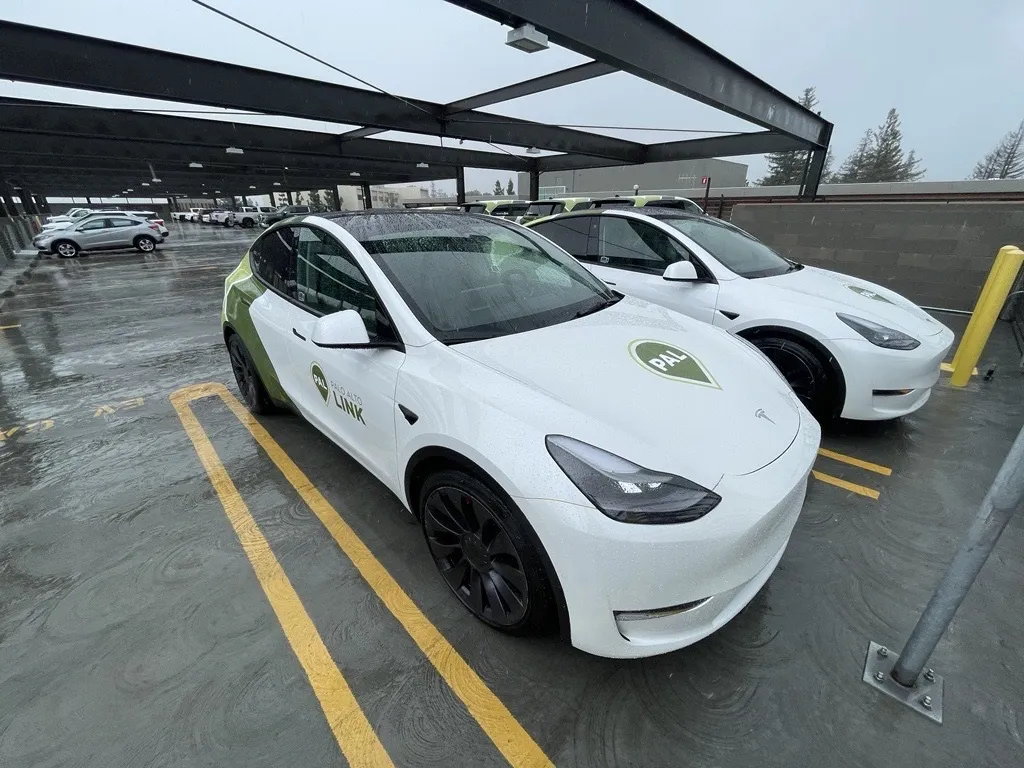
As Palo Alto Link prepares to run its final trip next month, residents who have come to depend on the city’s ride-hailing service are raising concerns about losing a valuable resource they have come to depend on since it first rolled out in 2023.
Ian Irwin, who is in his 70s and has a daughter with a disability, is among those who have come to rely on Palo Alto Link, which functions like a subsidized Lyft service with discounts for older adults, youth, low-income residents and individuals with disabilities.
The City Council introduced Palo Alto Link as a replacement for the Palo Alto Shuttle, a bus system the city halted during the pandemic. But after several contract extensions, the council voted in June to end its agreement with Via, the company that operated the ride-hailing service and runs others in neighboring cities, citing high costs. Though Palo Alto Link was initially funded by a county grant, that money has run out, requiring a city subsidy of about $700,000 annually. Its final day of service is set for Oct. 30.
Irwin was one of several residents who told the council earlier this month that he was surprised to learn that Palo Alto Link will soon cease to exist. Once that happens, he will lose a service that he and his daughter have come to depend on for trips to doctor appointments, therapy appointments and the synagogue.
Many of these locations are not well served by Palo Alto’s existing transportation system.
“The Link was a lifesaver for many parts of the Palo Alto community,” Irwin said.
To compensate for the loss of Palo Alto Link, the councilmembers agreed this summer to add $100,000 to the budget of Palo Alto Transportation Management Association, bringing its overall contribution toward the transportation nonprofit to $500,000.
This approach, however, differs significantly from Palo Alto Link and the former shuttle system. Unlike those two services, which were available to all residents, employees and visitors to Palo Alto, the voucher program would focus almost exclusively on older adults, individuals with disabilities and other vulnerable populations.
The shift also represents a sharp pivot for Palo Alto TMA, which launched in 2014 with the goal of reducing solo-car commuting for local employees. To date, its main offerings have been transit passes, a program that refurbishes bikes and $10 credits for income-eligible employees to take Lyft late at night, when buses and trains stop running.
Alex Van Riesen, one of whose children has special needs, also urged the council not to pull the plug on Palo Alto Link. He said he does not believe the city’s budget challenges justify “fully ending the service that’s actively working for the people who need it most.” The voucher program, he noted, is “not a like-for-like swap.”
“Link was built for exactly the riders who now stand to lose the most — seniors, people with disabilities, low-income residents and just people whose lives are just burdened by physical ailments and inabilities to get around,” Van Riesen said.
Uber and Lyft rides aren’t always reliable and can’t always accommodate individuals with wheelchairs, he noted.
Justine Burt, executive director of Palo Alto TMA, told the Palo Alto Weekly that with the additional budget, her organization is prioritizing assistance for the most vulnerable residents. She encouraged people who require assistance getting around town to apply for one of Palo Alto TMA’s programs, which will expand next month to accommodate the new clientele.
Palo Alto TMA’s efforts include increasing its partnership with Avenidas, the nonprofit provider of senior services that currently operates its own shuttle service for older adults. Palo Alto TMA is contributing $45,000 to Avenidas to hire another part-time driver, allowing it to expand its shuttle service. When people sign up for Palo Alto TMA services, Avenidas will have access to the list of applicants, whom it could then assist with door-to-door rides as needed.
“We’re trying to help people stay connected to their community,” Burt said. “The focus is on older adults or people who live independently, who are starting to feel like it’s harder for them to get around and to stay connected.”
The program will, however, have some gaps. Avenidas focuses on older adults, which means that younger residents with disabilities will likely have to find other options. Burt said transit agencies such as SamTrans and VTA have their own paratransit services. Once Palo Alto Link ends, Palo Alto TMA will guide some riders toward those services.
Burt acknowledged the new contract with the city represents “an expansion of our mission,” but said her organization looks forward to helping the city meet its goals for both reducing car emissions and helping people get around town. She said her organization will start sending out alerts in early October to notify residents about service changes and their ride options.
“We’re excited that the city trusts us and felt we’ve done a good job in pursuing our mission and wants to help us with this transition,” Burt said.
This story originally appeared in Palo Alto Weekly. Gennady Sheyner is the editor of Palo Alto Weekly and Palo Alto Online. As a former staff writer, he has won awards for his coverage of elections, land use, business, technology and breaking news.
Leave a Reply
You must be logged in to post a comment.