


|
Getting your Trinity Audio player ready...
|
Bay Area voters appear to have approved a new sales tax for public transit — staving off service cuts and paving the way for future improvements to buses, trains and other parts of the regional transportation network.
The Regional Transit Measure will levy a half-cent sales tax in San Mateo, Santa Clara, Alameda and Contra Costa counties and a 1-cent sales tax in San Francisco, beginning April 1, 2027, lasting 14 years. The revenue will be split between more than a dozen public transit agencies across the five counties, with the bulk allocated toward BART, San Francisco Muni, Caltrain and Alameda County Transit, all of which were planning extreme service cuts without the measure.
The measure needed a majority to pass, and so far has an average of 63% approval across the five counties that make up the measure’s tax district. It’s done least well in Santa Clara County, with 55.6% approval as of Nov. 17, and best in San Francisco with 71.2% approval.
To Adina Levin, executive director of the transit advocacy organization Seamless Bay Area, this amounts to a mandate from voters to maintain and improve public transit.
“It’s really great that it has passed decisively in all counties, showing that voters all around the five counties are supportive of public transit,” Levin said.
Managing the money
The measure is expected to generate about $980 million annually. That money should bridge many of the region’s largest transit agencies’ budget deficits — though Rebecca Long, director of legislation and public affairs for the Metropolitan Transportation Commission, said this year’s shifting economy has changed that situation for some agencies. MTC is responsible for overseeing and helping distribute the measure’s funds.
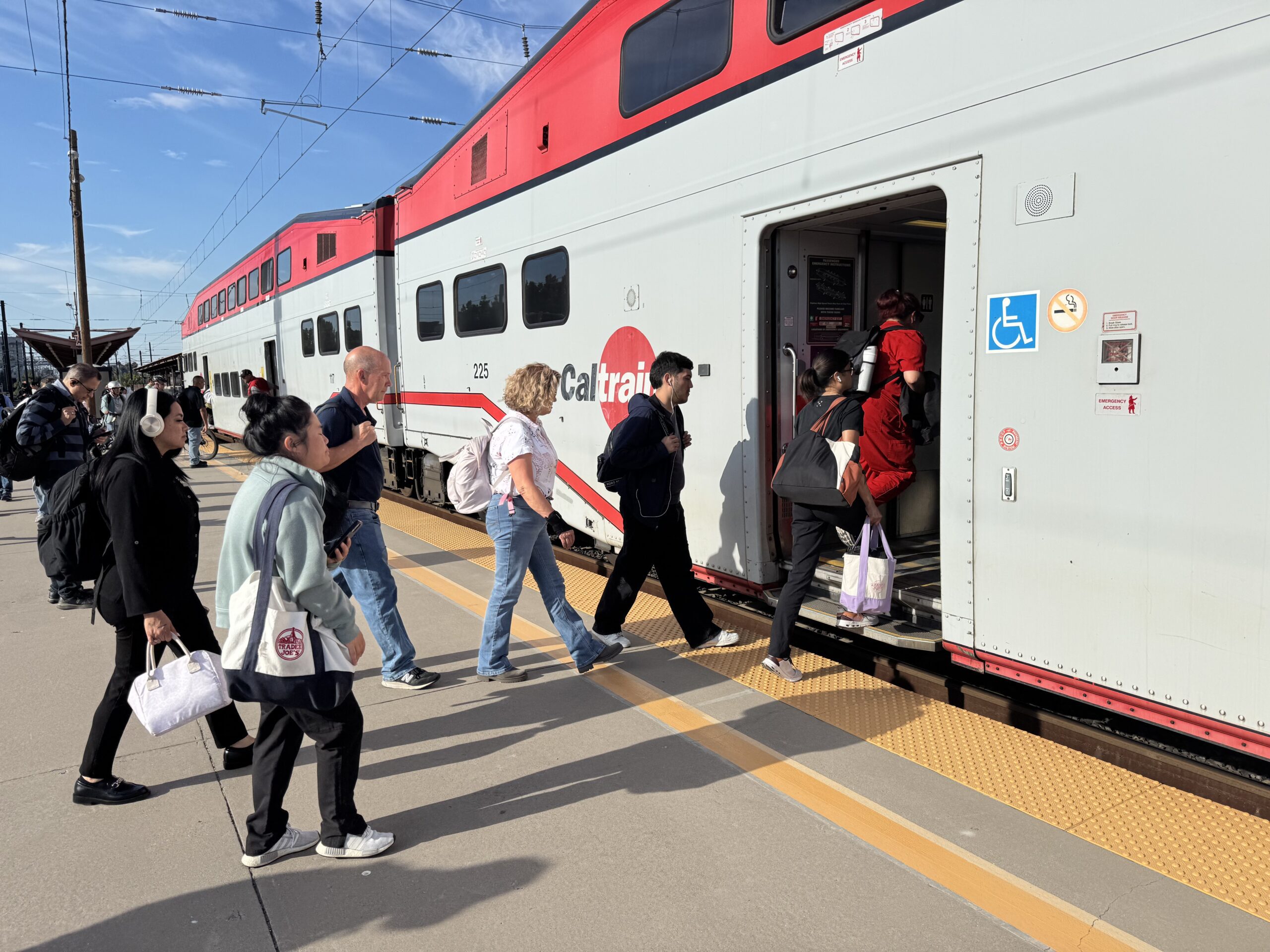
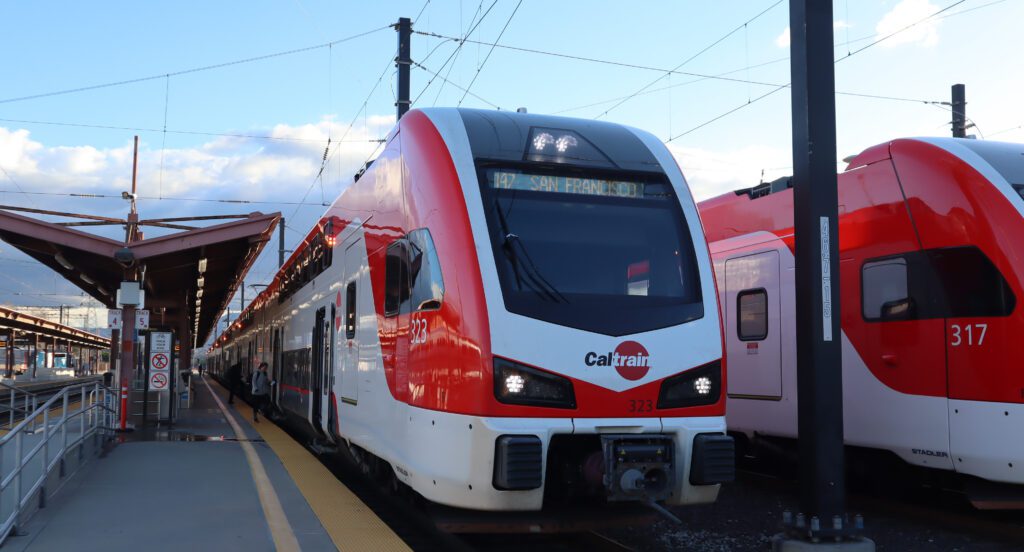
Caltrain’s ridership and farebox revenue dropped steeply in 2020 when the COVID-19 pandemic began, and the agency has been struggling to recover ever since. The transit measure is expected to generate about $70 million annually for the agency, which Long said should be able to close the agency’s operating deficit and protect existing service. If the measure failed, Caltrain was expecting to slash weekend service and reduce train frequency, among other cost-saving cuts.
On the other hand, BART will receive the largest portion for any individual agency — an estimated $310 million annually — to cover much of its deficit, but not all of it. Long said the revenue estimates reflected agencies’ deficits at the time the measure was moving through the state Legislature, and some financial conditions have worsened since then.
After the first few rounds of election results were published, BART officials issued a statement on Nov. 4 saying they were “committed to greater financial discipline, efficiencies and meaningful changes in how we operate,” and will not reduce existing service. BART had planned a handful of service cuts if the measure were to fail, including closing 10 stations.
Now that the threat of immediate service cuts has diminished, Long said the commission is preparing to oversee the agencies’ financial accountability.
The four agencies receiving the bulk of funds — BART, Muni, Caltrain and AC Transit — must create financial efficiency plans, which will review the agencies’ adherence to those plans publicly every year in its Programming and Allocations Committee meetings.
“That’s a thing I heard from the campaign and volunteers was when they were talking to voters, one of the key concerns and interests was how are these agencies going to be held accountable,” Long said. “It is really important that this oversight happens and MTC takes its role very seriously.”
MTC has already launched a request for proposals for a consultant to evaluate the four agencies and set financial efficiency performance metrics. The request closes Jan. 15, 2027.
Gregg Dieguez, president of the No on RTM campaign, said these accountability guardrails don’t have much teeth. The state legislation that authorized the measure creates an oversight committee appointed by the transit agencies, and the legislation only allows the oversight committee to withhold up to 7% of an agency’s allocated funds, among other critiques. He advocated for hiring an independent inspector general to oversee the distribution of funds and ensure agencies managed taxpayer dollars properly.
Dieguez and the No campaign’s supporters argue there should be stronger oversight, especially given many of the region’s largest transit agencies have been the subject of numerous grand jury reports that call their financial responsibility into question.
“I don’t know what other evidence you need to draw the conclusion that they’re not well-run,” Dieguez said, adding that his policy group, SHIFT-Bay Area, intends to watch the measure’s efficiency reviews closely.
Funds for other public transit agencies, such as VTA and SamTrans, will also be distributed annually, but are not subject to the same efficiency review process.
Improving the network
Beyond staving off cuts, Long said the measure’s revenue will help improve service across the network and for specific locales.
MTC oversees multiagency connections around the Bay Area, so Long said some of the measure’s revenue will go toward smoothing transfers for riders. One example of this is through extra mapping and wayfinding signage, which is being piloted at a handful of transfer hubs, including Palo Alto’s University Avenue station.
“It’s been a very long road, and this regional measure was really the final piece of the puzzle, at least for the next 14 years, to prevent this transit death spiral that everyone’s been so worried about,” Long said. “What it means is that now we can focus on improvements.”
Multiple agencies already approved plans outlining how they’ll spend their portions of the measure’s revenue. SamTrans is expecting about $50 million annually and its local investment plan includes turning the Dumbarton rail corridor into a new bus route and improving bicycle and pedestrian safety on El Camino Real.
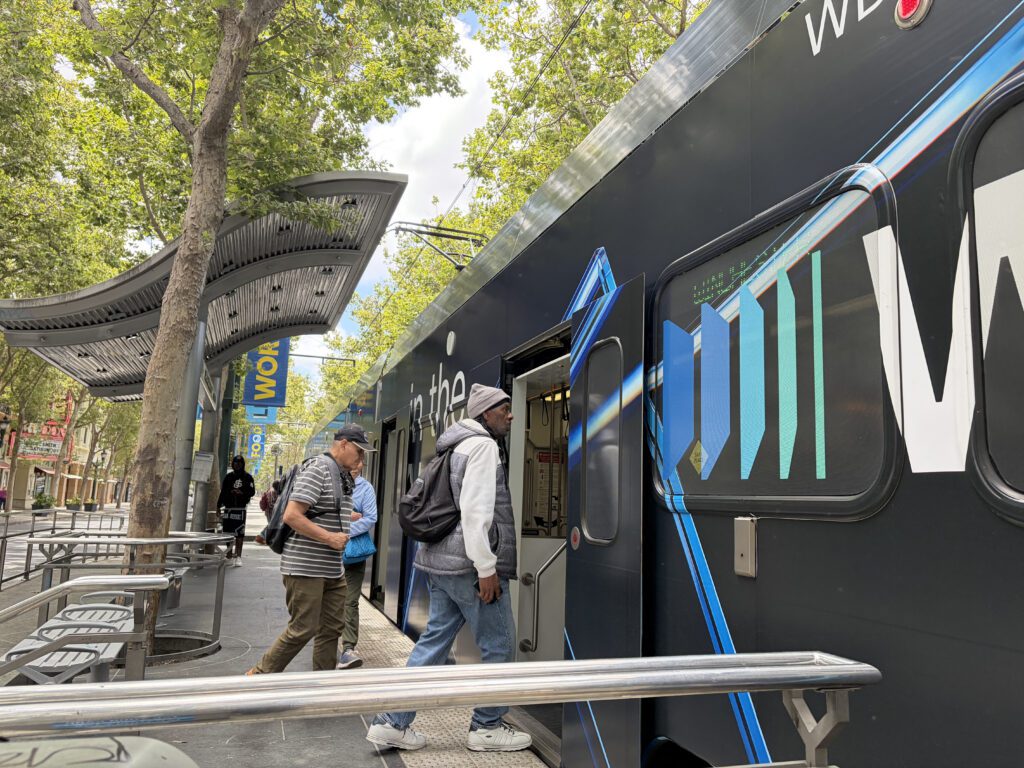
Levin said MTC is considering an individual version of the Clipper BayPass program, which currently offers unlimited group access to all bus, rail and ferry services in the Bay Area at participating organizations. Most agencies have been discussing ways to improve efficiency in even more granular ways, by giving buses priority access at traffic lights, or coordinating payment options and schedules between multiple transit lines at transfer stops.
The lionshare of revenue will go toward maintaining status quo services, however. Levin and other transit advocates are hoping to build on the measure’s success and push the state to broadly invest more in public transit, which will help finance further improvements to the system.
Levin said the measure’s revenue gives more runway to take “the next steps toward rider-friendly world-class transit systems.”
“Now that the measure has passed and we know we’re not going to face drastic cuts, those efforts to have efficiencies agency by agency and efficiencies in how the institutions and the networks work together, that jumps to a higher priority,” Levin said.
This story originally appeared in the Mountain View Voice. B. Sakura Cannestra is a reporter for Embarcadero Media.
Leave a Reply
You must be logged in to post a comment.