


|
Getting your Trinity Audio player ready...
|
This year, two bills moving through the state reveal the competing visions shaping California’s response to one of its greatest humanitarian failures. One asks how we stop people from losing housing in the first place. The other focuses on managing the consequences after people have already fallen into crisis.
Assembly Bill 1924 would require California to finally create a statewide homelessness prevention strategy by coordinating agencies, identifying evidence-based practices and developing action plans focused on keeping people housed before they end up on the street. The bill recognizes something most frontline providers already know: Homelessness is rarely a sudden event. It is usually the predictable outcome of economic instability, rising rents, untreated health needs, family disruption or institutional failures that were visible long before someone ended up sleeping in a car or tent.
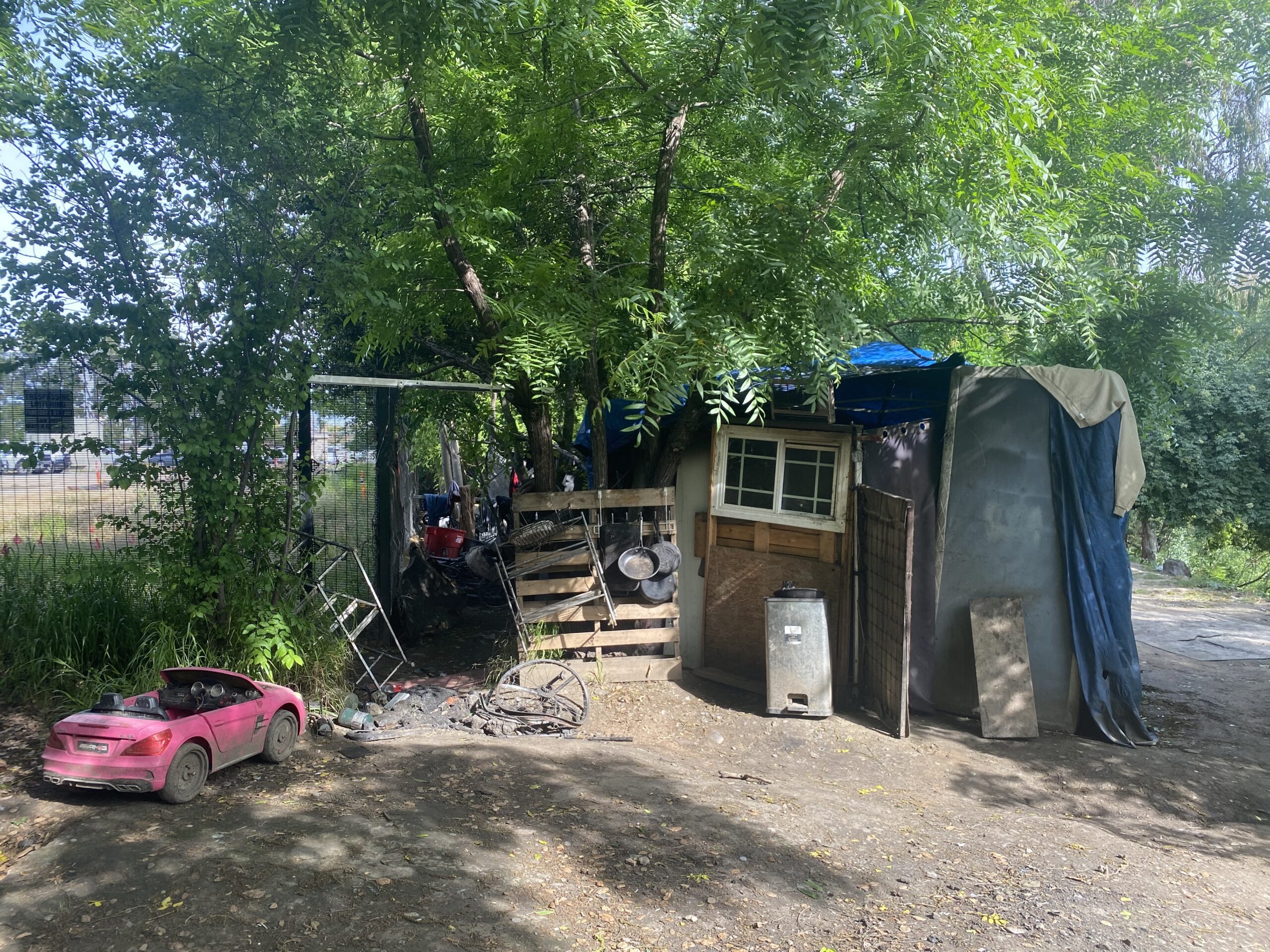
Assembly Bill 1606 moves in the opposite direction. That bill would provide tax credits of up to $20,000 for businesses to clean up unauthorized encampments, install deterrents, repair damage and prevent “reencampments” on commercial property. The legislation explicitly ties itself to the Supreme Court’s Grants Pass decision and the increased displacement of unhoused people from public spaces onto private property.
The difference between the two approaches is profound. One bill tries to reduce the number of people becoming homeless. The other assumes homelessness will continue and focuses instead on controlling where poor people are allowed to exist.
That distinction matters because homelessness is not fundamentally a sanitation problem or a visual blight problem. It is a housing stability problem. Yet California continues to spend enormous amounts of political energy responding to homelessness only after people have already lost everything.
By then, the costs explode.
A family facing a short-term financial crisis may need only a few thousand dollars in rental assistance to remain housed. But once that same family enters homelessness, the public costs multiply across emergency rooms, shelters, law enforcement, behavioral health systems, school instability and long-term housing interventions. That is why prevention works: not because it is softer, but because it is smarter.
Supporters of AB 1924 pointed to growing evidence that prevention programs significantly reduce inflows into homelessness and can do so at a fraction of the human and financial cost of crisis response systems. California cannot meaningfully reduce homelessness without also reducing the number of households newly entering homelessness each year.
And yet California still struggles to build policy around that reality. Too often, public debate collapses into a false binary between compassion and accountability, as though preventing homelessness somehow means tolerating unsafe conditions on streets and in neighborhoods.
But effective prevention policy is accountability.
It means recognizing that when seniors lose housing after a rent increase, when veterans fall behind after a medical emergency or when working families cannot absorb one missed paycheck, the state has an opportunity to intervene before crisis becomes catastrophe.
AB 1924 understands that. AB 1606 does not.
To be clear, businesses should not be left alone to deal with encampments on their property. The impacts are real, and small business owners should not bear disproportionate burdens created by a statewide housing crisis. But there is something profoundly backward about a state willing to subsidize fencing, cleanup and anti-camping deterrents while still lacking a comprehensive statewide prevention strategy.
That is the equivalent of celebrating emergency room expansion while refusing to invest in primary care.
Beyond the policy implications, there is also a deeper moral question underneath these bills: What exactly is California trying to optimize for? Fewer visible encampments? Or fewer people becoming homeless?
Because those are not always the same thing. Sweeps move people. Prevention keeps people housed. Criminalization disperses suffering, while prevention reduces suffering.
One approach treats homelessness as a public nuisance to be managed. The other treats it as a system failure to be solved.
California has spent years reacting to homelessness downstream. We have built entire political identities around encampment debates while underinvesting in the quieter work that actually stops homelessness from happening. AB 1924 offers a chance to change that — not with slogans or magical thinking, but with coordination, data, accountability and a recognition that preventing homelessness will always be more humane and more effective than criminalizing its consequences.
That should not be the controversial approach. It should be the obvious one.
San José Spotlight columnist Ray Bramson is the chief operating officer at Destination: Home, a nonprofit that works to end homelessness in Silicon Valley. His columns appear every second Monday of the month. Contact Ray at [email protected] or follow @rbramson on X.
Leave a Reply
You must be logged in to post a comment.