


|
Getting your Trinity Audio player ready...
|
San Jose has begun dismantling its last large homeless encampment after weeks of outreach and offers of housing.
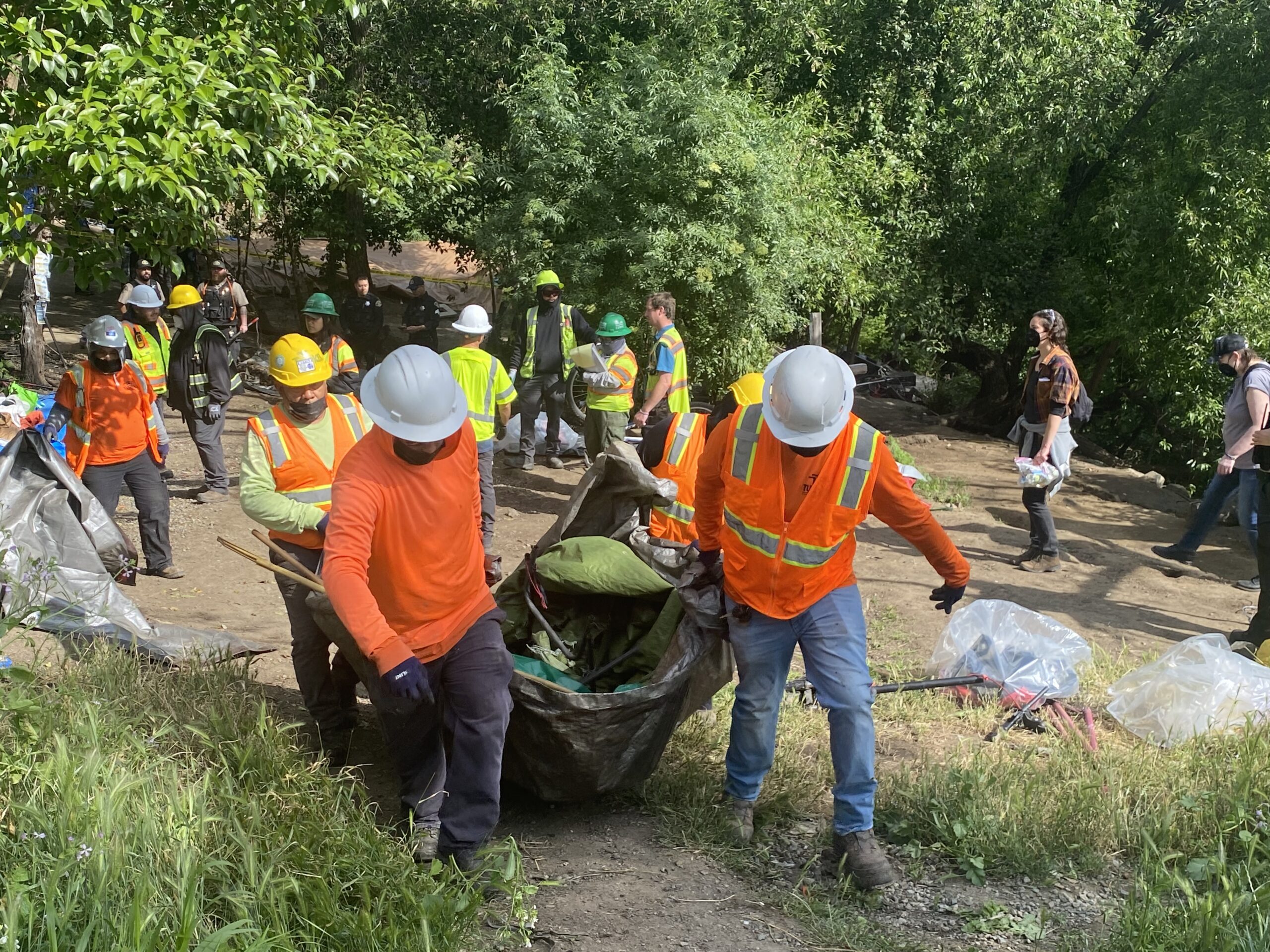
Workers on Wednesday tore down tents and makeshift homes along Coyote Creek across from Happy Hollow Park & Zoo — an area known as “the Jungle.” As the city started clearing the encampment, which had become home to more than 100 homeless people, some residents had already moved to the Cerone tiny home site, some were waiting to move and others said they received no offers of housing and have nowhere to go.
“This isn’t a sweep, it’s an eviction,” Jim Taylor, a 29-year-old resident who lives in the encampment, told San José Spotlight. “I feel directionless. I don’t feel much right now, I feel numb to the entire situation.”
One stretch of the winding Coyote Creek Trail was cleared Wednesday. Homeless advocates said only one person was left in the area and she received an offer of housing. City officials estimate it will take about a month to clear the entire encampment, after which the area will be declared a no encampment zone and signs will be posted to deter people from re-encamping.

San Jose began outreach at the Jungle last month. So far, more than 30 people have moved into Cerone and other temporary shelters, according to city officials. In February, city workers created a list of 109 people in the area and have a shelter bed available for them, according to Housing Director Erik Soliván. Eighty will be placed in the newly opened Cerone site. Those who moved to the Jungle after the city began its outreach will be put on a shelter waiting list.
“We have gone through a process working collaboratively across the departments, but especially between (the Housing Department) and Parks and Recreation, to clear out our largest encampments throughout the city,” Soliván said at a Wednesday news conference.
Felipa Trejo, 65, has been living in and around the Jungle for 11 years. She’s glad to be moving to a tiny home, but worries about the shared bathrooms since she is disabled, she told San José Spotlight through a Spanish translator. She’s only allowed to bring two backpacks worth of her items, and feels rushed in the moving process.
Homeless advocates said others are worried about Cerone being too far from necessities, such as grocery stores and job opportunities. The tiny home site is located in North San Jose on VTA property, close to Alviso.
“(One resident) said, ‘I’m going to spend my whole day just getting to a grocery store,'” Lori Katcher, an organizer with Showing up for Racial Justice (SURJ), told San José Spotlight.
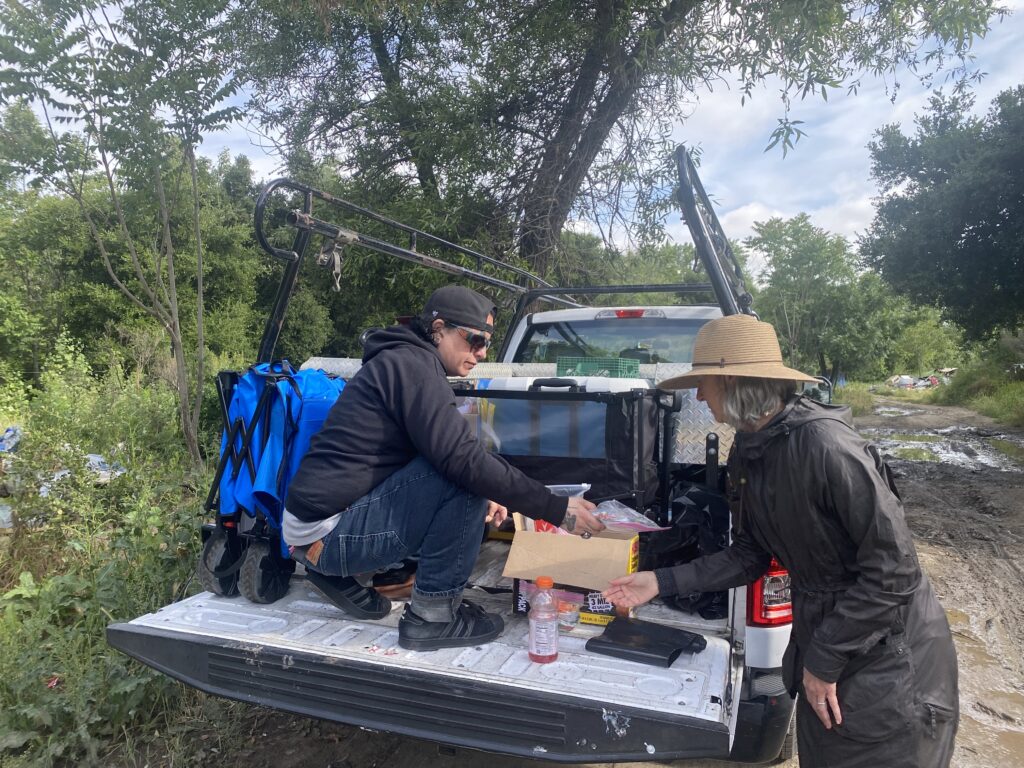
SURJ, Unhoused Response Group and other homeless advocates were present during the sweep to provide food, moving supplies, medical support and legal observation.
Soliván said transportation is provided at all the city’s temporary housing sites, which can include ride-share services such as Uber and Lyft.
Homeless people are given a limited number of Uplift transit passes to ride VTA light rail and buses for free, but advocates said no one at Cerone has received one yet.
VTA provides 2,500 Uplift transit passes each quarter to the Santa Clara County Office of Supportive Housing, which distributes them to homeless service providers based on previous use of passes and number of clients they serve. More people are in need of passes than are available, a county housing spokesperson told San José Spotlight.
A VTA spokesperson told San José Spotlight there is no plan to increase the number of passes it provides at this time.
Homeless advocate Azazel Holmkvist, who used to live in the Jungle and works with SURJ, said there’s not enough places for everyone who wants to be housed.
“It’s devastating that they are tearing it down,” Holmkvist told San José Spotlight. “It’s such a unique community here. They don’t need to tear it down. They need to bring resources here.”
San Jose has 6,503 homeless residents. About 60% of that population — 3,959 people — is unsheltered, and 2,544 are sheltered, according to a point-in-time count conducted last January. Since the count, the city has added more than 1,000 beds across a dozen new or expanded temporary housing sites.

San Jose has also been under fire to comply with the Clean Water Act or face hefty fines for not cleaning up its waterways.
Jon Cicirelli, director of Parks, Recreation and Neighborhood Services, said homeless encampments greatly impact city waterways. He estimates the city will clear roughly 500,000 pounds of trash and debris from the Jungle.
“This is a sensitive riparian area,” Cicirelli said. “Some of that trash catches up and creates what we call trash rafts, and they’re deep into the water, require specialized tools and permits to … remove it. It’s an environmental hazard.”
Contact Joyce Chu at [email protected] or @joyce_speaks on X.

Leave a Reply
You must be logged in to post a comment.