


|
Getting your Trinity Audio player ready...
|
Santa Clara residents and workers now have access to an on-demand shuttle service in the northern part of the city thanks to a regional effort to reduce car trips and improve transit connections.
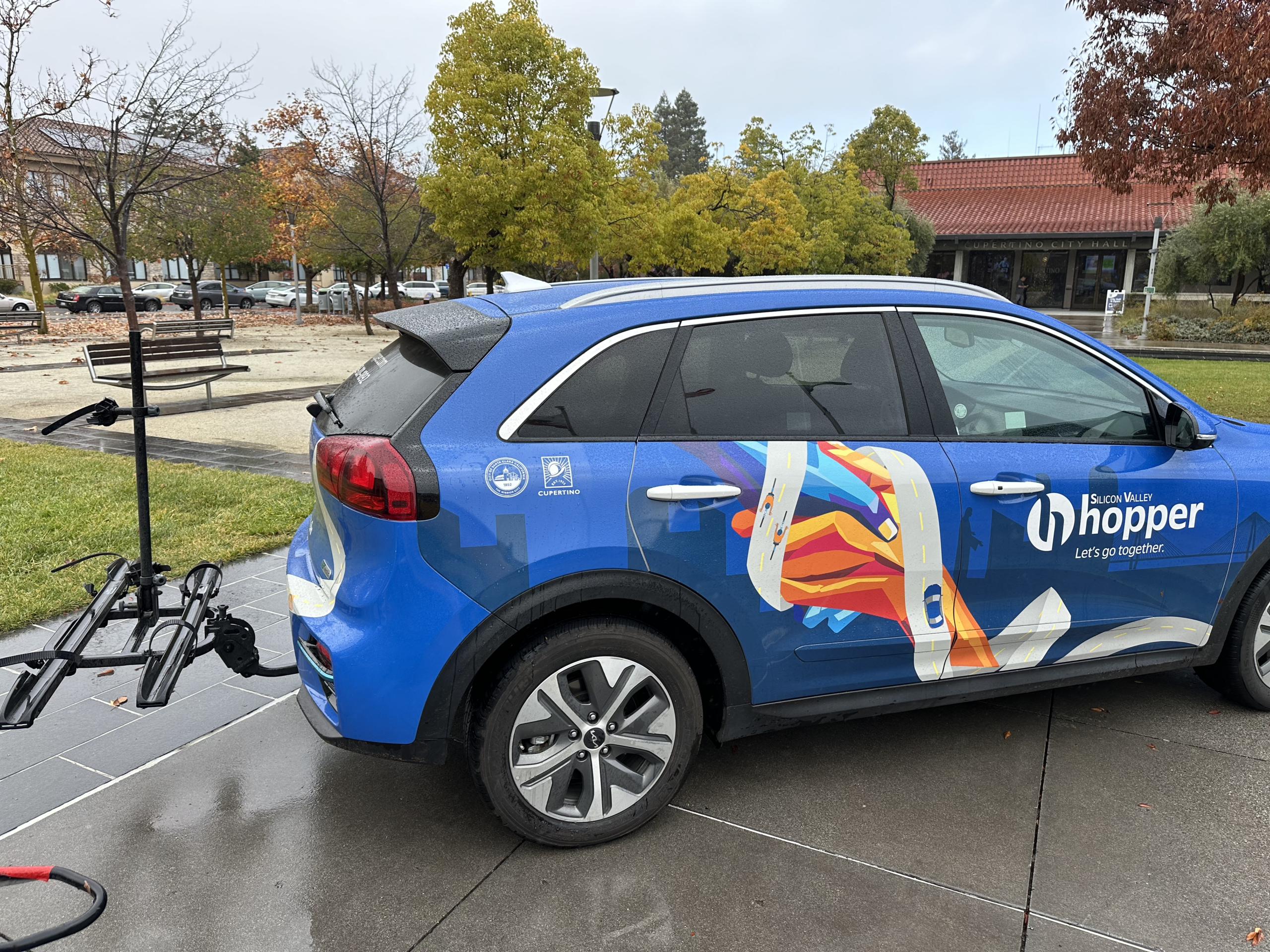
Silicon Valley Hopper has expanded its service into North Santa Clara as of July 1, allowing riders to travel throughout the city and reach destinations that include Mission College, Rivermark Plaza, Santa Clara Square and Great America Station. The expansion completes the second phase of a four-year partnership between Cupertino and Santa Clara to grow the microtransit ride-share service, which launched in Cupertino in 2019.
“The expansion of SV Hopper makes it easier for residents to get where they need to go by providing affordable, on-demand transportation throughout Santa Clara,” Santa Clara Public Works Director Craig Mobeck told San José Spotlight. “By extending service to North Santa Clara, this program improves access to jobs, schools, shopping, regional transit and other key destinations while strengthening first- and last-mile connections that complement our existing public transportation network.”
The expansion is expected to serve about 28,600 North Santa Clara residents. City officials said the service is intended to complement existing bus, light rail and commuter rail service by expanding affordable transportation options for older adults, students, low-income riders and people with disabilities.
Unlike Uber or Lyft, SV Hopper picks riders up and drops them off at nearby street corners instead of their exact destination. Riders can request trips through the SV Hopper app or by phone, allowing drivers to transport multiple passengers traveling in similar directions. Fares cost $3.50 per ride, with discounted $1.75 fares available for students, older adults, low-income riders and people with disabilities. Each additional passenger costs $1.
Coverage increases
Growing SV Hopper’s coverage area has long been part of the cities’ plans. Cupertino and Santa Clara jointly secured about $3.6 million in grant funding — $2.9 million from the state’s Transit and Intercity Rail Capital Program and $727,000 from VTA’s Measure B Innovative Transit Program — for the Santa Clara expansion in two phases.
The expanded service is projected to cost approximately $5.8 million between July 2026 and November 2027. The current grant funding will support SV Hopper through November 2027, with Cupertino and Santa Clara sharing the remaining costs based on the size of each city’s service area.
With North Santa Clara joining the system, the city’s share of the local, non-grant-funded costs will increase from 42% to 61%, while Cupertino’s share will decrease from 58% to 39%.
Matthew Schroeder, Cupertino’s senior transportation planner, told San José Spotlight the funding pays for all operating costs through the cities’ contract with Via Transportation, which runs SV Hopper. That includes vehicle operations, drivers, dispatching, app technology, customer support, fleet maintenance, accessibility services and data reporting.
The expansion also includes additional drivers and an increase in the fleet to 16 electric vehicles. Schroeder said Cupertino, Santa Clara and Via Transportation will continue monitoring vehicle deployment, driver hours, routing performance, peak demand and rider feedback to maintain service reliability.
Officials said the expansion is expected to generate more commuter trips by connecting North Santa Clara’s employment centers with existing service to Caltrain, ACE and Amtrak. Because North Santa Clara has more jobs than residential neighborhoods, Schroeder said the cities anticipate an increase in first- and last-mile transit trips.
District 1 Councilmember Albert Gonzalez said the expansion will help residents who don’t drive, particularly in neighborhoods with limited parking.
“SV Hopper expanding to District 1 is one way to help residents who are looking for alternate forms of transportation,” Gonzalez told San José Spotlight. “It’s a plus for our community. It’s going to benefit us in the long run.”
Gonzalez said many residents living in affordable housing along Calle de Mundo have limited parking, prompting some households to sell their cars and depend on other ways of getting around.
“SV Hopper is much more direct, in a way VTA isn’t,” he said.
SV Hopper completed more than 103,000 rides in 2025 and averages about 9,000 rides each month, according to Cupertino officials. But not every rider has been satisfied with the service.
During the May 5 Cupertino City Council meeting, Peggy Griffin, an older adult who frequently uses SV Hopper, said she has experienced lengthy afternoon waits while helping people use the service to travel to medical appointments after they stopped driving.
“When we got to one of the doctors … it dropped us off okay, but picking us up, it took 20 minutes of ‘no ride available’ before she even got an offer for a ride,” Griffin said at the meeting. “Then the ride was 31 minutes for a wait. So it was 50 minutes before she even got a car to pick her up.”
Still, Griffin said she sees the service as valuable enough that riders should pay more if it helps improve reliability.
“I think that the cost of the rides needs to increase,” she said. “It’s too low.”

Schroeder acknowledged wait times can increase during peak afternoon periods when school dismissals overlap with evening commutes. He said Cupertino, Santa Clara and Via Transportation are evaluating ways to improve reliability, including repositioning pickup locations near high schools to reduce delays caused by school traffic.
Janine de la Vega, spokesperson for Santa Clara, said the city’s long-term goal is to secure additional funding to continue the service.
“SV Hopper has demonstrated strong ridership and regional value by increasing access to passenger rail, but as with any public transit service, long-term continuation of SV Hopper at this service level beyond the current grant horizon will depend on securing a sustainable mix of funding sources,” de la Vega told San José Spotlight.
Contact Maryanne Casas-Perez at [email protected] or @CasasPerezRed on X.

Leave a Reply
You must be logged in to post a comment.