


|
Getting your Trinity Audio player ready...
|
For anyone navigating Silicon Valley, traffic can seem like just a backdrop to daily life.
It’s easy to accept long lines of cars on Highway 101 during rush hours, idling buses at crowded stops and students waiting beside busy intersections as part of the price we pay for living here. But that normalization masks a dirty secret: Our roads are a public health crisis in plain sight.
Transportation remains California’s largest source of greenhouse gas emissions, accounting for nearly 40% of the state’s total footprint. Yet while climate is often part of the conversation around transportation, its local impacts extend far beyond global climate change.
The fact is that in Santa Clara County, you do not have to live near an industrial facility to experience toxic air. We can become exposed simply by waiting at bus stops, sitting in traffic with car windows open, or attending schools located only a short distance from major highways.
That’s why the American Lung Association’s 2026 State of the Air report handed Santa Clara County an “F” grade. According to the state’s CalEnviroScreen 5.0 mapping data, lower-income neighborhoods and communities of color, particularly in areas like East San Jose and parts of Gilroy, face a disproportionate environmental burden. Families living directly next to US-101, I-680 and I-880 have to bear heavily concentrated exhaust, placing seniors and children at extreme risk of asthma and cardiovascular disease. This toxic air threatens more than 1.8 million county residents, placing children in our most vulnerable ZIP codes at an extreme risk of developing severe pediatric asthma.
While much of this pollution is invisible, its toll on the human body can be catastrophic. Fine particulate matter (PM2.5) is small enough to travel deep into the lungs and enter the bloodstream. Many Californians are familiar with smog, formed from nitrogen oxides from vehicle exhaust which can inflame airways and create ground-level ozone. But these days, with tailpipe emissions becoming cleaner, particulate matter of a different kind can impact our health.
That’s because a transition to electric vehicles, while key to eliminating tailpipe emissions, is not a standalone cure for curbing the health impacts of emissions. Increasingly, more of our particulate pollution comes from the wear and tear on tires on our roads and highways, which can become airborne, and electric vehicles can in fact make this problem worse, not better. Replacing every gas vehicle with a much heavier battery electric vehicle does not eliminate congestion, traffic injuries or the toxic particulate pollution generated by tire and brake wear.
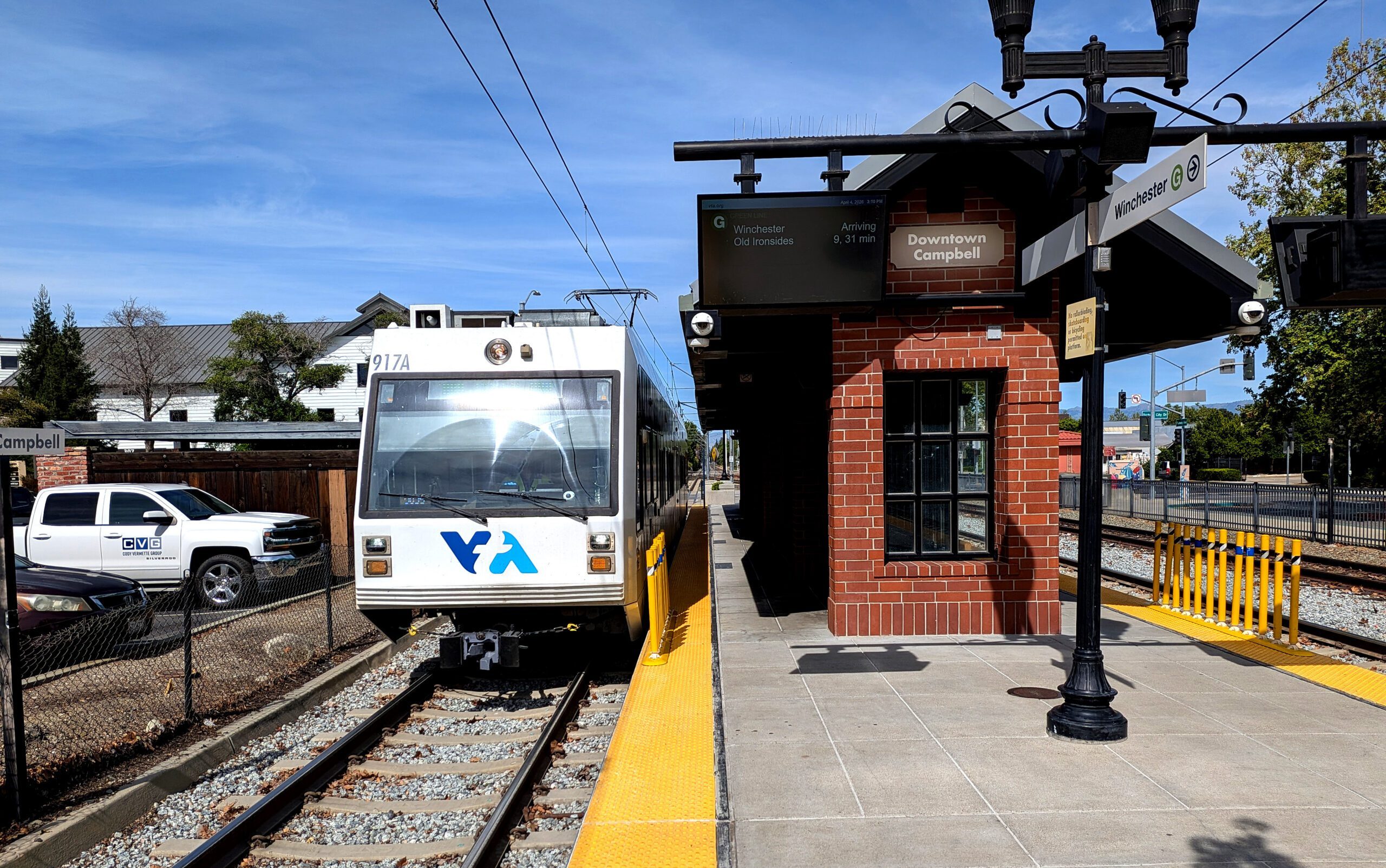
This is why public transit is essential for a healthy future for our communities — an investment that improves health for all Santa Clara County residents, even ones who may never ride a bus or train. Every full bus removes dozens of cars from the road, reducing emissions and improving air quality, including removing tire particulate matter from our air which is produced by all cars, whether gas-powered or electric.
There are other health benefits as well. Reliable transit also naturally encourages physical activity while expanding access to healthcare, education, jobs, grocery stores and other essential services, all at a lower transportation cost. Furthermore, building affordable housing near transit hubs shortens commutes, reduces overall emissions and gives families their time back, all of which compound to create healthy communities.
That’s why one of the best investments we can make in public health is supporting our public transit system — whether or not you’re a rider. The health and safety of our communities depends on it.
Sergio Lopez is a Campbell councilmember and chair of the VTA board of directors. Charlotte (Jingqi) Liang is the Climate x Health Collaborative founding co-chair at Silicon Valley Youth Climate Action.

Leave a Reply
You must be logged in to post a comment.