


|
Getting your Trinity Audio player ready...
|
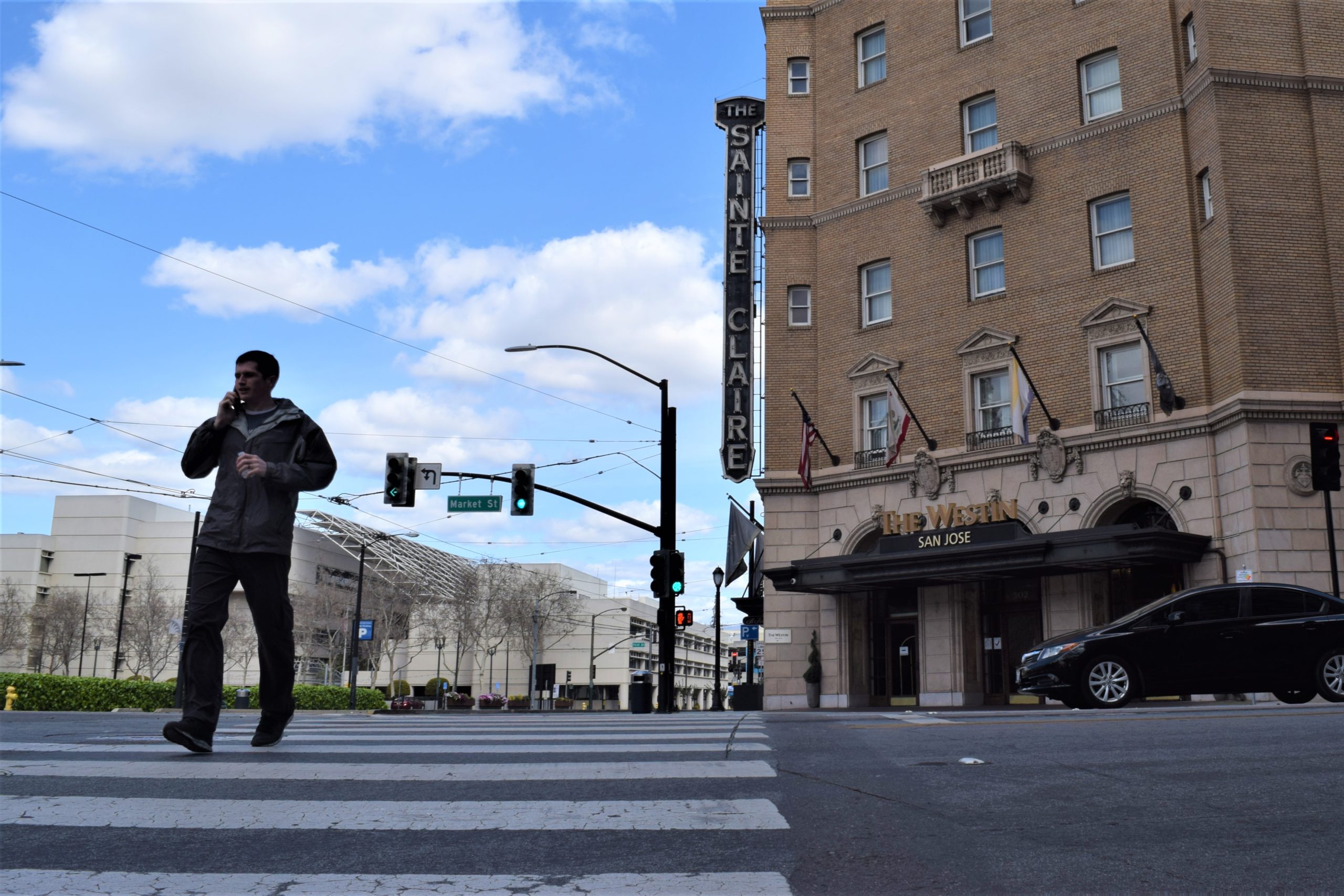
On Sept. 14, San Jose recorded its 18th pedestrian death of 2026.
That sobering milestone came during California Pedestrian Safety Month. While “18th pedestrian death” sounds abstract, it is important to realize that this statistic tells us something crucial: Traveling on foot or using a mobility device — one of the most fundamental ways we move through our communities — may put someone’s life at risk, including your own.
In 2024, more than 7,000 pedestrians were killed in traffic crashes across the U.S., including 1,090 in California. Not surprisingly, three in five of those deaths occurred in places without sidewalks, with the majority happening at night. Thousands of people are killed simply trying to get where they need to go.
What can we do about it?
To start, it’s important to recognize that while it is absolutely critical to look both ways before crossing the street, pedestrian safety is a collective issue, not just an individual one. We can teach a child to use a crosswalk, but what if there isn’t one? That’s the rest of the safety equation: Pedestrian safety must include purposeful design and sustainable resources to implement that design, as well as education and personal responsibility.
The way we design our transportation system matters. Sidewalks, visible crossings, adequate lighting, speed limits and other safety improvements make it easier for drivers and pedestrians to see one another and give everyone more time to react and make safe decisions. Just as importantly, these designs help make walking a practical transportation option rather than an obstacle course.
Data and research help turn a broad goal like “safer streets” into specific decisions about where and how to invest. And you don’t have to be an academic to help. Walk audits, for example, can bring neighborhood residents together with transportation professionals, businesses, schools and community leaders to examine what is actually happening on a street and who is affected. Where are there sidewalks? Does that road need a crosswalk? Does there need to be a new speed limit?
There are many other pedestrian safety tools you can use to educate yourself or help make your neighborhood safer, including UC Berkeley’s Street Story platform, which allows Californians to report crashes, near misses and places they feel are unsafe, providing valuable information alongside traditional crash data. Research from the Mineta Transportation Institute has also produced several related tools, including the Smart Mobility Calculator, which helps communities and transportation professionals better understand factors including walkability, safety, access and livability.
These kinds of information, resources and education are vital in identifying effective solutions — but communities still need the resources to carry them out.
That matters especially in a growing city like San Jose, where 138 pedestrians were killed between 2019 and 2023. The city is working to change that. Its Move San Jose Plan calls for safer and more convenient ways to get around without a car, including creating more walkable communities by concentrating jobs, housing and development near transit.
San Jose’s proposed five-year capital plan also includes more than $230 million for traffic safety and multimodal improvements. But plans and projects require funding to become reality, and some still face significant shortfalls. For example, the Jackson Avenue Complete Streets Project to improve safety and mobility along Jackson Avenue (from Berryessa Road to Story Road) currently has funding for design, but not yet for construction.
Walking connects us to our transit system, our schools, our businesses and each other. A city where a child can safely walk to school, an older adult can comfortably cross the street and a transit rider can reach the bus stop without fearing for their life is a better city for all.
Pedestrian Safety Month gives us an opportunity to focus on this issue, but safer streets require attention all year long. Pedestrian deaths are not simply an inevitable cost of getting around.
San José Spotlight columnist Karen E. Philbrick is the executive director of the Mineta Transportation Institute, a research institute focusing on multimodal surface transportation policy and management issues. Her columns appear on the first Thursday of every other month.
Leave a Reply
You must be logged in to post a comment.