


|
Getting your Trinity Audio player ready...
|
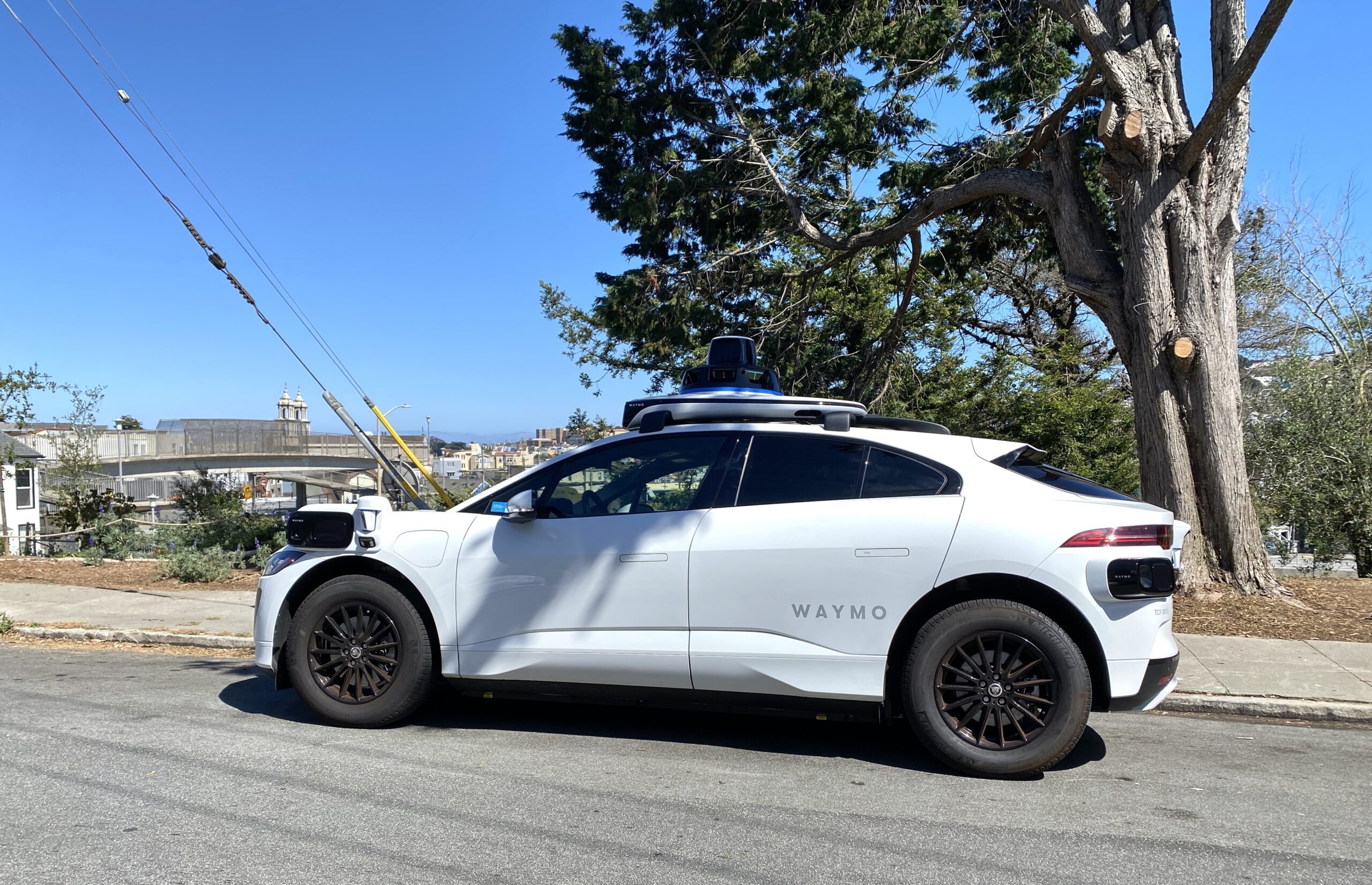
The power for more than 130,000 homes and businesses in San Francisco was knocked out in late December by a fire at a substation, but the outage had an unexpected effect: multiple Waymo self-driving robotaxis failed to adapt to the lack of traffic lights and abruptly stopped in the middle of intersections, dangerously blocking traffic.
The arrival of autonomous vehicles in California comes with promises of safer roads, smoother traffic, lower emissions and new jobs, but autonomy doesn’t operate in a vacuum — it runs on infrastructure. When that infrastructure fails, even the most advanced systems can falter. Is our infrastructure ready?
The U.S. autonomous vehicle market is booming, with an expected growth of more than $75 billion in 2030, an increase of 350% from 2023. This growth is, in part, inspired by research that has explored a wide variety of potential — and sometimes quite significant — benefits to more autonomous vehicles on the road. That includes improved safety, quality of life, public health, mobility and accessibility.
For context, in 2023 40,901 people were killed in car collisions in the United States, and human error is a key contributing factor in many of these crashes. Autonomous vehicles might be able to help us achieve Vision Zero and safer streets for everyone. In combination with other technologies and transportation models, autonomous vehicle use has also been shown to potentially reduce energy use, environmental impacts, congestion and overall transportation costs. Who doesn’t want cleaner, cheaper, more efficient mobility?
However, public trust in autonomous vehicle technology remains fragile: 66% of Americans reported being afraid of fully autonomous vehicles in 2024 (and 68% in 2023) — a major increase compared to 55% in 2022. This increase in apprehension likely stems, at least in part, from well-publicized incidents (like the one mentioned above in San Francisco) involving current autonomous vehicle technology.
This fear isn’t irrational, rather it is informed by what people are seeing online and on the streets. Stories and images of stalled robotaxis blocking intersections spread fast on social media and shape the public’s perception, maybe more so than overall safety statistics.
In the December incident in San Francisco, the Waymo cars were following the rules of their design, trying to keep everyone safe — but they failed to adapt at scale when the infrastructure they rely on failed, making safe-stop behavior lead to unsafe outcomes.
The Golden State has the world’s fourth-largest economy and nearly 40 million residents that depend on a vast infrastructure network to move about freely. Disruptions to our 25,000 bridges and 177,000 miles of roads means disruptions to critical supply chains and disruptions to how we work, play and live. Hiccups in infrastructure expose the limits of even well-designed autonomy and reveal what more we need to do to make autonomous vehicles a real, practical, scalable part of San Jose and the Bay Area’s future.
Autonomous vehicles are not just a question of technological innovation. The technology relies on clear and well-maintained road markings, functional traffic signals, reliable power and predictable right-of-way behavior. Investing in autonomous vehicles without investing in infrastructure is meaningless, especially as our roads, bridges and railroad tracks continue to age and be affected by climate stressors such as wildfires, extreme heat and flooding.
We cannot make progress toward a better transportation future without building up the foundation every system depends on.
As the heart of Silicon Valley, San Jose has long been on the forefront of technological innovation, and the advancement and deployment of autonomous vehicle tech is no different. In November, the San Jose Mineta International Airport became the first commercial, international airport in California — and the second in the world — to bring fully autonomous ride-hailing to its terminals. Waymo plans to expand into downtown San Jose and other parts of the city soon. Autonomous vehicles are already on San Jose streets, and we need to be asking ourselves if our streets are ready.
How does autonomous vehicle deployment intersect with transit, bikes and pedestrians? What happens during emergencies or power outages? Ultimately it is infrastructure that sets the conditions for success or failure.
It is not a debate about whether or not we should have autonomous vehicles on our streets — they are already here. The discussion needs to center on the need for regulations, resilient systems and infrastructure upgrades. Effective planning should integrate transportation, emergency management and public communication to best serve our communities and keep them safe. Readiness is not about perfection — it is about preparation.
San José Spotlight columnist Karen E. Philbrick is the executive director of the Mineta Transportation Institute, a research institute focusing on multimodal surface transportation policy and management issues. Her columns appear on the first Thursday of every other month.

Leave a Reply
You must be logged in to post a comment.