

|
Getting your Trinity Audio player ready...
|
As San Jose begins to create standards for building data centers, residents, advocates and researchers warn the city needs to develop robust safeguards for community health before approving any new projects.
San Jose is kickstarting its community engagement process this month through September, gathering input on what these standards should look like. Outreach will consist of community listening sessions and working sessions with residents, advocates and developers. The city manager’s team will develop these standards, provide updates to the City Council and present a final draft in the fall. City staff expect to give the proposed standards to the city council in December.
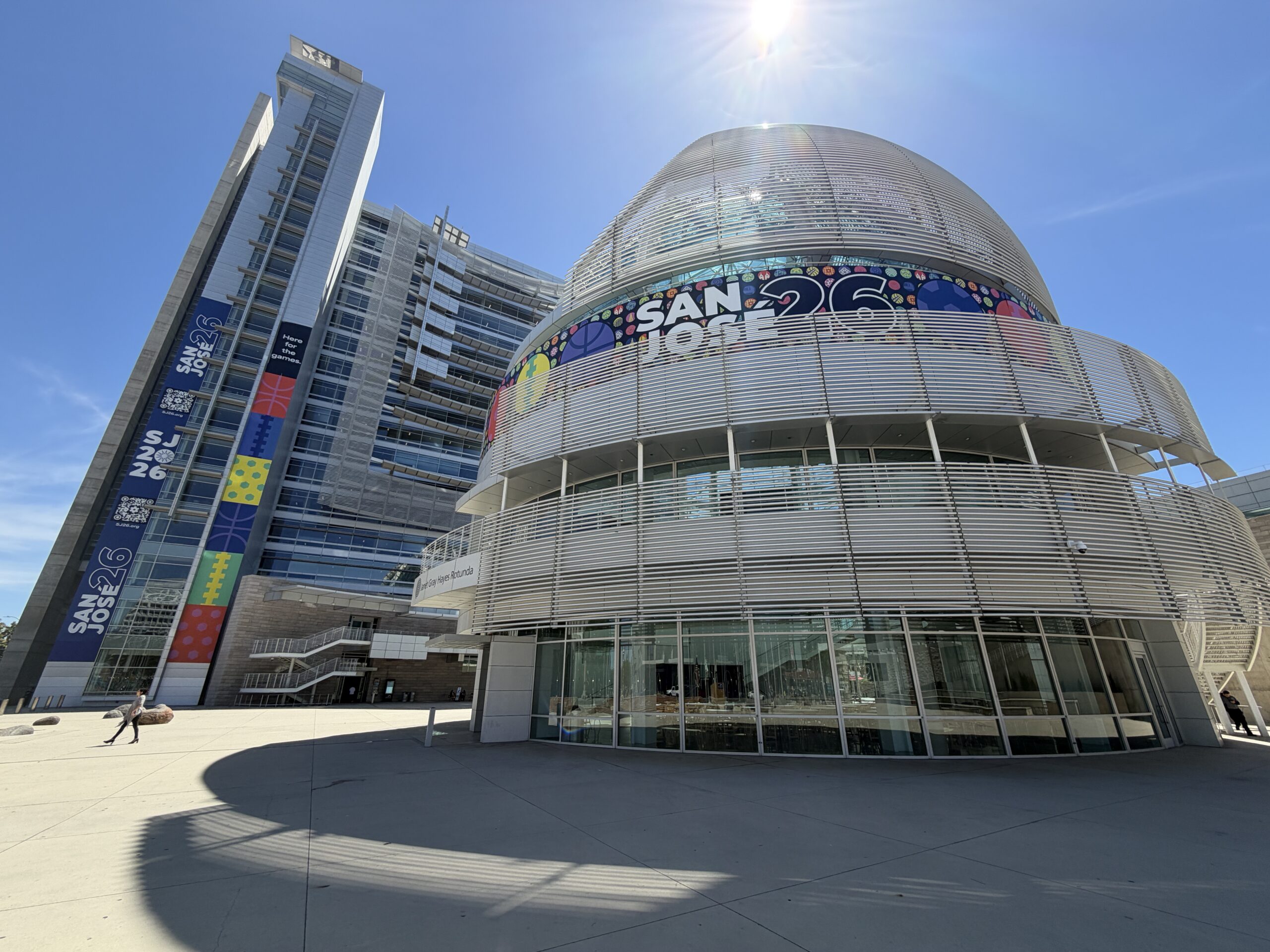
The first community meeting is Aug. 19 from 6-8 p.m. in the wing rooms at City Hall.
“Developing responsible standards for data centers and other large-energy projects requires careful consideration of a wide range of perspectives and the impacts these projects may have on our community,” City Manager Jennifer Maguire said in a statement. “Through a thoughtful engagement process, we will listen to and engage community members as we work toward a balanced, sustainable and well-informed approach that supports economic opportunity while protecting quality of life in San Jose.”
Linda Hutchins-Knowles, co-founder of a climate justice nonprofit Mothers Out Front Silicon Valley, said her top concern is that the process is participatory, open and transparent. She wants these standards to ensure that harmful chemicals discharged by data centers aren’t contaminating local drinking water.
“I really think the standards need to be requirements, not hopes,” Hutchins-Knowles told San José Spotlight. “There should be a moratorium in place while they’re developing the standards because we don’t want to grandfather in any projects before they’re in place.”
According to a memo from Mayor Matt Mahan and Councilmembers Peter Ortiz, Domingo Candelas and David Cohen, these standards would help mitigate environmental impacts, provide a process for community engagement and support cleaner infrastructure. The goal of creating these standards isn’t to simply regulate data centers, but to create a flexible framework to support economic growth and responsible development, the memo states.
“The public response to recent data center proposals has made it clear that we need to approach data center development differently in San Jose. We must establish strong environmental protections and quality-of-life standards that safeguard our neighborhoods,” Candelas said in a statement. “Equally important is a transparent and meaningful community engagement process that brings developers, residents and the city together early and throughout the process. Technological innovation should not come at the expense of the quality of life our residents deserve.”
Masheika Allgood, a data center and AI ethics researcher, said San Jose does not have the infrastructure to handle an AI data center boom. She said most of those contaminants from AI data centers are highly toxic, and the technology to treat these atypical contaminants hasn’t caught up yet.
“We clearly don’t have the power grid, and there’s been no studies, no reports, nothing written about the types of chemicals that are discharged from data centers, and whether our wastewater treatment has the technology to (remove) them,” Allgood told San José Spotlight. “They aren’t normal things that you just would automatically as a wastewater treatment plant have capacity to address. That’s why you have to do a study of what these contaminants are.”
Angelina Cayabyab, a San Jose resident and former employee at the Bay Area Air District that provides air permits, said San Jose should study the cumulative effects of having multiple development projects in one area, such as Alviso that is already heavily impacted by industrial developments.
Cayabyab said San Jose should require developers to disclose whether a data center is used for AI or not.
“That distinction matters,” Cayabyab told San José Spotlight. “Right now, it does not track whether a data center is AI focused or a traditional facility, and that distinction drives water usage, discharge and generator activity.” 
Allgood said if the city wants residents to trust the process, it has to show that it is being transparent. However, the city continues to label a proposed 250-megawatt Google development as a “large energy-use project” distinct from a data center, despite blueprints showing it has all the characteristics of a data center.
“If you’re saying that you’re serious about standards, but you’re still in the process of approving the largest data center that has been built in the Bay Area, then that’s not trustworthy,” she said.
Contact Joyce Chu at [email protected] or @joyce_speaks on X.

Leave a Reply
You must be logged in to post a comment.