

|
Getting your Trinity Audio player ready...
|
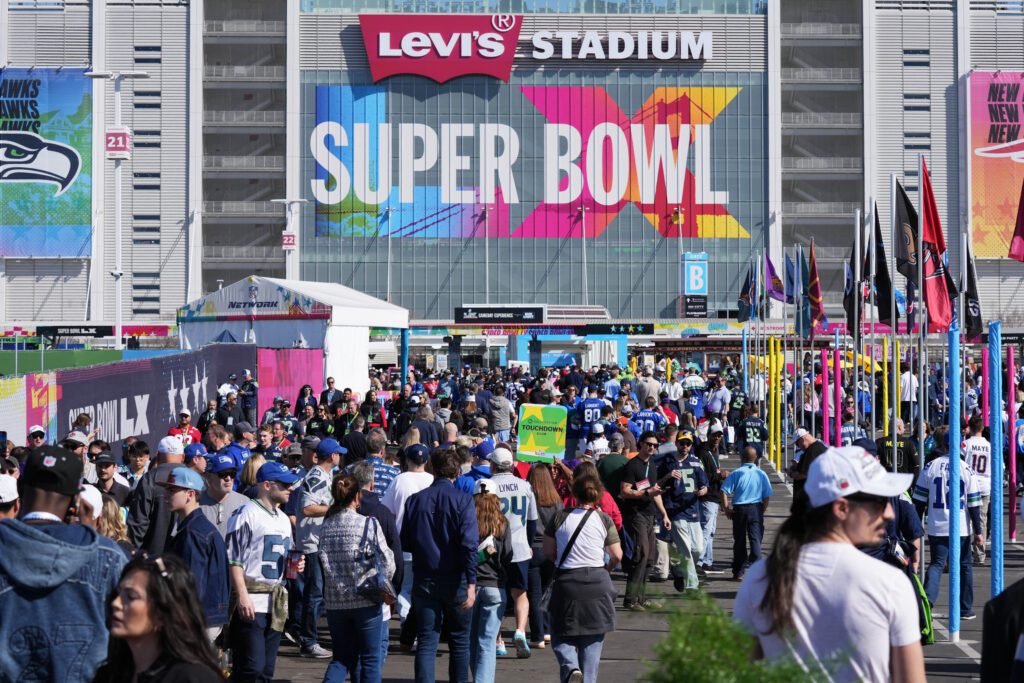
South Bay officials are touting a new economic analysis of Super Bowl 60, which found the game drove $720 million in total economic activity throughout the Bay Area, $195 million of which went to Santa Clara County.
The report, released Friday by the Bay Area Host Committee, may bolster the case from leaders in San Jose and Santa Clara that the region has made progress since Super Bowl 50 in 2016, when local leaders lamented that the vast majority of business activity from the game went to San Francisco. This time, the overall cash flow to the Bay Area is about three times higher than generated 10 years ago at $240 million. In addition, Santa Clara County’s share comes out to 27% of the total, marking what appears to be incremental, though significant gains. In 2016, the county netted roughly 20% of the commercial activity from that year’s Super Bowl, according to a previous analysis.
“The Bay Area Host Committee’s report confirms what San Jose businesses, workers and residents felt firsthand: Our city scored big during Super Bowl 60,” San Jose Mayor Matt Mahan told San José Spotlight. “We began preparing in 2023, the moment the NFL selected our region to host, and our team worked for years with partners across the Bay Area to deliver a world-class experience.”
Santa Clara spokesperson Janine De la Vega said the city is also encouraged by the report’s findings.
As another sign of increased tourism activity, De la Vega points to a 43% surge in city hotel tax revenue in February compared to the past year. Santa Clara plans to conduct its own economic impact analysis of Super Bowl and FIFA World Cup events, she said.
The Feb. 8 Super Bowl in Santa Clara was followed up by other major sporting events, including NCAA March Madness games held this spring at SAP Center and the upcoming series of World Cup matches set to take place at Levi’s Stadium beginning June 12.
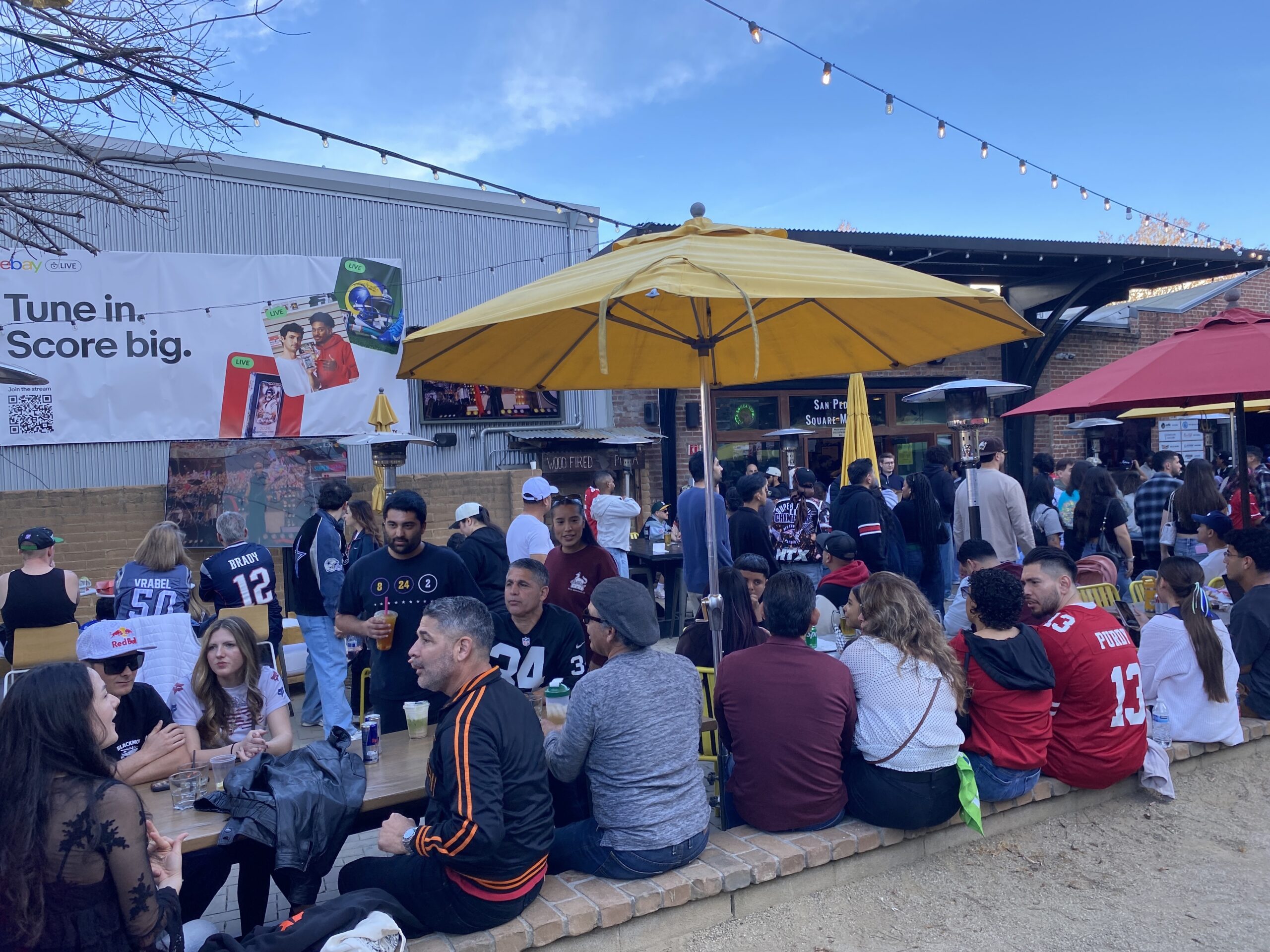
Hoping to give sports fans a reason to stay in San Jose, the city has supported an array of events set to coincide with this year’s big games. By the time the World Cup matches wrap up in July, the city will have likely seen more than 100 watch parties and about two dozen major events, including concerts and light shows, according to officials.
A bigger share of the pie?
The all-out events blitz is a direct response to the region’s lackluster economic showing during the 2016 Super Bowl. One analysis found that while the Bay Area as a whole drew in $240 million from that game, San Jose secured only 12% of the economic pie and Santa Clara saw only 7%. In contrast, San Francisco took home 57%.
The latest report covering economic activity from February’s game, conducted by global management consulting firm Boston Consulting Group, bases its estimate of economic impact on spending numbers that reflect the surge in purchases on things such as food, hotel stays and transportation.
The report breaks down its findings only to the county level. It found that San Francisco County captured about $425 million in revenue generated by the game, or about 59% of the total. Other Bay Area counties — such as Alameda, Contra Costa and Marin — captured about $100 million, or 14%. The game also attracted 90,000 visitors from outside the Bay Area, according to the report.
“Super Bowl (60) was truly a transformational event for the Bay Area,” Zaileen Janmohamed, president & CEO of the Bay Area Host Committee, said in a statement accompanying the report. “We’ve demonstrated that the Bay Area’s world-class infrastructure, hospitality, and business ecosystem can deliver meaningful economic benefits that extend far beyond game day.”
But Roger Noll, a professor emeritus at Stanford University who studies sport economics, poured cold water on the report’s jaw-dropping figures. He notes the report does not factor in important economic costs from the game. For example, big events often displace every-day business activity, like the local families that chose not to go to their usual downtown restaurant due to the crush of sports fans in the area. Such displacement can essentially wipe out the incremental gains from major sports events, Noll said.
“What others have found in studying other events … is that the increment is small to nonexistent,” Noll told San José Spotlight. “It doesn’t have to make us all rich to be worth doing.”
Then there is the money local governments spent on things such as event planning, marketing and police and fire personnel staffing.
San Jose set aside $1.15 million in this year’s budget to support major games in 2026, according to city officials. In addition, private sponsors donated another $5 million toward this effort.
Santa Clara officials have estimated expenses related to hosting the game totaled $6.4 million. The city expects to be reimbursed for “all eligible costs” by the Bay Area Host Committee, a spokesperson said.
Meanwhile, there has been grumbling about uneven business activity from many outside of San Jose’s downtown core, where the games provided less of an economic boost.
Jason Aland owns Henry’s Hi Life, a bar located in Little Italy within walking distance of downtown. Still, he said he didn’t see any increase in business during Super Bowl week.
“For us, week-over-week, year-over-year comparative sales were not much of an increase — if any,” Aland told San José Spotlight.
Local business observers have lauded San Jose’s efforts to capture more revenue from the big games. However, they said this work took a major hit when the Bay Area Host Committee announced a roster of official NFL-endorsed events that almost entirely excluded the South Bay. San Jose appeared just once on the list. Santa Clara didn’t make the list at all.
“I thought that was a little ridiculous, but that’s kind of how it works in this region — we still play second fiddle to San Francisco,” Mike Van Every, president and managing partner of San Jose real estate firm Republic Urban Properties, told San José Spotlight. “I think (the city was) ready and primed to even do better than those numbers, but because of circumstances beyond San Jose and Santa Clara’s control — we kind of got hosed.”
Contact Keith Menconi at [email protected] or @KeithMenconi on X.

Leave a Reply
You must be logged in to post a comment.