


|
Getting your Trinity Audio player ready...
|
While the San Jose City Council has approved new contract agreements with several public sector unions, a protracted labor dispute that has brought the city government dangerously close to a major worker strike will continue, after one bargaining group’s members rejected the deal.
Councilmembers on Tuesday unanimously approved updated three-year contracts that will cover roughly 4,000 city workers represented by IFPTE Local 21 and MEF-AFSCME Local 101. For these groups, the approval marks an end to months of tense bargaining talks that pitted workers against city leaders over a range of issues, including wages and worker protections from artificial intelligence displacement risks.
But the membership of one bargaining group — the Association of Maintenance Supervisory Personnel (AMSP), one of three IFPTE Local 21 chapters involved in the talks — rejected the deal, leaving it unclear where contract talks will head next.
Despite the incomplete resolution to the longstanding labor dispute, city leaders still celebrated the deals that did cross the finish line.
“This is definitely good news that we got to an agreement that I think is fair to our workers who we so appreciate, who do the essential work of the city every day, as well as residents and taxpayers who rely on city services,” Mayor Matt Mahan said at Tuesday’s meeting.
San Jose’s administrators and the unions’ bargaining teams reached a tentative agreement Oct. 8 that included a 3% annual wage increase for the next three years, along with other measures intended to address fears about workplace disruptions that could result from the city’s rapid embrace of AI tools.
The council’s approval follows earlier ratification votes by union members. AMSP — a union chapter which represents about 140 maintenance supervisors and managers working across a range of departments — is the only bargaining group to reject the deal. Union representatives notified city leaders Friday about the decision, officials said.
City officials are expected to discuss the situation with councilmembers next week during a closed session meeting.
“The city will continue to engage with AMSP regarding next steps as part of its ongoing efforts to support our workforce while ensuring that the city can deliver essential programs and services to the community, now and into the future, in a fiscally responsible manner,” Demetria Machado, a spokesperson for the City Manager’s Office, told San José Spotlight.
Representatives for IFPTE Local 21 did not respond to requests for comment.
Negotiations have been taking place since February to replace workers’ last three-year contract, which expired at the end of June after workers rejected what the city called its “last best and final offer.”
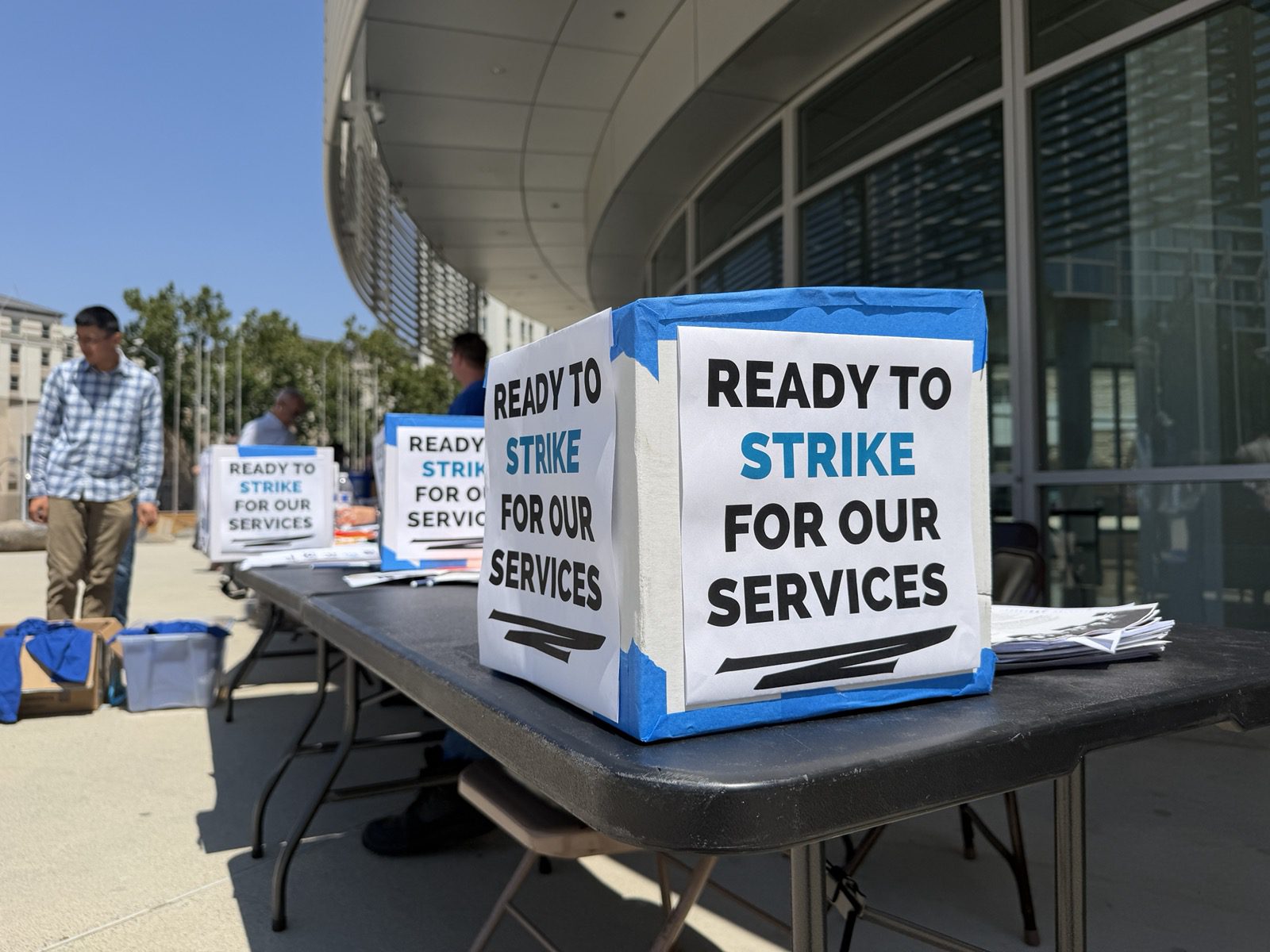
With contract talks largely stalled over the summer, thousands of union members voted in August to authorize a strike should progress fail to materialize.
Following the strike threat, San Jose negotiators added a number of financial sweeteners for workers, including a lump sum cash payment equivalent to 1% of their base annual wages and a promise of another 1% pay increase in the contract’s third year if the city’s budget hits certain benchmarks.
However, the deal still falls far short of the wage increases workers had demanded.
Workers contend a 3% annual increase will not even keep pace with inflation in the South Bay, amid the region’s ever-rising cost of living. Furthermore, they contend that lagging wages have led city workers to depart in large numbers, degrading city services.
While union leaders have lamented the deal’s wage provisions, they have also said it comes with a number of important wins for workers.
“We secured a contract that recognizes and respects our workers, and these are the people that keep the city running,” Carlos Murillo, an engineer at San Jose Mineta International Airport and an IFPTE union member who serves on the bargaining team, previously told San José Spotlight shortly after the tentative deal was reached. “It’s not everything we wanted or everything working families in our community needed, but it’s a step in the right direction.”
San Jose is facing tight budget constraints. The $5.5 billion budget the city passed in June balanced a $50 million deficit by tapping into reserve funds and making wide ranging service cuts. Meanwhile, the city is expected to face deficits topping $10 million for the next two fiscal years as well.  Had workers followed through on their strike threat, it would have been the largest labor action to take place in San Jose since 1981, according to union officials.
The city narrowly avoided a worker strike in 2023 after months of impasse. Mahan was the lone holdout when the council approved a deal that scraped together enough funding to meet workers’ wage demands.
At Tuesday’s meeting, District 5 Councilmember Peter Ortiz alluded to worker dissatisfaction over the city’s wage offer, even as he applauded the agreements that have been reached.
“Our employees deserve much more than often what we’re able to provide, especially in a city where the cost of living continues to put enormous pressure on working families,” Ortiz said. “I’ve always believed our city can’t serve its residents well while leaving behind the people who make those services happen.”
Contact Keith Menconi at [email protected] or @KeithMenconi on X.
Leave a Reply
You must be logged in to post a comment.