


|
Getting your Trinity Audio player ready...
|
The San Jose City Council has punted on a proposal that could have introduced ranked choice voting to certain city elections.
Councilmembers on Tuesday voted 8-2 — with Vice Mayor Pam Foley and District 10 Councilmember George Casey voting against, and District 5 Councilmember Peter Ortiz absent — to advance a ballot measure that would allow the city to use the ranked choice model to fill unexpected council or mayoral vacancies. However, while the original proposal would have put the question before voters this November, the final measure sets the ballot contest for the March 2028 primary election.
The year-and-a-half delay comes in response to an estimate from county election officials that found holding the vote this November would cost the city $2 million more than waiting until 2028, when the ballot measure could piggyback on the citywide mayoral election taking place that year.
The ranked choice reform push has been energized by concern about San Jose’s recent spending on special elections. Supporters argue that granting city leaders the option to use ranked choice voting in such elections could save the city millions of dollars by eliminating costly runoffs.
However, the proposal has been met with fierce opposition. At various points during Tuesday’s public comments, angry residents described the voting method as “bad public policy,” a “scam” and an “abomination.” Several argued it undermines elections by adding unnecessary complexity.
But District 4 Councilmember David Cohen, a chief backer behind Tuesday’s proposal, said even if voters pass the ballot measure, it would mark only an incremental change, as the ranked choice reform covers just a subset of city elections and would not apply to regular elections.
“It would give us a good testing ground … to see how well it works in our city,” Cohen said at the meeting. “Voting yes today doesn’t impose anything on our voters, it empowers the voters to decide if they want to add this option to the charter.”
Under San Jose’s charter, when a vacancy opens up on the city council or in the mayor’s office outside of the typical election cycle, councilmembers may either fill the vacancy through appointment or by calling a special election.
The council has had to fill such vacancies several times in recent years. That includes two times in 2023 to fill the vacancies left behind by former District 8 Councilmember Sylvia Arenas, who won a seat on the Santa Clara County Board of Supervisors, and Matt Mahan, who departed District 10 after winning the 2022 mayor’s race. Most recently, San Jose held a special election for the District 3 council seat to fill the vacancy opened up when former Councilmember Omar Torres resigned amid a child sex abuse scandal.
In the case of a special election, if no candidate wins an outright majority of the vote, the city must hold a runoff election. Critics said holding two off-cycle elections, often with extremely low voter turnout, is a poor use of city resources.
If San Jose allowed ranked choice voting, the city could instead conduct an instant runoff, eliminating the need for the second vote. In the case of last year’s special election in District 3, doing so would have saved the city $1.5 million, backers contend.
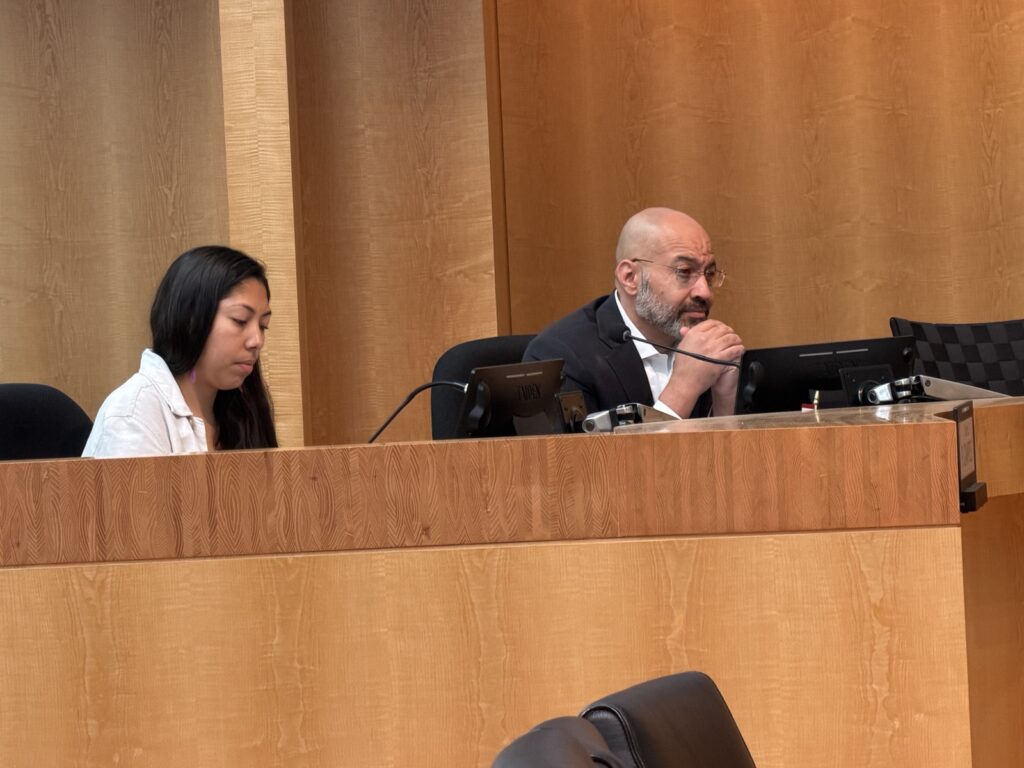
But while supporters maintain ranked choice voting helps boost voter turnout, detractors have questioned this claim. They warn that by foisting an unfamiliar system on voters, the plan could backfire, causing some to stay home or lose trust in the process.
“Yes, elections are expensive — especially in California,” former Santa Clara County Assessor Larry Stone, a consistent critic of ranked choice voting, said during public comment. “But sometimes the cost of elections are some of the best and most cost-effective expenditures a government can make.”
Under a ranked choice system, if a voter’s first choice candidate receives the lowest vote count, their vote shifts to their second choice candidate. The process continues until a single candidate garners a majority of the votes.
Casey warned the work it would take to educate voters about the new voting method could require significant city expenditures.
“I just don’t understand the need to add an extra layer of complexity to the voting process,” Casey said at the meeting. “I think we should be making it as simple as possible.”
The proposed change, which requires voter approval because it’s a charter amendment, would only create the option for ranked choice voting — leaving it up to the council to choose what voting method to select to fill any particular vacancy.
Councilmembers also asked staff to review how ranked choice voting systems have played out in other cities. Councilmembers must still review the ballot measure at least one more time before it gets placed on the March 2028 ballot, leaving open the possibility it could be revised or even scrapped entirely.
San Jose has considered ranked choice voting before. In 2022, a proposal to enact ranked choice voting for all city elections emerged as one of the primary recommendations from a year-long charter review process conducted by a citizen-led commission. However, councilmembers rejected the measure over similar concerns.
Four years later, as ranked choice voting systems catch on in more places — including Hawaii, Washington, D.C., Portland, Oregon and Seattle, Washington — some of the reform’s local supporters are growing impatient.
“Ranked choice voting is good government, and it is being implemented by governments throughout the country successfully,” San Jose resident and prominent housing advocate Alex Shoor said at the meeting. “How many more governments need to implement ranked choice voting before we make it our policy here in San Jose?”
Contact Keith Menconi at [email protected] or @KeithMenconi on X.
Leave a Reply
You must be logged in to post a comment.