


San Jose’s largest public school district is looking to use bond measure funding to not only pay for workforce housing, but also to update its aging schools.
The San Jose Unified School District has plans to modernize all of its 49 campuses and facilities to the tune of $4 billion. Officials are looking to pay for more than $1 billion worth of upgrades with Measure R, a nearly $1.2 billion bond measure approved by district voters in 2024. The funds will be used to improve school safety, upgrade classrooms and facilities and provide affordable housing for teachers and staff. More than $282 million is expected to be set aside from Measure R for workforce housing.
“We don’t have $4 billion to knock out everything that we want to do, but (we do have) a substantial amount of capital,” Seth Reddy, SJUSD chief business officer, told San José Spotlight. “Rather than making repairs in a piecemeal fashion, we wanted to take a step back to develop a strategic plan … and be responsible stewards of those tax dollars. We want to be thoughtful and strategic about how we invest those funds to best support our students and our teachers and staff.”
Parent Michael Melillo, former co-chair of the Measure R campaign, sees the district’s plans as aspirational and noted the lack of funding to pay for them.
“That’s a dramatic shortfall from what we would need to do all of this work,” Melillo told San José Spotlight. “If we can’t do everything … what can be done and at which schools? There are a lot of school buildings and facilities that are either beyond their useful life or very close to it.”
The district’s $4 billion facilities master plan will guide investments for the next 15 years, and is expected to be reviewed by the school board later this fall. The plan envisions using $3.2 billion for campus modernization and construction; $188 million for heating and cooling systems; $57.5 million for program management and contingency; and $55.5 million for critical repairs at schools that added students following recent campus closures due to declining enrollment.
SJUSD has $1.5 billion available for its plans, and anticipates receiving $225 million in state matching funds to help modernize school facilities. That’s in addition to more than $38 million in expected developer fees, more than $121 million from a district building fund and more than $11 million from a maintenance budget.
Reddy said the district will pursue state matching grants and energy-efficiency grants to make Measure R dollars last. He said while system repairs are a priority, athletic fields, outdoor spaces and multipurpose facilities remain an integral part of the long-term campus updates.
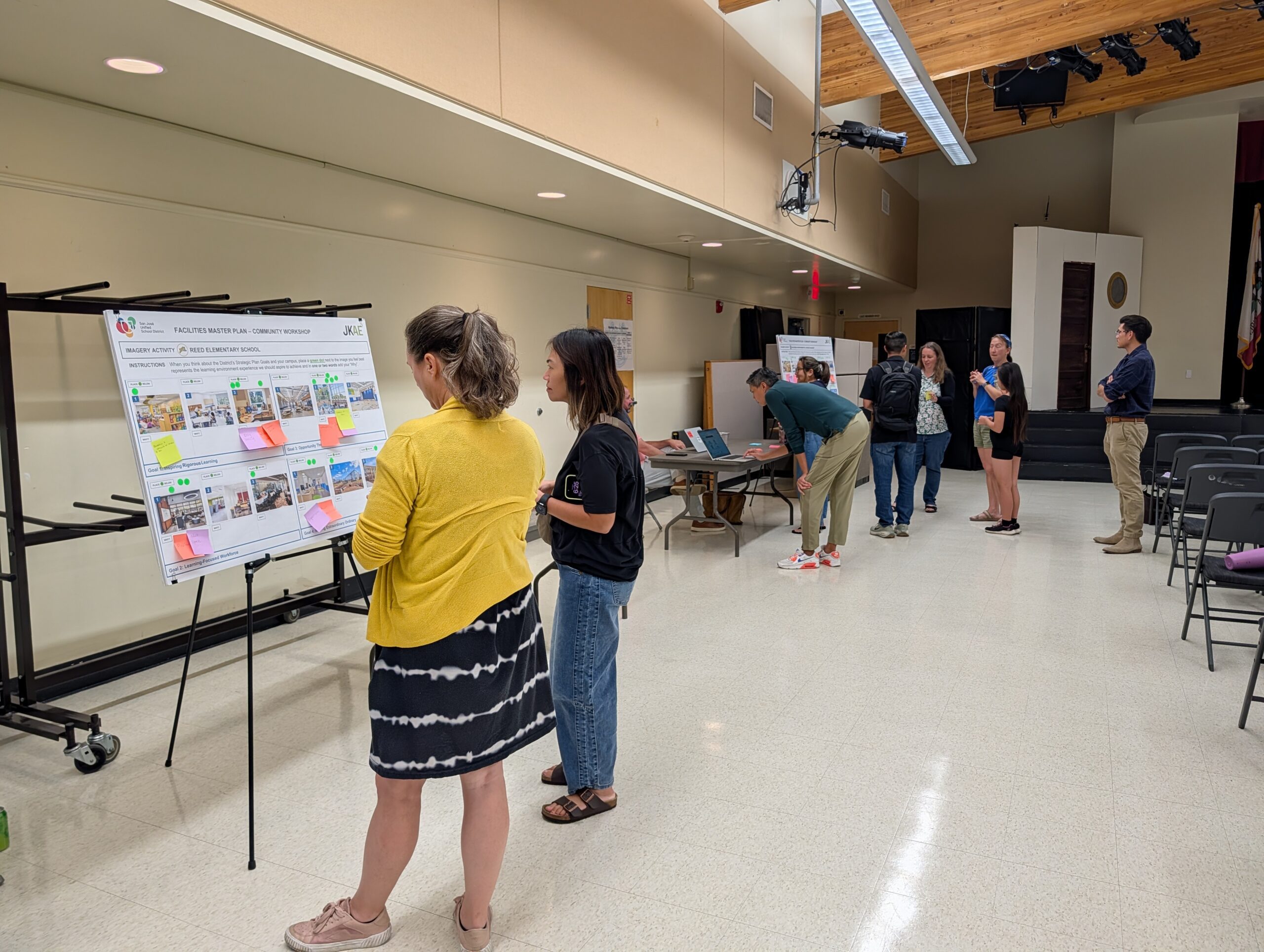
Work may start next summer, but Reddy said large-scale projects wouldn’t begin until summer 2028. In the meantime, the district has been sending out surveys and holding community workshops to show off conceptual plans and take feedback from the community.
He said the whole point is to have a list of district needs, and then determine how those projects will be funded.
But parent David Friedlander wants to see more meaningful collaboration. At a Sept. 17 community workshop on the plans, he said he’s frustrated with the continued lack of public engagement.
“Community engagement needs to happen while plans are being developed, not after significant work has already been done,” he said at the meeting. “That’s exactly what creates the mistrust that we’ve highlighted between the district and the community. I truly hope that these workshops show us that our voices still matter.”

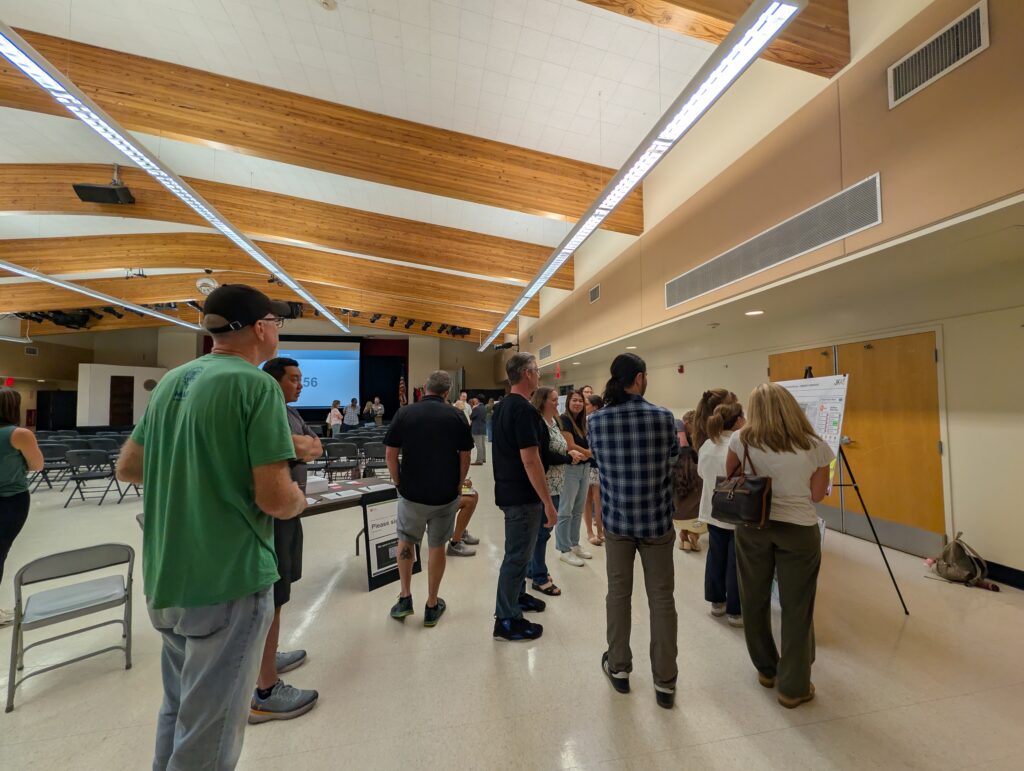
About 70 people showed up at Pioneer High School on Oct. 8 for another community workshop, where attendees could give input on the proposed modernizations. Teachers at Castillero Middle School said air conditioning doesn’t work in every classroom, and parents noted the school is a performing arts magnet but lacks a large indoor performance space.
Parent Amy Lazzini said based on the district’s plans, updating HVAC and electrical systems appears to be the priority, but she is concerned future projects like a multipurpose room won’t be realized.
“The money’s going to run out on us,” she said. “We’re going to get very minimal (changes).”
Contact Lorraine Gabbert at [email protected].

Leave a Reply
You must be logged in to post a comment.