


Santa Clara County is ensuring residents have access to affordable healthcare.
Valley Care, an expansion of the low-cost Primary Care Access Program, will enable residents to enroll or re-enroll in healthcare following federal changes to Medi-Cal that will cause people to lose benefits. The program’s coverage, which starts Jan. 1, will include emergency room visits, hospitalization, lab work and pharmacy services for residents barred from Medicaid, known as Medi-Cal in California, Medicare or Covered California and fall within 650% of the federal poverty level. It is funded through the Primary Care Access Program’s $90 million budget.
The Primary Care Access Program launched in January 2017 through a grant from the Blue Shield Foundation. The program covers thousands of people who can receive care at county facilities and community health clinics.
President Donald Trump signed into law the “One Big Beautiful Bill Act,” or H.R. 1, on July 4, 2025. The bill requires Medi-Cal recipients to spend 80 hours a month working, in job training or doing community service and earn at least $580 per month. About 129,000 county residents could lose Medi-Cal benefits over the next two years because of the federal changes, Santa Clara Valley Healthcare CEO Paul Lorenz said.
“It’s better for them as individuals to have access to healthcare on a regular basis,” Lorenz told San José Spotlight. “And it’s also better for our health system relative to making sure that we have the reimbursement to provide for their care. We actually just about got there until the federal government started to screw it up.”
Many immigrants on Medicare, who live in the U.S. legally, including refugees and people with temporary protected status will also lose coverage, even after paying into the system for decades.
Santa Clara County faced $1 billion in annual losses from federal spending cuts under H.R. 1, which decimated funding for Medi-Cal and CalFresh food benefits. The county consolidated services, closed mental health clinics and eliminated positions to balance the budget. The county also put Measure A, a five-eighth cent sales tax increase marketed as an emergency lifeline for the public hospital system, on the ballot. The measure was approved by voters last year.
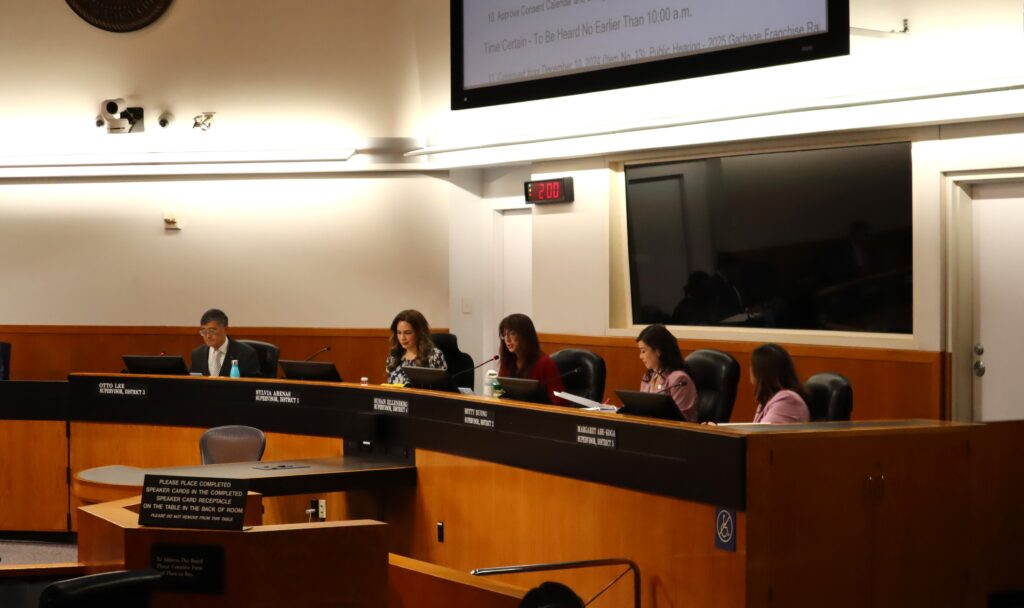
The Board of Supervisors approved the Valley Care program on Oct. 20. Supervisor Susan Ellenberg said people who apply for Valley Care will first be screened for Medi-Cal and Covered California eligibility.
“If we can get people coverage under other insurance plans, obviously that’s more cost effective for us,” she told San José Spotlight. “But for that population that is not eligible, we now have this product. We want to provide coverage for the unfortunately increasing population that will no longer be covered by Medicaid and that will no longer be able to take advantage of Covered California because the premium subsidies have gone away, also thanks to H.R. 1.”
Bob Brownstein, strategic advisor for Working Partnerships USA and one of the architects of the access program, sees healthcare as a social value. He said being unable to afford healthcare can affect a person’s sense of well-being, lead to fear and anxiety and impact their ability to work or stay in school.
“If you’re going to have a society that’s just and reflects caring about all of its members, including the most vulnerable, you want to make sure that they have healthcare,” he told San José Spotlight. “If people don’t have healthcare, it’s very hard for them to be able to have full, quality lives.”
Brownstein said Valley Care was needed to mitigate the damage of additional Medi-Cal requirements.
“The people who made the work requirements had no interest at all in having people get jobs,” he said. “This is a budget mechanism. You get the savings because people won’t be able to stay on the health program. If the people in Congress who pushed this were thinking, ‘We really want to get people working,’ they’d have put together a program to help people get jobs and not a program to throw them off of healthcare.”
Supervisor Margaret Abe-Koga said regardless of whether someone is insured or not, the county is responsible for taking care of its residents. She said having access to preventative care is crucial to avoid health problems that could result in an expensive emergency room visit.
“My father was a self-employed gardener, and so he didn’t have work-based insurance,” Abe-Koga told San José Spotlight. “He had a preexisting condition, so when he applied for health insurance, he was denied. He had diabetes … preexisting conditions that weren’t treated until he got on Medicare. Because he wasn’t getting regular care treatment … he had high blood pressure. He had a triple bypass. He passed away from kidney failure. What happens is these conditions if not detected and treated early pile up and become much more severe. If you don’t have coverage, you’re likely not to go to the doctor because you can’t afford it … and that’s why I’ve always prioritized having access to quality health care for everybody.”
Emergency room visits by uninsured county residents have increased from 9% in January to 13% as of November, Lorenz said.

Briana Gallo, spokesperson for Registered Nurses Professional Association, said nurses are understaffed in many county health departments and especially in emergency rooms. Gallo said the revocation of healthcare for residents due to H.R. 1 is disastrous.
“Valley Care is the county’s effort to address community members losing insurance,” Gallo told San José Spotlight. “Hopefully, Valley Care and expanded county funding will lead to more nurses for our hospitals.”
Lorenz understands these concerns.
“We’re going to do whatever we can to make sure they feel supported and are able to care for patients,” he said. “We see close to 750 to 800 patients in our emergency rooms on a day-to-day basis.”
He said the emergency room at Regional Medical Center in East San Jose has been expanded and Valley Medical Center will also increase its emergency room capacity. Urgent care access was expanded at St. Louise Regional Hospital in Gilroy to weekends to avoid emergency room visits.
“We are trying to develop strategies to anticipate the increase in the demand for emergency room care in our county,” he said. “It’s something we’re going to monitor very closely and adjust staffing as we need to. We have been very fortunate that our county board has been supportive of programs such as Valley Care. There are very few programs, if any, that are as robust and focused on maintaining the health of our entire community.”
Contact Lorraine Gabbert at [email protected].

Leave a Reply
You must be logged in to post a comment.