

|
Getting your Trinity Audio player ready...
|
Immigrants from around the world are drawn to America for the opportunity to create a better life, and Silicon Valley has been a magnet for such diversity. Whether it’s foreign-born transplants looking to hit it big in tech, families escaping persecution or searching for a fresh start — their dream is to find freedom and prosperity.
Santa Clara County, home to about 2 million people, is one of the most diverse regions in the nation. Asians make up 44% of the population and Hispanic or Latino residents are about 25% of the population, according to the 2025 U.S. Census. San Jose is home to the largest Vietnamese community of any city worldwide outside of Vietnam, representing between 11% to 17% of the city’s population. San Jose is home to one of just three remaining Japantowns in the U.S., and the region has robust Indian and Chinese populations.
In celebration of America’s 250th anniversary, San José Spotlight asked local residents of various ethnicities what the U.S. means to them, how they feel about the current state of our country and what changes they’d like to see as the nation moves forward.
Below are their responses.
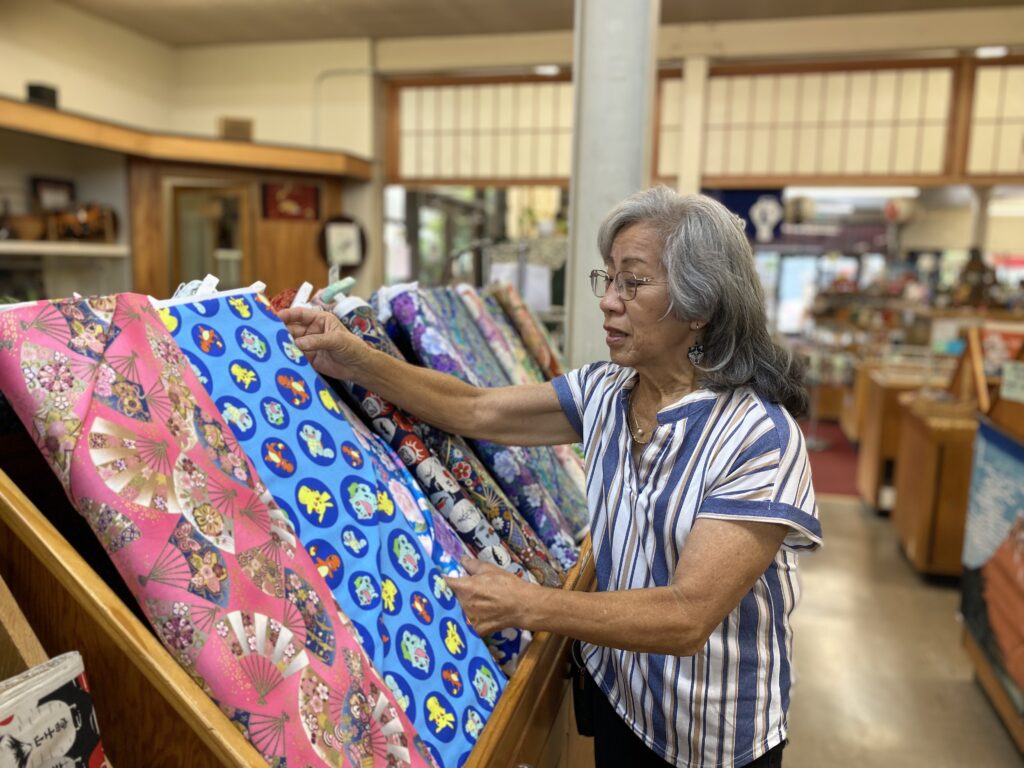
Arlene Tatsuno Damron
Arlene Tatsuno Damron, 81, is the owner of Nichi Bei Bussan, a longstanding store in Japantown specializing in Japanese goods. The store recently celebrated its 78th anniversary in San Jose, but the storefront was spawned years before in San Francisco by her father Dave. It has weathered many storms, including the 1906 San Francisco earthquake and fires, World War II and when the government seized Japanese people’s properties and shipped them to internment camps.
Tatsuno Damron has also witnessed the generations of change the country has rode through. Born in 1944 in the Topaz internment camp in Utah, she spent seven months there before her family was released. She is a third generation American who sees the echoes of the country’s past repeating today. She wants Americans to gain a deeper appreciation for all the varying cultures that exist in this “salad bowl” — the diversity of stories that makes this country beautiful and what makes her proud to be an American.
What does it mean to you and your family to be an American?
America is potentially a wonderful place. It’s a nation where there’s not just one race. People in the past have talked about the U.S. as a melting pot. I don’t believe so. My thought is that we’re a salad. All these separate veggies are wonderful in themselves. They have their own special qualities, whether it’s slimy like okra, or tangy, or sharp, or sweet or crunchy. Now you toss them all together in a bowl, like our country. Each one is contributing. They’re bringing something very unique and very special to that bowl. Now, you can still tell a tomato is a tomato. But it has all these added additional flavors from all these other ingredients that have contributed. We get a little rough around the edges. I’m sure we’ve seen a lot of that lately, but you look for the best.
They’ve always called the U.S. the land of opportunity. How many people have come for that very same reason from different countries, whether (they’re) coming from Europe, South America, Mexico, Canada over the ocean from the Pacific. Essentially, people came for a better life. That’s universal.
I think what happened after internment, it became very important for Japanese Americans, who were very upstanding people, to show how wrong the government was.
For how many years has the world wondered, ‘How (did) the German people allow Hitler to do what he did to the Jewish people?’ Fast forward. It’s Putin. What was he doing to Ukrainians? Pretty much the same kind of thing. Echoes of the past. Learn from history.
@sanjosespotlight In celebration of America’s 250th anniversary, @sanjosespotlight ♬ original sound – San José Spotlight
What are your thoughts on the current state of our country?
It is a sad state. I don’t know how we got this way. It’s easy to start labeling people and not giving people the benefit of doubt. I think what we’re missing, especially (from) COVID, (when) everybody had to shelter in place — you couldn’t have dialogue, you couldn’t meet with people. People need connection.
What changes do you want to see moving forward in our country?
More understanding. The only way you do that is by talking to people with an open mind, and it shouldn’t be us against them. What can we learn from all these different types of people?
We have a unique opportunity, because we have such diversity (in Santa Clara County). Other places you don’t have it. On any given weekend during the summer, how many different kinds of ethnic community festivals could you go to?
I think we keep on being positive. It’s hard to be positive sometimes. (More than a century ago) you didn’t even know when the Civil War ended when you were in California. Now you know all the bad things happening all around the country, all around the world at every given moment. And you can’t do anything about it, really. So what you need to do is actually talk to people, share, help people in whatever little spot you have.
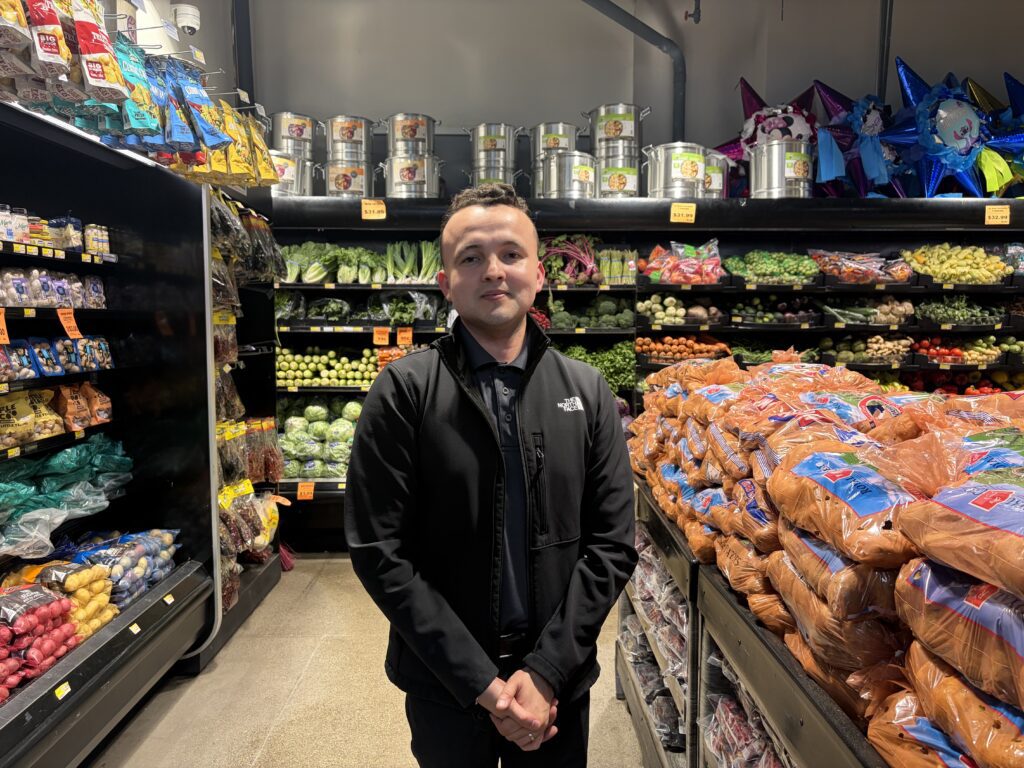
Francisco Uvliz
Francisco Uvliz is managing director of SantaFe Mercado — Carniceria, a Mexican grocery store serving Santa Clara County. When he was younger, he worked at a student-run news radio station in Mexico before later settling in California.
Drawing on his experiences in both countries, Uvliz said he views being American as a powerful idea rooted in opportunity and connection. He hopes the country continues creating more equal opportunities so people can work, support their families and build better lives.
What does it mean to you and your family to be an American?
The word American I feel is very strong, it’s a big word and it encompasses a lot. First of all it can be inspiring, it’s inspiring for us (Latinos) working in a Mexican market being American because we have daily interaction with others. The word American makes us think because it’s such a big word it encompasses a lot of topics, specifically being American and working in a place like this creates a close relationship with people.
What are your thoughts on the current state of the country?
I don’t have much of an opinion, but I think we should focus on what we are doing. I think if it’s going well for one person, it will go well for the rest of us. For our workers here (at the market), we always try to give them the best work experience so they feel happy in a safe work environment for them and their family.
What changes do you want to see moving forward in our country?
I think it would be best to create more opportunities for people. There are always people coming to the United States to find work and unemployment is so high. I just feel there needs to be more equal opportunities and they should create more labor jobs for the people that are here.
We have to be a bit more open, level the playing field, that we can all have the same access. I think everyone wants to work and aspires to move up in the world. If we give other people the opportunity and space, then there will be great results.
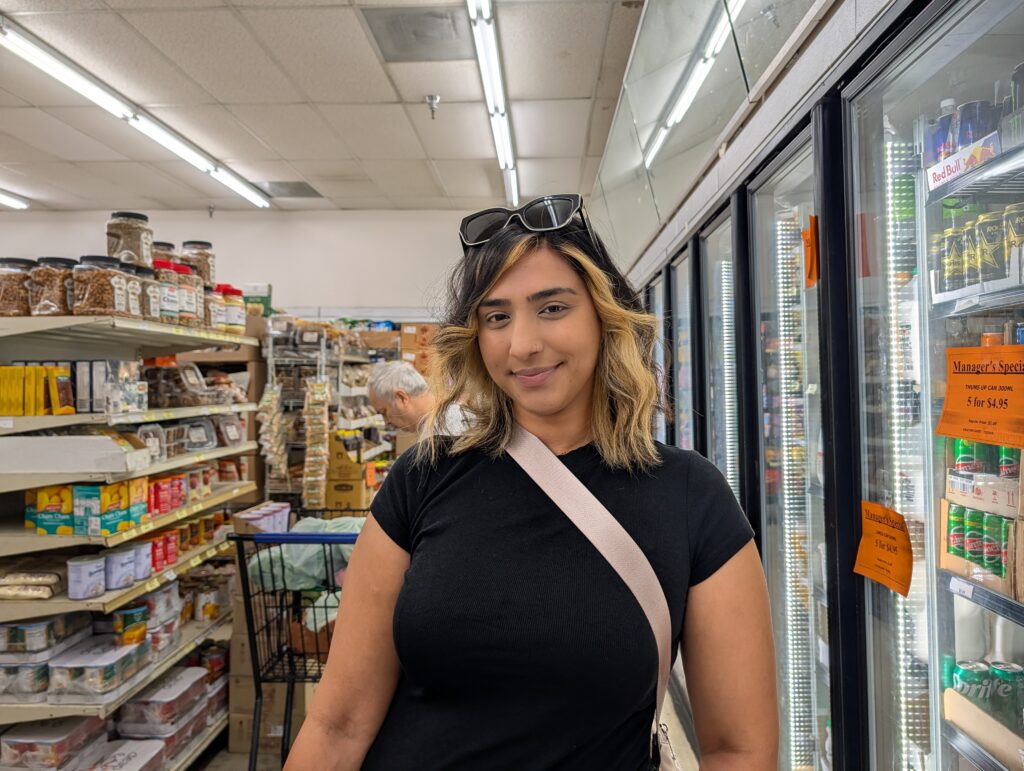
Monika Badwal
Monika Badwal, 31, lives in San Jose and owes her strength and confidence to her parents, who immigrated from India to the U.S. after living through war, genocide and a caste system. It pushed her parents to want something different for themselves and their three children, even if it meant they had to start at the bottom.
They took whatever work they could find — sales, management, maintenance, construction and administrative work. They even owned a business. Badwal’s sister is a doctor and her brother is an engineer. They support each other’s career goals. She said her brother pushed her and her sister to pursue their master’s degrees and they’ve helped him financially. Today, Badwal works in human resources.
What does it mean to you and your family to be an American?
I love the freedom that we have. Politics aside, being American is a good head start that our parents gave us, and I’m glad to be American. I’m super grateful.
(My parents) wanted us to have a chance to be able to have the freedom of choosing who we wanted to be without constraints. I’m so thankful every day for my parents. Seeing what they had gone through, what my grandparents had gone through and had to live through. My grandfather, my dad, they’re all army men, so they traveled a lot. But it’s tough everywhere outside of America. We have our struggles here too, but it’s different.
(My parents) were working like dogs and also getting an education. My mom put herself through school to get a better job that could provide for us. They worked really hard. They struggled and they got us to have a great start to our life.
What are your thoughts on the current state of the country?
It’s scary, to be honest. We don’t know if tomorrow we’re going to war or something will (be) happening to us.
What changes do you want to see moving forward in our country?
I want everyone to remind themselves to be kind. Be empathetic toward each other. This hate stuff needs to stop. We have to support everyone. We’re all human. Find your purpose and live it.
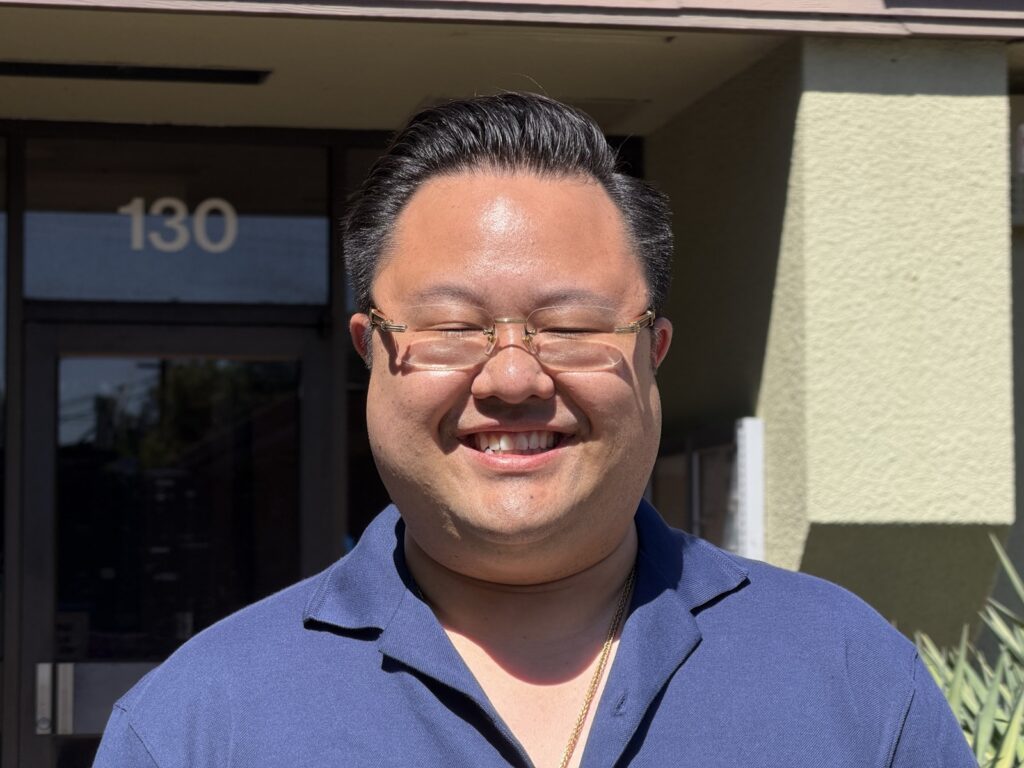
Philip Nguyen
Philip Nguyen, 32, is a second-generation Vietnamese American who has dedicated his working life to fostering the community ties that bind together members of the Vietnamese diaspora in the Bay Area.
As the head of the Vietnamese American Roundtable, a San Jose based nonprofit, Nguyen oversees a small team working on community initiatives to boost civic engagement, voter awareness and cultural understanding. Nguyen, who previously taught Asian American Studies at San Jose State University, said the life he enjoys now has only been possible because of the opportunities his family has found in the U.S. since fleeing Vietnam in the 1970s.
What does it mean to you and your family to be an American?
My family came to the United States as refugees after the end of the Vietnam War — after living under the communist regime in Vietnam. My grandparents had been associated with the Republic of Vietnam or South Vietnam. They came through the orderly departure program and the humanitarian operation, and then ended up settling in California.
I think for me, America represents a land of opportunity. I think for (my parents), growing up, they really emphasized the importance of education for me. They oftentimes reminded me that they lost their opportunity to get educated, living under the communist regime, having lived through a time of war.
For me and my younger sister, a lot of our opportunity here in the United States was to make sure that by getting an education or going through the educational process, that’s something that no one would be able to take away from me. And so they were able to find their way in Vietnam as refugees and then raise us in this sort of refugee immigrant household, where we’re able to seize that opportunity America promised them when they originally came.
What are your thoughts on the current state of our country?
I think that political division, vitriol, is probably at its highest in terms of the tension that we feel and our connection to what it means to actually be American. I think it’s particularly hard to be American right now, especially living in the United States, and especially coming from a refugee and immigrant family, because it seems like the America that was promised to my parents, this land of opportunity, this land of freedom, isn’t something that’s necessarily accessible to people like them, or even me by extension.
There are a lot of values I grew up learning about America that don’t seem to be upheld right now by the people in leadership. We need more, better role models in leadership, particularly civic leadership. And so we are at maybe a dire time in American history right now, one that we haven’t seen before. But if there’s anything American history teaches us, it’s that it’s in these moments where the people are much more motivated to come together and fight against things like oppression or injustice or inequality.
What changes do you want to see moving forward in our country?
Maybe having a little bit more compassion for humanity in all of its forms, both inside of the United States and with respect to the global plight of refugees and people that are affected by war.
I think that at our best, we’re able to see each other for who we are. To see a common humanity in each other. I think we’re at our best when we work together to get things done, both within our community and as neighbors here in San Jose and Santa Clara County.
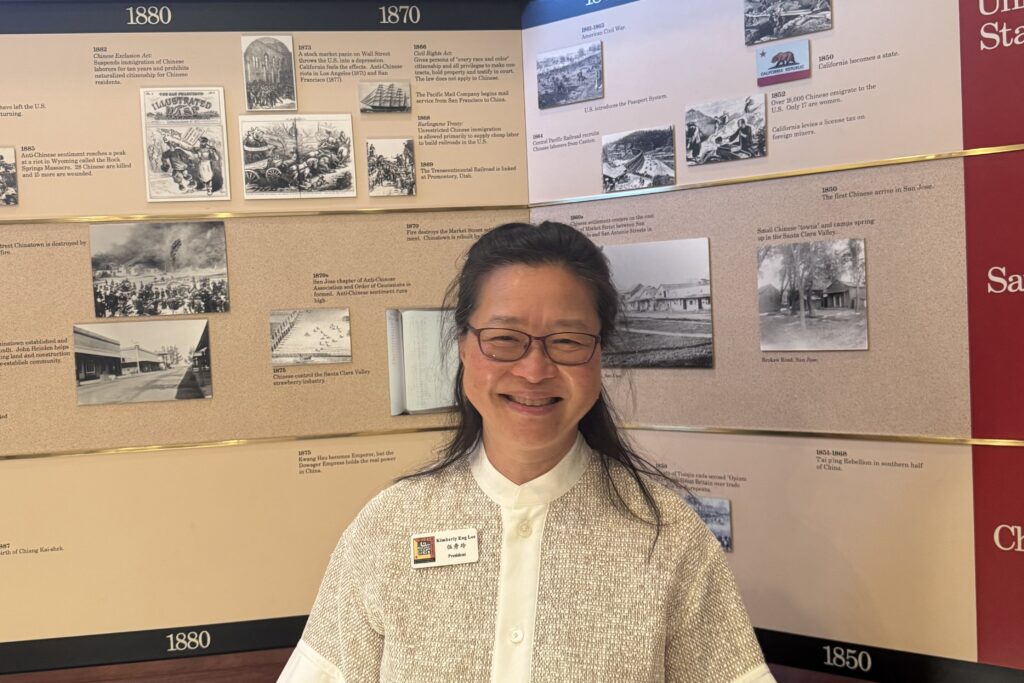
Kimberly Eng Lee
Kimberly Eng Lee, 60, is the president of the Chinese Historical and Cultural Project (CHCP). She is originally from Chinatown in New York City, after her grandfather and great-grandfather both immigrated separately from China. Lee said she was fascinated by CHCP’s work after moving to the Bay Area.
Through her experiences learning about Chinese and American culture, Lee encourages people across the U.S. to be willing to listen to others and acknowledge that while the country still has its fair share of problems, it’s also important to celebrate what we’ve accomplished.
What does it mean to you and your family to be an American?
I tell my children we really want to learn from and borrow the best of both cultures. So I feel fully American, and I would say fully Chinese. And actually, in later generations, you’re learning what that actually means and how you practice that. I think it’s exciting to know that you want to honor the past and still be able to remind future generations of what was precious about it, as well as what was challenging about it.
What are your thoughts on the current state of our country?
I think that the Chinese community has always been one that is cognizant that there’s been pressure on our existence, with the Exclusion Act, which restricted immigration into the United States and has cast a shadow for a long time. I actually think of this as a very exciting time for Chinese Americans, and by virtue, I hope for other AAPIs (Asian American and Pacific Islanders), because we’re established. Now, I think you see the prevalence of Chinese Americans and other AAPIs in all facets of industries and areas.
It’s important to remember that there’s no longer this need to justify ourselves. Our country was built with two-plus parties, and so there’s going to be a pendulum swing all the time, and so to try to not get political but really hold to values is what’s really important. What we don’t want is to end up at a point where we’re always at extremes, because then it’s a very volatile back and forth.
What changes do you want to see moving forward in our country?
I think one is to listen to each other, not just to talk at each other. I always say I don’t know what I don’t know. We’re always going to be passionate about what we know and what we’ve already heard of, but when you see somebody else who’s passionate about something that you don’t know about or something maybe you don’t agree about, then I think it’s really important to understand where it came from.
We’re all human, bringing it back down to a place of commonality helps us better understand why there was some divergence, and to what extent can people hold their different views. We have freedom of speech, that means it’s understood that we would have different opinions and views on things.
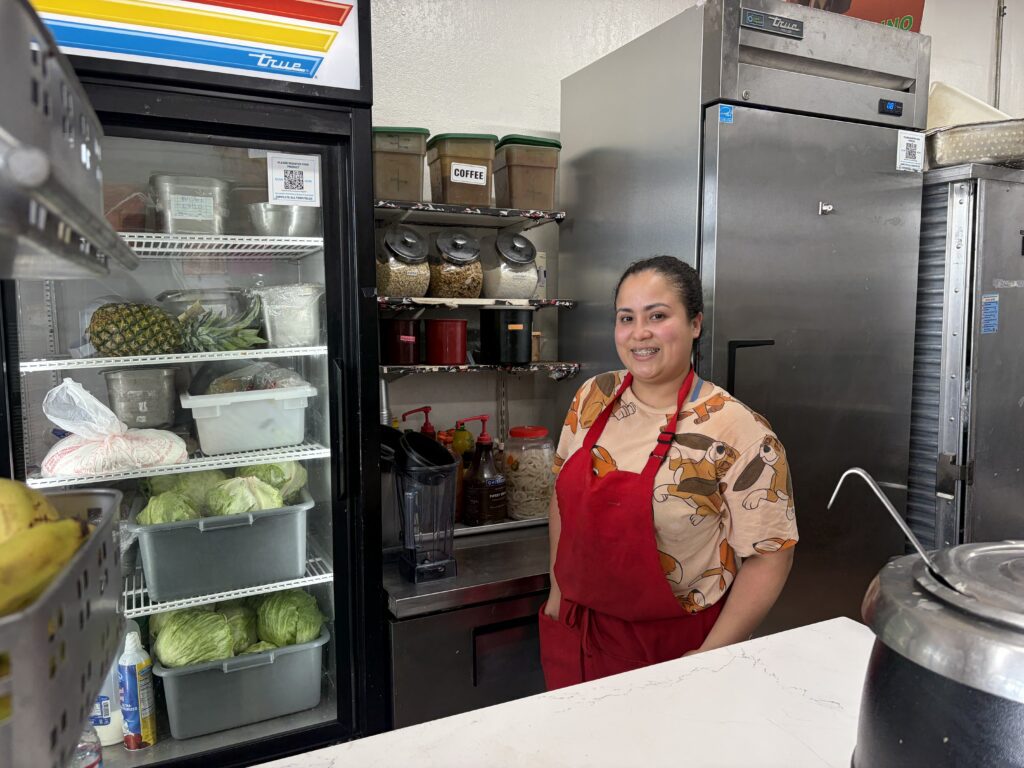
Annia Maria Lopez
Annia Maria Lopez has spent the past five years building a life in San Jose while co-managing Delizias Panaderia. She said moving to the U.S. from Mexico has offered opportunities she values, but recent economic uncertainty and immigration policies have changed how secure she feels about the country’s future.
Watching customers buy fewer items than they once did has reinforced her belief that leaders should prioritize strengthening the economy and creating more possibilities for working families. She said the economic slowdown has become visible from behind the bakery counter. Customers who once bought 10 pieces of bread now buy only three. She said this pullback is evidence of growing financial uncertainty for many families.
What does it mean to you and your family to be an American?
I feel good living in a country where there are more opportunities. The people who want to take advantage will take the advantage, and they’ve had a simple life until the immigration policies started happening. Everything was fine until that moment. Now it feels a bit uncertain.
What are your thoughts on the current state of the country?
I feel like things are not as good as they used to be. It feels like there is no sense of economic security. I feel more security in social settings. It feels that the economy has worsened as opposed to the previous years. People are not buying and spending money like they used to, and sales are dwindling. There are always customers, but they are consuming less.
What changes do you want to see moving forward in our country?
I feel that our government needs to focus more on the economy than to be focused on immigration policy. They need to implement or help small businesses or entrepreneurs. They need to educate people so they can have more jobs, so people can feel comfortable investing and buying. I feel like people just need more opportunities.
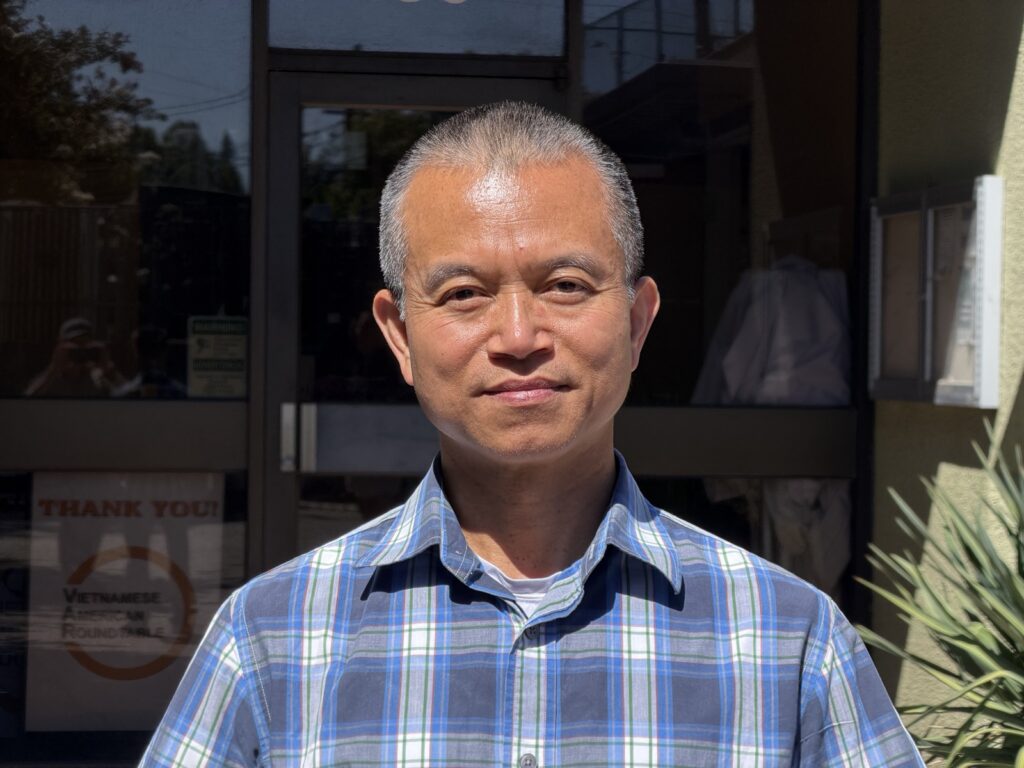
Tan Nguyen
Tan Nguyen, 50, likes to joke that he was given seven lives, and he spent six of them trying to make it to the U.S.
Nguyen was born in Saigon in the 1970s. Amid the chaos and economic deprivation of postwar-Vietnam, his family spent years searching for a way to leave the country. However, it wasn’t until 1987 that Tan finally made his way to a refugee camp, where he lived for a year before settling in the Bay Area.
The family’s earlier, unsuccessful attempts to emigrate had cost them nearly all their savings, leaving just enough money to pay for one person’s journey out of Vietnam. As a result, when Nguyen left in his youth, he made the trip alone, leaving his family behind to begin a new life in a country half a world away.
If this is Tan’s seventh life, he said that he is pleased with it. The longtime Willow Glen resident became a naturalized U.S. citizen in 1996. He went on to work in IT in the tech sector, and has also become a martial arts teacher, offering free lessons to the public through his school, Than Phong Taekwondo.
What does it mean to you and your family to be an American?
Let put this way — it’s just like a new life to me, completely different. When I came here, besides from ‘hello, bye,’ I knew nothing else. Pretty much. So I went to school. I learned the language completely — just like a 3-year-old kid.
What are your thoughts on the current state of our country?
The one thing I would say now is education. The education back when I went to college, I only paid $4 per unit. But these days, if you go to four-year college, it will normally cost you about $200,000. So, the students now will have a tough time if they have to borrow the loans the way we used to.
The second aspect, I see also that people now are less social compared to in the 90s. Back then, in the 90s, neighbors go out talking and playing around and let the children play together. But now I hardly to see that. Sometimes I drive around the different neighborhoods to see if they have any neighborhood gathering or event regularly like before. I don’t see that often, anymore.
What changes do you want to see moving forward in our country?
I think safety. I think that is very important for the community. Every single day when I look at government news, somewhere there is a shooting, or some news that police did not respond quick enough or because we don’t have enough resources. So safety, that is one thing I found when I first came here, and I think this day is still very very important.
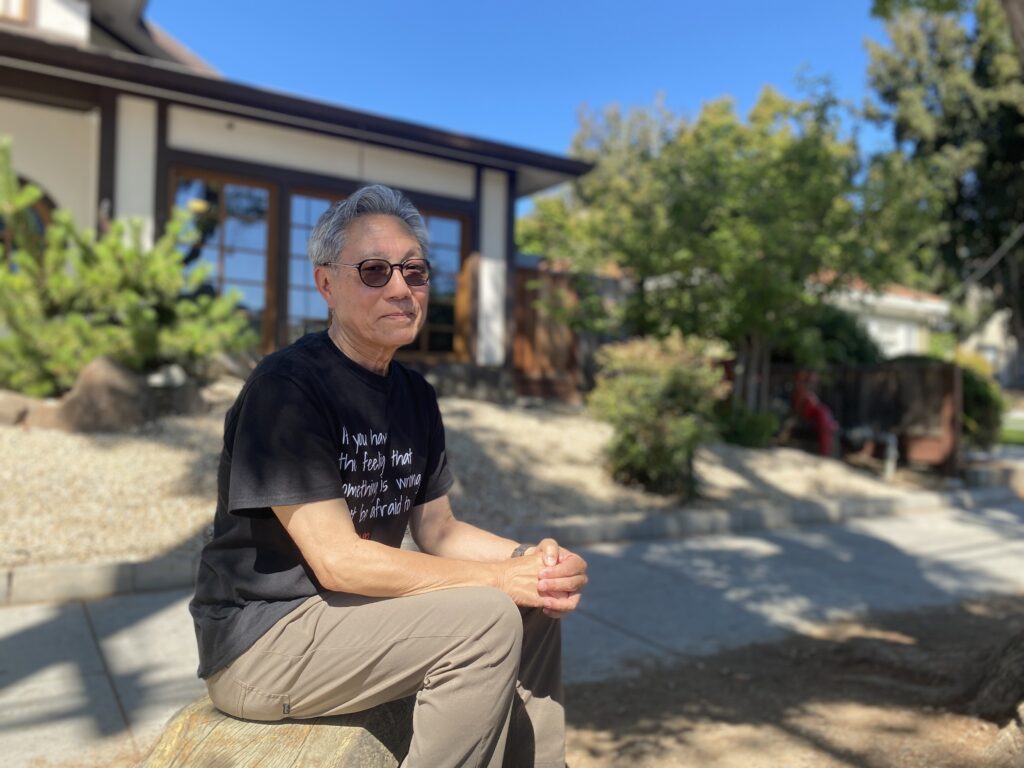
Tom Izu
Tom Izu, 68, is the board president of the Japanese American Museum of San Jose and a member of the Northern California chapter of American Civil Liberties Union.
Izu has dedicated his life to fighting for the expansion of civil rights. When he was 22, he organized support for the national reparations movement in Japantown, urging elders to testify in Congress about their experiences in internment camps. Japanese Americans won that victory when Congress passed the Civil Liberties Act of 1988, providing all survivors $20,000, along with a formal apology from the U.S. government and the creation of an education trust fund.
Izu’s soft voice and introverted demeanor don’t fit the fiery image people may associate with an activist. Instead, Izu disarms with a steely conviction to carry on the wishes of the generation of Japanese Americans before him — to never let what his parents and grandparents experienced in internment camps happen again.
What does it mean to you and your family to be an American?
It makes me realize my commitment to social justice and equality. I get a lot of strength to keep going because of who I am, because of my Japanese American ancestry. I owe it to this community to fight for these things because I think our story as Japanese Americans won’t have a future unless we keep doing this.
I’m not even sure how long (our story as Japanese Americans) would have survived if we didn’t go through this redress movement because it helped open things up and get people to reflect on who they were as Japanese Americans, and what role we have in the broader community.
So one of the things about learning about the mass incarceration of Japanese Americans in more detail and going through this movement, I realize not only do I owe it to the past generations to keep talking about this, but it’s also really important to have Japanese Americans help other communities that are facing similar things that we went through.
I feel like I owe it to the older generations to keep fighting for what they were hoping would happen, that (internment and racism) wouldn’t happen to anybody else. That’s another reason why I’m involved in the museum.
What are your thoughts on the current state of our country?
I am very alarmed it’s going down this path, and that things that used to be considered so basic to the principles of this country, like basic civil rights, civil liberties, are just being ignored completely.
There’s this incredible movement to try to get rid of a lot of the progress that has been made in this country for all groups. That is very depressing at times. It does make me feel fearful and uncomfortable.
I try first to think of the whole history of this country, which actually isn’t that long either as the United States, but it’s gone through lots of ups and downs. Sometimes people say this is the worst ever. But when you think about it, this country started under slavery and after the destruction of the Indigenous communities.
Right now is one of the real down periods. But we’re going to keep fighting for equality. I do it very proudly as a Japanese American, because I think the history of Japanese Americans speaks to that.
I think communities of color and immigrant communities have really fought to make the Constitution actually mean something. And a lot of them have not really been given the credit due to them for being in the front line of pushing these really basic things.
What changes do you want to see moving forward in our country?
A real basic one is for people to demand the rule of law to be followed. On a basic level, things like individual due process rights should be followed. We would like the courts to stand by that, and elected officials to stand by that and all the people here (to) stand for that too, so they won’t let these (violations) happen.
The rule of law is really important — and individual’s due process, the Constitution, the Bill of Rights — as imperfect as they are. Not only to defend civil liberties, but to expand them and to create civil rights, more civil rights, because that’s the whole reason for the civil rights movement, was that we need to form protective classes because they’re being mistreated.
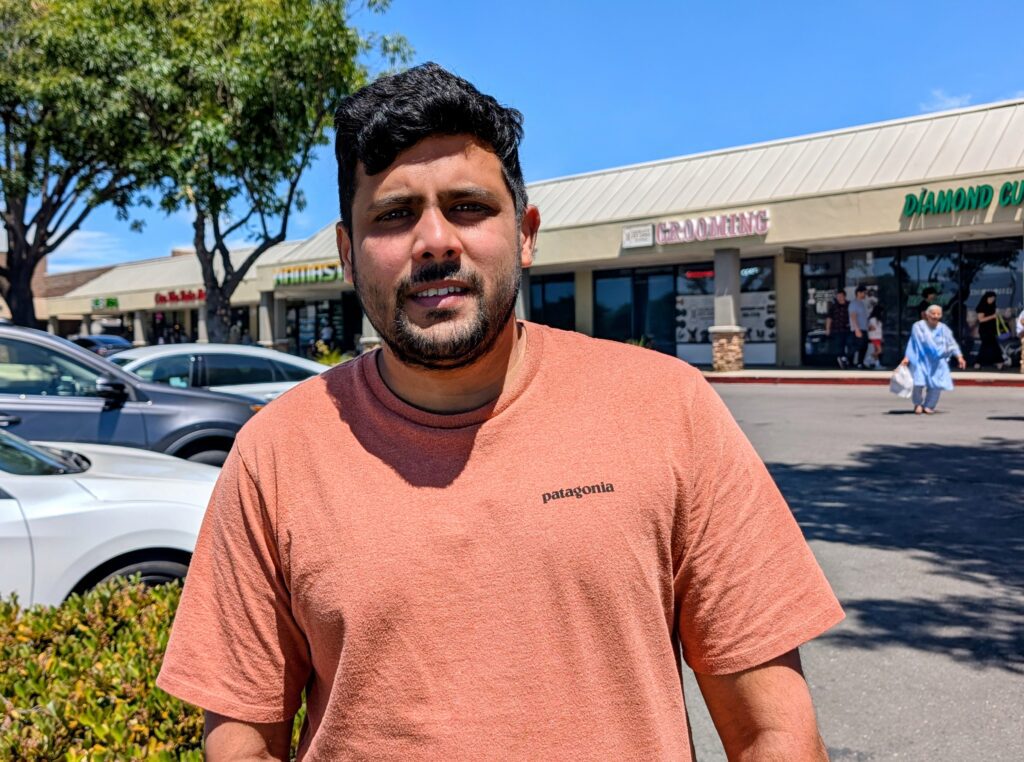
Vettri Arumugam
Vettri Arumugam, 34, came to America from India to pursue his master’s degree at the University of Texas in Dallas. Upon graduating, he got a job as a software engineer specializing in Wi-Fi and wireless technology in San Jose. He has been in the U.S. for 10 years.
Arumugam would like to see immigration guidelines change. He said his family can’t move to America due to current immigration policies. Even their visits are limited to four months a year, he said.
What does it mean to you and your family to be an American?
Being an American gives you a lot of opportunities to grow a career and it provides you and your family with education. I like all those things, living here.
What are your thoughts on the current state of the country?
The way the current government operates, I have my concerns. If we could stop financing all the global wars and start focusing on domestic growth, that would be great. Start focusing on public transport.
What changes do you want to see moving forward in our country?
Less hatred toward immigrants; people showing love and affection toward people who are trying to work hard and build a life for themselves.
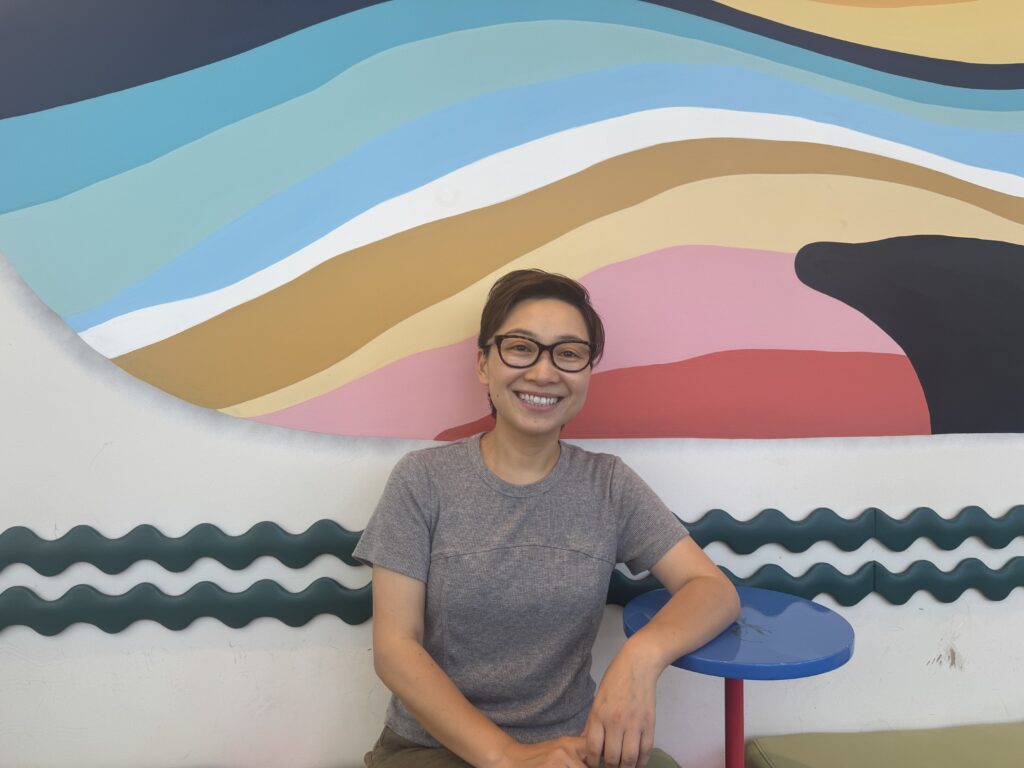
Michelle Zhang
Michelle Zhang is the CEO and founder of the Society of Heart’s Delight, a Bay Area nonprofit that helps Chinese-speaking immigrants become more involved in their communities through various outreach programs.
Zhang, a Chinese native and former lawyer in her country, moved to San Jose from Chengdu, China in 2017. She moved to the area with her former partner because China is not considered an LGBTQ-friendly nation. Even though homosexuality is legal in China, there are no anti-discrimination protections and same-sex marriage is banned. At the time her former partner, who was from San Jose, wanted to return home.
Zhang said she moved to San Jose from China to continue her lifelong commitment to justice, freedom, equality and to build stronger connections between Chinese-speaking immigrants and local civic life. She said she moved to the area because China doesn’t allow same-sex marriage, and she wanted to be with her former partner at the time.
What does it mean to you and your family to be an American?
I love this country. Before I moved to San Jose, I was a lawyer in corporate law, foreign investment. But I’ve always been really passionate about politics and social justice. So when I was in China, I was involved in lots of grassroots LGBTQ rights, women’s rights and that kind of stuff.
I moved to the Bay Area because the environment even empowers me more. So we started this organization, Society of Heart’s Delight, right before the pandemic hit, and now it’s been over six years. Our mission is to empower the Chinese community to engage fully in our local civic and cultural life and foster a greater sense of belonging.
What are your thoughts on the current state of our country?
So, definitely, our current administration on a federal level is not friendly to immigrants. As an immigrant community member and building an immigrant community, we can feel like the attacks and the hostility (from) the administration are anti-immigrant to those from all different backgrounds. So this has definitely changed. We can feel it. It’s normalized. Trump changed corporate culture. He’s right now trying to basically make America turn into an authoritarian regime.  What changes do you want to see moving forward in our country?
I think civic engagement and cross-cultural collaborations are key to change. We can change here. We encourage more people, immigrants, to participate in our civic life. Democracy takes people, all people. It needs more people to take part, right? To contribute their wisdom and ideas, and to have open and free conversations. Every person is their own. They have their own fire and they have their own network. They can influence the circle network around them.
I wouldn’t say I can create change on the national level, and we do work with congressmembers, senators and state assemblymembers, but it’s important to focus on daily life. As long as we can encourage more people, Chinese, Vietnamese, Mexicans, all people to be more engaged, make friends and come together to discuss topics. It will lift everyone up.
The following reporters contributed to this project: Keith Menconi at [email protected] or @KeithMenconi on X. Joyce Chu at [email protected] or @joyce_speaks on X. Maryanne Casas-Perez at [email protected] or @CasasPerezRed on X. Lorraine Gabbert at [email protected] and Gabriel Symkowick at [email protected].
Leave a Reply
You must be logged in to post a comment.