


|
Getting your Trinity Audio player ready...
|
Santa Clara County is set to see a surge of investment in helping its hungriest residents obtain food thanks to millions of dollars from the state.
California lawmakers passed a budget that provides $108 million for the CalFood program to allow food banks to purchase, transport and store produce. The budget also commits $20 million for the CalFresh Fruit and Vegetable Electronic Benefits Transfer (EBT) program that allows families to purchase additional fruits and vegetables in stores and $15 million for the California Nutrition Incentive Program, allowing food stamp participants to receive a dollar to dollar match when they spend their benefits at farmers markets.
Locally, about 4,000 county households can receive an additional $50 to $60 for three to four months to purchase produce at select stores through the EBT program. The $20 million in EBT program funding will aid more than 98,000 households across California.
“Even before (the federal spending bill) H.R. 1, nearly 190,000 people experienced food insecurity in Santa Clara County alone,” Assemblymember Alex Lee, who represents Milpitas, North San Jose, Fremont, Newark and Sunol, told San José Spotlight. “But catastrophic Republican cuts will only force more families into hunger and poverty. The state budget is a crucial step to mitigating the devastating impacts of H.R. 1, and I will continue to do everything possible to ensure food aid for low-income families.”
Denisse Becerra, senior policy associate at Fullwell, a nonprofit that works to reduce hunger, said these additional dollars help families stretch their budgets, especially when traditional food stamp benefits, also known as CalFresh, is often not enough to feed a family.
“In this moment where food prices are high, gas prices are high and housing costs also continue to skyrocket, it’s a program that provides a lot of benefit for families in helping them both make ends meet and have easier access to fresh produce,” Becerra told San José Spotlight.
H.R. 1 has instituted the largest federal cuts to food stamp benefits, slashing $186 billion from the Supplemental Nutrition Assistance Program (SNAP) over the next decade. It also expanded work requirements to include adults ages 18 to 64, raising it from the prior cap of 54. Recipients previously exempt from work requirements such as homeless people, veterans and those aged out of foster care must now work at least 80 hours a month. The federal spending bill also shut out refugees, asylum seekers and human trafficking survivors from receiving benefits.
More than 132,000 Santa Clara County residents relied on CalFresh last year, and about 55,000 people are expected to lose their food benefits due to the changes.
The state is allocating $223 million to help counties with the increased administrative workload in implementing the expanded requirements, as well as $14 million to help people navigate their CalFresh applications.
While advocates are celebrating these wins, they are disappointed that no funding was set aside for humanitarian immigrants. There are more than 50,000 refugees in the county.
“We’re talking about refugees, asylees, people who have experienced trauma and violence,” Betzabel Estudillo, chief engagement officer for nonprofit Nourish California, told San José Spotlight. “So access to food helps people navigate very challenging situations when they come to the U.S. I think many of them are going (to go) to food banks, and I know that they are also limited in their resources.”
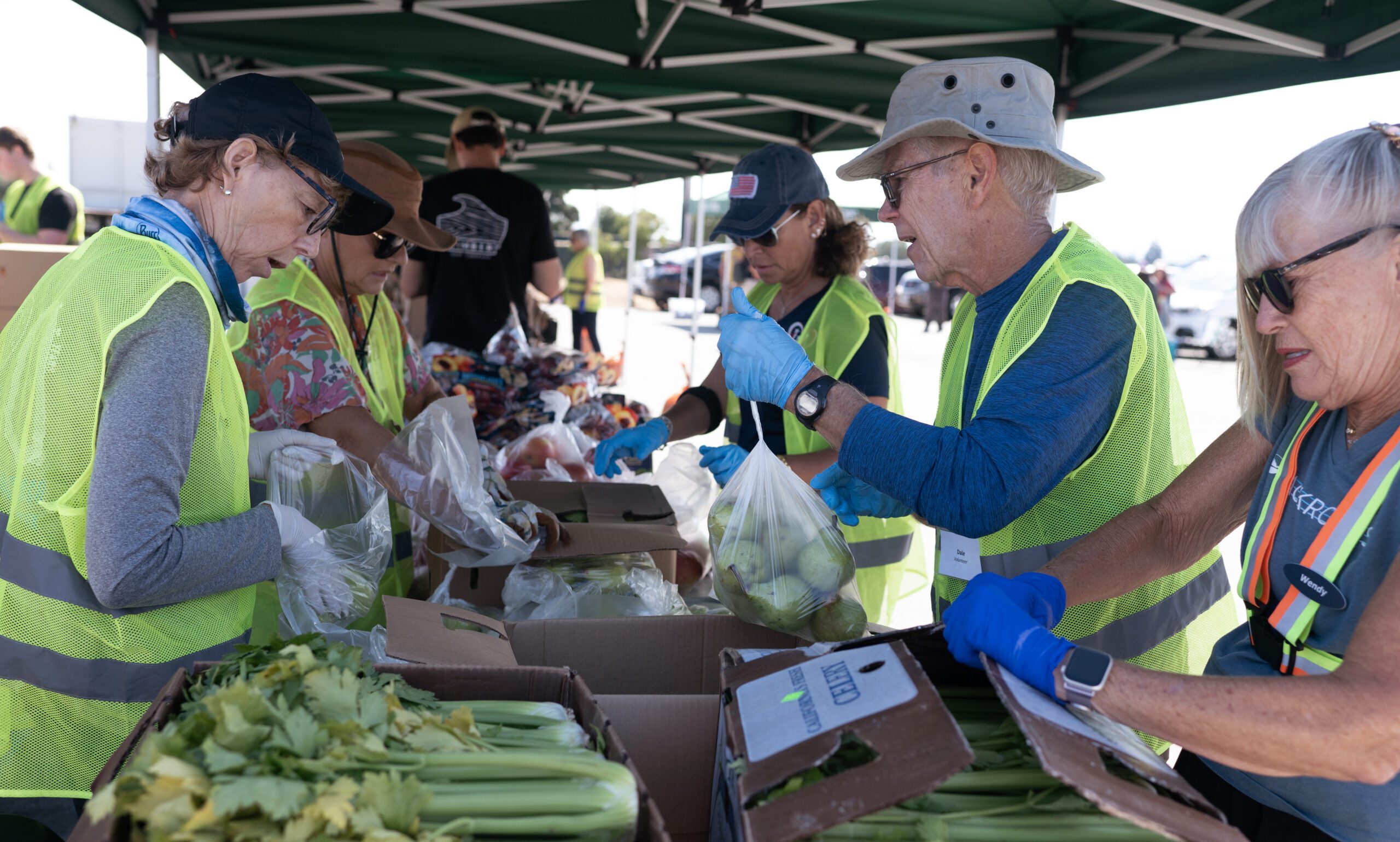
The $108 million the state is providing for food banks is the largest amount the CalFood program has received, up $28 million from last year’s allocation. It will allow food banks such as Second Harvest of Silicon Valley to purchase more produce, including meat, dairy and locally-grown food, to meet the growing demand. A Second Harvest spokesperson said they should know how much money is being allocated to the food bank in a few weeks.
The food bank is providing produce to nearly 500,000 people a month across Santa Clara and San Mateo counties — the same as it was during the height of the pandemic. Prior to that, the food bank served 250,000 people every month through food distributions and grocery programs.
“Anytime there are cuts, we know that it’s going to impact the number of people who are food insecure, and it will increase the need for more support,” Diane Hayward, spokesperson for Second Harvest, told San José Spotlight. “(This is) very important funding that will help us fill that gap.”
Contact Joyce Chu at [email protected] or @joyce_speaks on X.
Leave a Reply
You must be logged in to post a comment.