

|
Getting your Trinity Audio player ready...
|
San Jose’s commitment to housing unsheltered people hit a milestone when hundreds of shelter beds came online and temporary housing sites were expanded. Yet a portion of the city’s homeless population — those with a serious mental illness — were left out, and the problem is glaring.
The number of mentally ill people in the downtown core goes way beyond Mayor Matt Mahan’s Responsibility to Shelter program that he touts as working in one of his newsletters.
All the mayor and District 3 Councilmember Anthony Tordillos need to do is walk up Santa Clara Street from City Hall along First, Second and Third streets — bounded by San Fernando and St. James streets — to understand how grave the situation has become.
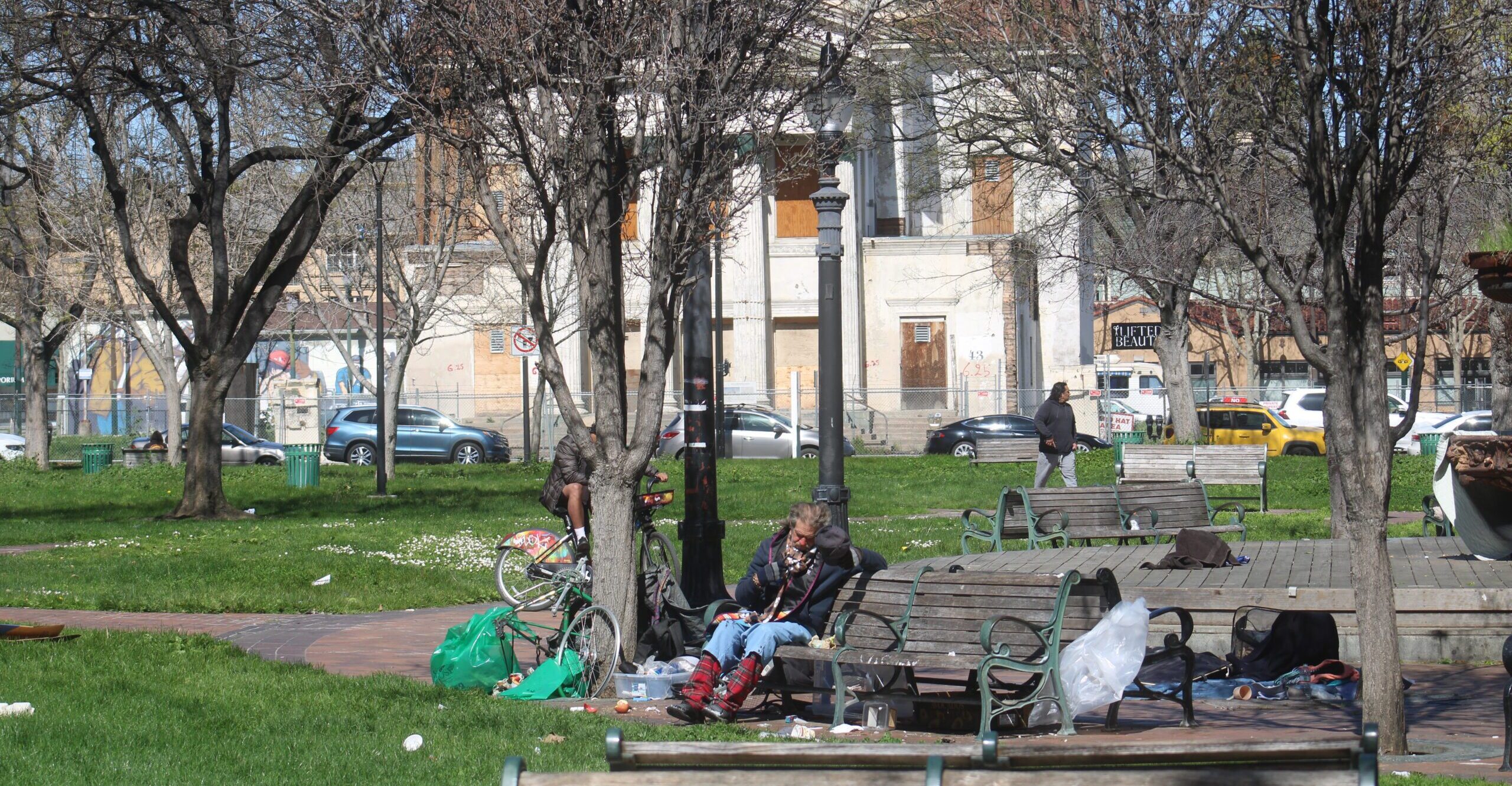
These are people suffering from illnesses that requires medical treatment. They are individuals of all ages and races — white, Black, Asian, Latino. They are psychotic and yelling at invisible voices only they can hear. They are walking around confused, wearing filthy clothes, often barefoot and draped in dirty blankets trying to stay warm.
The other day a half-naked man shuffled down Third Street, an older woman sat in an alcove by a Santa Clara Street bus stop screaming and another man walked in circles flailing his arms on San Fernando Street — and there are dozens more.
So when the mayor says in his newsletter: “The goal of our Responsibility to Shelter initiative isn’t punitive. We don’t want to cite or arrest anyone. We want them to make the right decision … But what’s harder — what’s inhumane — is leaving people to suffer on the streets with no access to the services …” These are not the people who will adhere, but they are suffering.
They will never fit the demographic the mayor describes because these individuals need much more than shelter. They need medical attention in a hospital — not a jail where they are often taken and released hours later back to the streets.
For those who argue this breaches an individual’s civil rights, Santa Clara County’s pioneering Behavioral Health Court has been working for decades to bridge this issue and help mentally ill unhoused people stabilize and reenter society through treatment. But they too can’t operate in a silo without a continuum of care program and support from local governments.
The problem is incredibly difficult, especially with San Jose and Santa Clara County dealing with unprecedented federal and state cuts to safety net services. Yet there is starting point if the will is there.
Begin with a head count, separate from the detailed point-in-time count of the unhoused community that happens every other year. One that’s focused strictly on the mentally ill in the downtown core, because no one has a clue how many people there are.
To accomplish this, the city and county need to coordinate a team of mental health workers, maybe three to five people. The team can be from the county Behavioral Health Services Department, the mobile crisis units, nonprofit organizations like Momentum for Health, students working toward their clinical master’s degrees at San Jose State University or through a combined effort. But they must be people with mental health training who understand these individuals. It can’t be a slapped together outreach team.
This would give the city and county a sense of scope and what’s needed going forward.
Then with help from the mobile crisis units and San Jose Fire Department paramedics, several of these people could be transported to Valley Medical Center’s Emergency Psychiatric Services facility for crisis stabilization. From there it’s a matter of getting them into an acute inpatient facility. With enough beds, the process could be repeated.
None of it is simple, but nothing pertaining to mental health treatment is.
Last August, Mahan and county Supervisor Betty Duong talked about collaborating to identify the individuals with the greatest needs. The downtown core is ground zero for this work.
It’s heartless to let these people try to survive on the streets in such a state, and even more so by turning a blind eye to the problem. They are human beings.
If the mayor is as compassionate as he claims, he will find a way to address the problem with the same effort he demonstrated when he added more than 1,000 beds across dozens of temporary housing sites. And, if he truly believes it’s inhumane to leave individuals on the streets to suffer, his message has to apply to all homeless people no matter their plight.
Moryt Milo is an editor at San José Spotlight. Contact Moryt at [email protected] or follow her at @morytmilo on X.
Leave a Reply
You must be logged in to post a comment.