


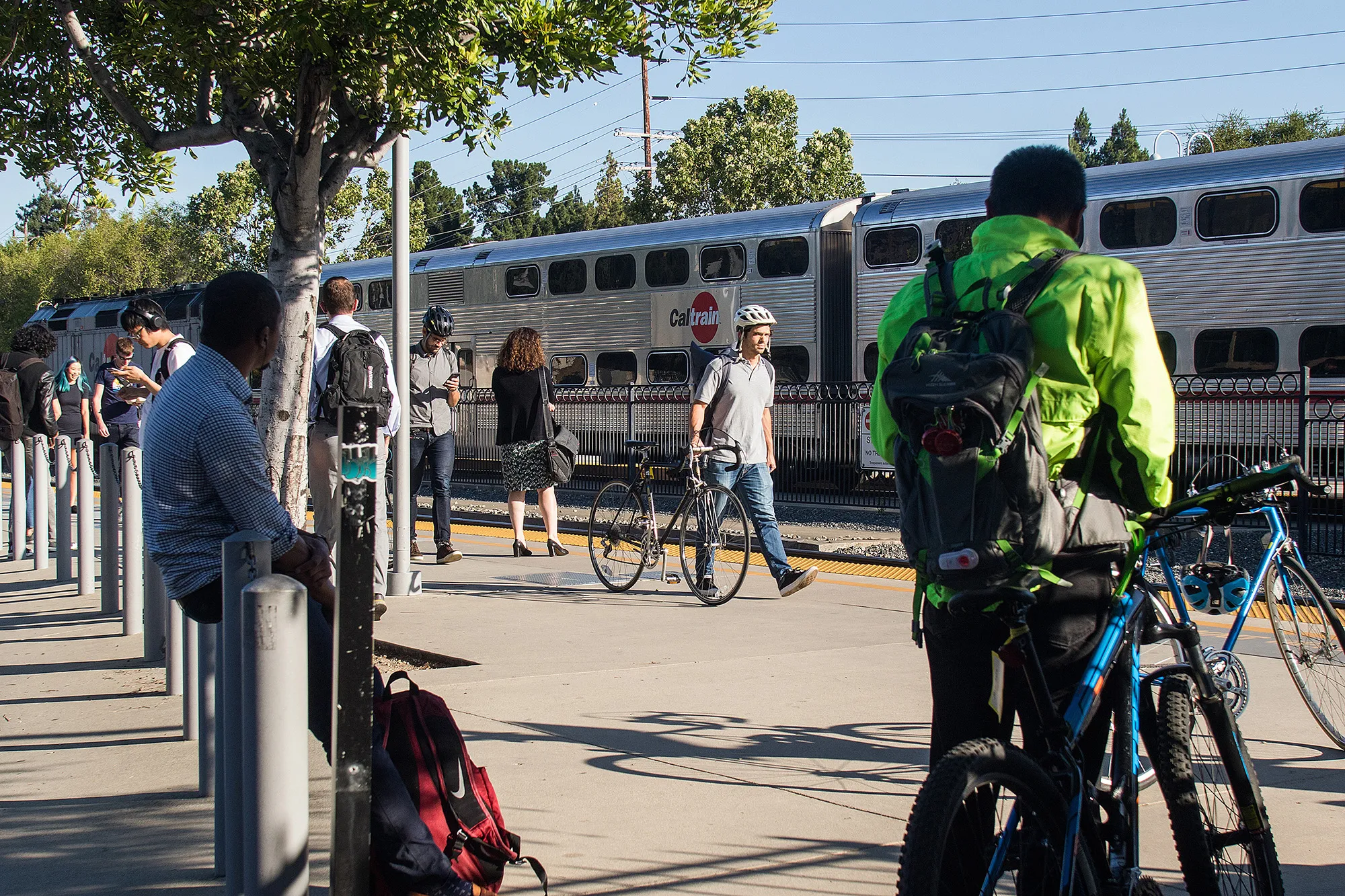
Palo Alto is weighing eight options, seven of which are tunnels, for bicyclists and pedestrians to have a safer way to cross the Caltrain tracks between the California Avenue and San Antonio stops.
City staff must now pare down the list from eight to two before returning to the Planning and Transportation Commission in November for a stamp of approval. The City Council is set to choose its preferred option by the end of the year.
Based on commissioner and public feedback, the immediate frontrunner crossing options are tunnels at El Dorado Avenue and Loma Verde Avenue, or center-running bike lanes on the San Antonio Road bridge above the Caltrain station.
“As with all transportation projects, the identification of alternatives for this Project involved consideration and balancing of diverse and sometimes competing needs in the allocation of public right-of-way and resources,” city staff wrote in a report to the planning and transportation commission, which discussed the project on Sept. 10.
The report evaluates each of the eight options based on several criteria, including mobility, user experience, ease of construction, visual appeal and impacts on neighboring communities.
Two of the options — at Loma Verde Avenue and Lindero Drive — include plans for just a tunnel and plans for a tunnel and accompanying traffic signal on Alma Street. Commissioners discouraged the traffic signal idea, saying it could worsen traffic congestion on Alma Street without providing any major benefit to pedestrians and cyclists.
“If we add lights, we’re essentially taking the one arterial that we have that actually kind of works … and then we’re causing impediments,” said Vice Chair Bryna Chang. “I think a light is almost a non-starter.”
Palo Alto has acknowledged the need for more bicycle and pedestrian crossings at the Caltrain tracks for more than a decade: the 2012 Bicycle and Pedestrian Transportation Plan recommended exploring an additional crossing near either Park Boulevard or Loma Verde Avenue.
Since then, the city council has reaffirmed safer streets for cyclists and pedestrians as a priority, as well as encouraging denser housing near Caltrain, particularly in south Palo Alto. At the same time, the city has been exploring for well over a decade proposals to physically separate roads for track tracks at rail crossings, a project known as grade separation. The options that the city is currently exploring include a tunnel for cars on Churchill Avenue and either a car underpass or a “hybrid alternative,” which includes lowering of roads and raising of tracks at the Charleston Road and East Meadow Drive crossings.
While the grade separation effort is expected to cost hundreds of millions of dollars and take more than a decade to implement, the city hopes to move faster on the planned bike tunnels in south Palo Alto.
“This bicycle pedestrian connectivity project is another project that will help to support all those other things that are happening in the city in that broader context just to help maintain the quality of life as the city continues to evolve,” Charlie Coles, senior transportation planner, told the commission.
City staff wrote in the report that each option for bike and pedestrian tunnels has “right-of-way implications that would also need to be addressed once the list is narrowed down.” Construction of tunnels or separated bicycle lanes may also require the city to acquire property nearby, adding additional steps and costs to the project. Commissioners cautioned that the Loma Verde option in particular would impact two parcels, while other alternatives impact one parcel or none at all.
Staff also emphasized that the preliminary options for tunnels are still very far out — and there could be significant overlap with the rail grade separation plans at Meadow Drive and Charleston Road. That could mean nearby grade-separated tunnels at Lindero Drive and Ferne Avenue “have too little value to pursue,” Commission Chair Allen Akin said, even if they would significantly improve connections to schools in south Palo Alto.
“I’m just a little nervous about getting excited and getting people excited about being able to cross when I know that if their children are already born, they’re not using these tunnels to go to school. This is long-term planning,” Cari Templeton added.
The proposals for tunnels at El Dorado Avenue and Loma Verde Avenue would provide the greatest increase in access, according to the staff report, with around 2,500 daily trips estimated at either tunnel.
Leave a Reply
You must be logged in to post a comment.