

|
Getting your Trinity Audio player ready...
|
The San Jose Fire Department is rethinking how it responds to emergency medical calls.
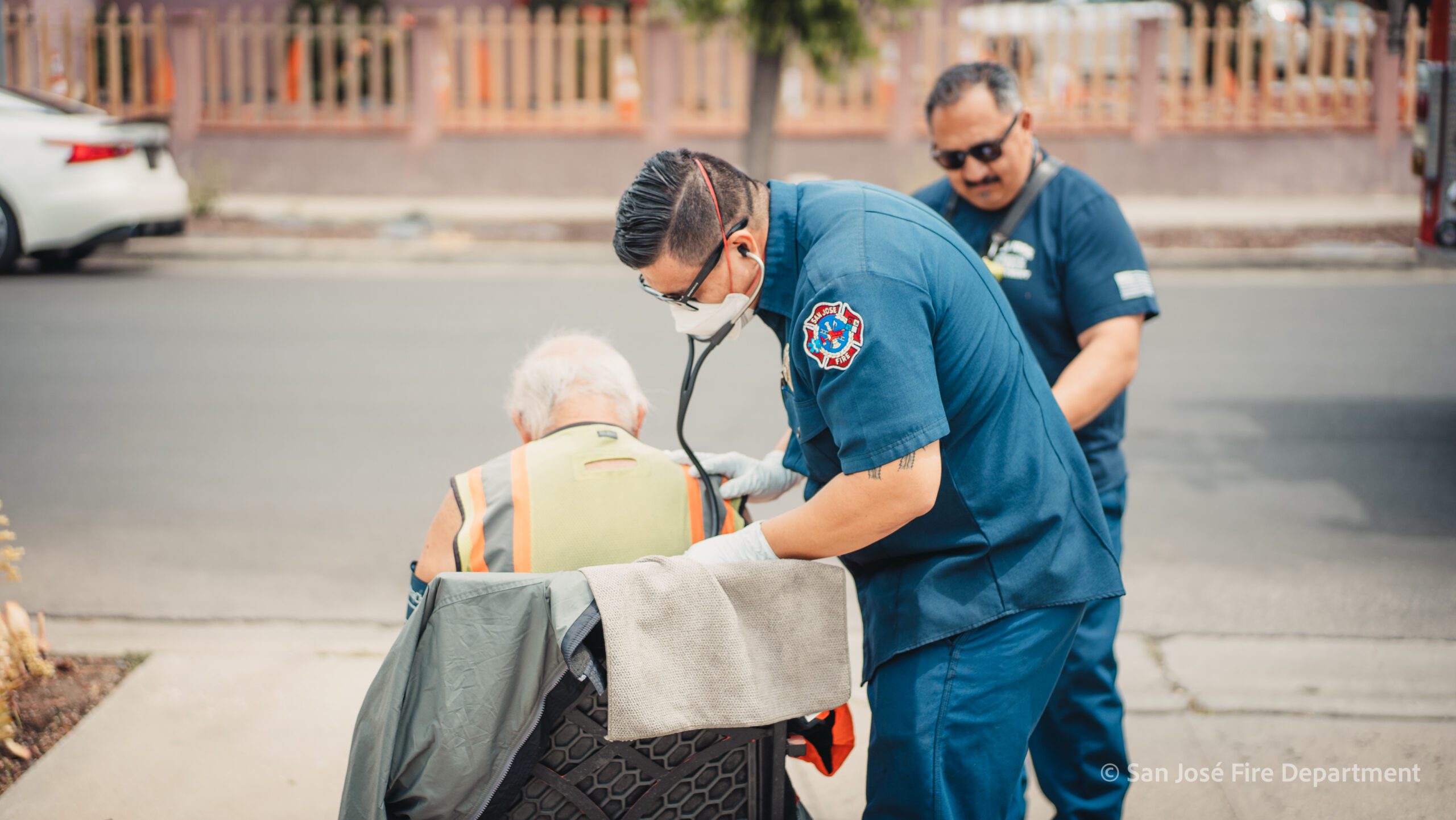
Under a new pilot program, greenlit by the City Council as part of the recently completed annual budget process, the city is preparing to launch a “community paramedicine” team of firefighter paramedics trained to help patients with complex needs that can’t be fixed with a trip to the emergency room.
It comes as San Jose’s emergency agencies see a rising call volume from high-need patients suffering from chronic illness, mental health challenges or substance abuse. Backers of the pilot said too often, traditional paramedics teams are ill equipped to address the underlying problems that lead to such emergency calls in the first place — leaving patients to cycle between the emergency room, the street or jail.
Officials said the pilot will allow the paramedicine team to offer timely, cost-effective interventions, such as providing a trip to a mental healthcare provider, or assistance locating housing support, elder care or reduced-cost meals.
“There are just a lot of basic things out there that people need help with,” Fire Chief Robert Sapien told San José Spotlight. “We hope what we will achieve is help individuals in our community get out of the cycle of really high-cost services that don’t give them what they ultimately need.”
The pilot program will be paid for with a $764,000 allocation from money the city received through a settlement payout stemming from a class action lawsuit against companies involved in the opioid industry.
The funding will support three positions and the purchase of new equipment. Presently, San Jose is working with Santa Clara County officials to draw up a program proposal. If approved by state authorities, the pilot could hit the streets as soon as this fall.
California has been experimenting with paramedicine programs for more than a decade. To support this effort, state lawmakers have loosened regulations for paramedics working under these special initiatives. Typically, state law means paramedics are restricted only to providing medical treatment, and only at the scene of an emergency or in transit to a hospital.
So far, dozens of cities have leveraged the new paramedicine teams to offer a variety of support services, including hospice care, post-hospital discharge follow-up visits and help connecting patients with other care providers, according to a report from the California Healthcare Foundation.
In the case of San Jose, the two-member paramedicine team will be trained to evaluate patients in a variety of ways as they decide how best to direct their care. This might mean asking about a person’s living conditions, health record or history of substance use.
“For example, if they encounter someone, say, with an addiction issue, they would be able to determine whether that patient needs immediate medical care or whether they simply need other supportive care or treatment, and they would work to connect them with that appropriate care pathway,” Sapien said.
The plan also includes funding for a fire captain tasked with designing the pilot program.

In addition to providing more targeted, cost effective care, the paramedicine pilot program will also advance the broader effort to expand the region’s emergency response options, officials said. In recent years, such efforts have led to the creation of a variety of new emergency response teams.
Those have included a previous community paramedicine program piloted in Gilroy. In addition, Santa Clara County is administering a countywide nurse navigator program that aims to reduce unnecessary emergency room visits by helping direct patients to more appropriate care options. During the program’s pilot phase, such referrals saved patients $400,000 in reduced healthcare costs, according to a county estimate.
San Jose’s paramedicine pilot has won plaudits from South Bay advocates for mental health support.
“As our communities face increasing behavioral health and chronic care needs, we must continue investing in innovative models that improve access while using health care resources more effectively,” Rovina Nimbalkar, executive director of National Alliance on Mental Illness (NAMI) Santa Clara County, told San José Spotlight. “Community paramedicine recognizes that health outcomes improve when medical providers, behavioral health professionals and community organizations work together to connect people with the right care at the right time.”
Contact Keith Menconi at [email protected] or @KeithMenconi on X.

Leave a Reply
You must be logged in to post a comment.