


|
Getting your Trinity Audio player ready...
|
San Jose’s proposed data center standards are one step closer to being cemented after the Planning Commission moved them forward Wednesday night, with one significant recommendation that would shift who has authority to approve new projects.
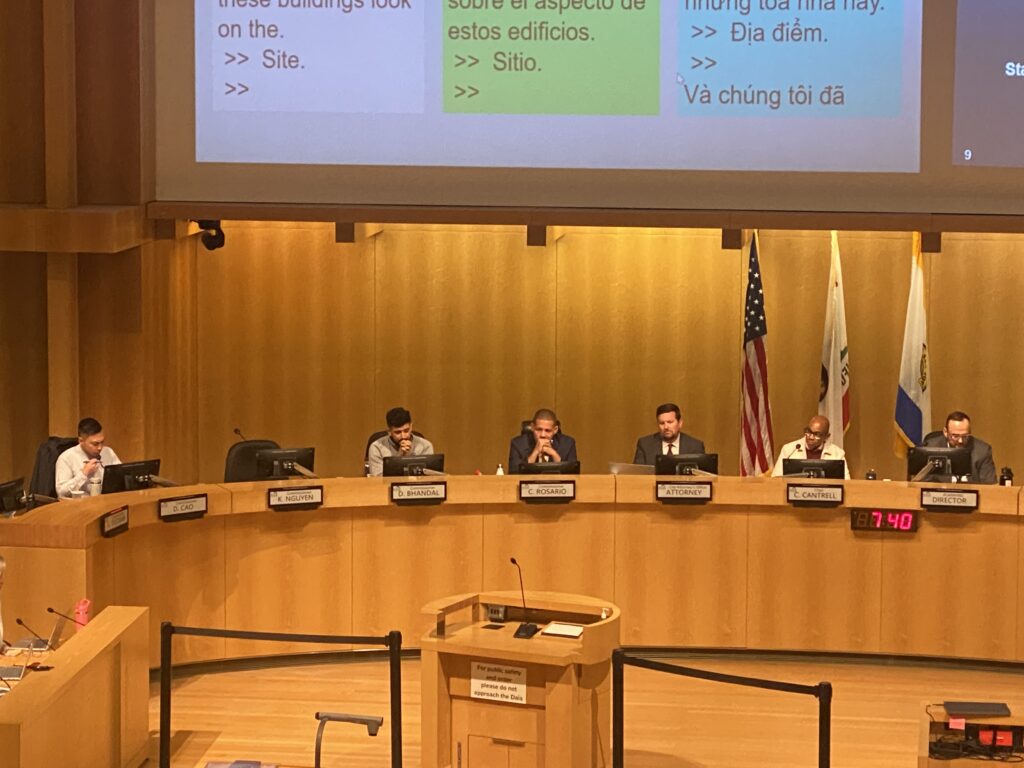
The planning commission voted unanimously recommend the City Council accept the proposed standards with a change that gives the commissioners approval authority on large data centers projects. This takes it out of the hands of the Planning Director, who is authorized to make such decisions unilaterally.
The proposed standards require developers to use 100% renewable energy and recycled water rather than drinking water to cool equipment, to install barriers to reduce noise and to pay construction workers a prevailing wage. The City Council will make a decision on the commission’s recommendations at the Dec. 8 council meeting. If approved, the standards could be in effect immediately under an urgency ordinance.
Planning Vice Chair Michael Young made the motion to shift data center approvals to the planning commission.
“I’m very disappointed that the planning commission has been removed out of this process. I think that’s wrong,” Planning Vice Chair Michael Young said at the meeting. “The city has a planning commission for a reason. The council does not have the time or the bandwidth to look at individual land use. These are large, large projects that have significant community concern.”
Under the city’s current process, the planning director is the initial decision maker for data centers. Land use appeals are heard by the planning commission, while environmental appeals are heard by the San Jose City Council.
In the proposed standards, staff are recommending that the planning director continues to be the person responsible for approving new data centers, while the city council would oversee both land use and environmental appeals.
Concerns around community engagement
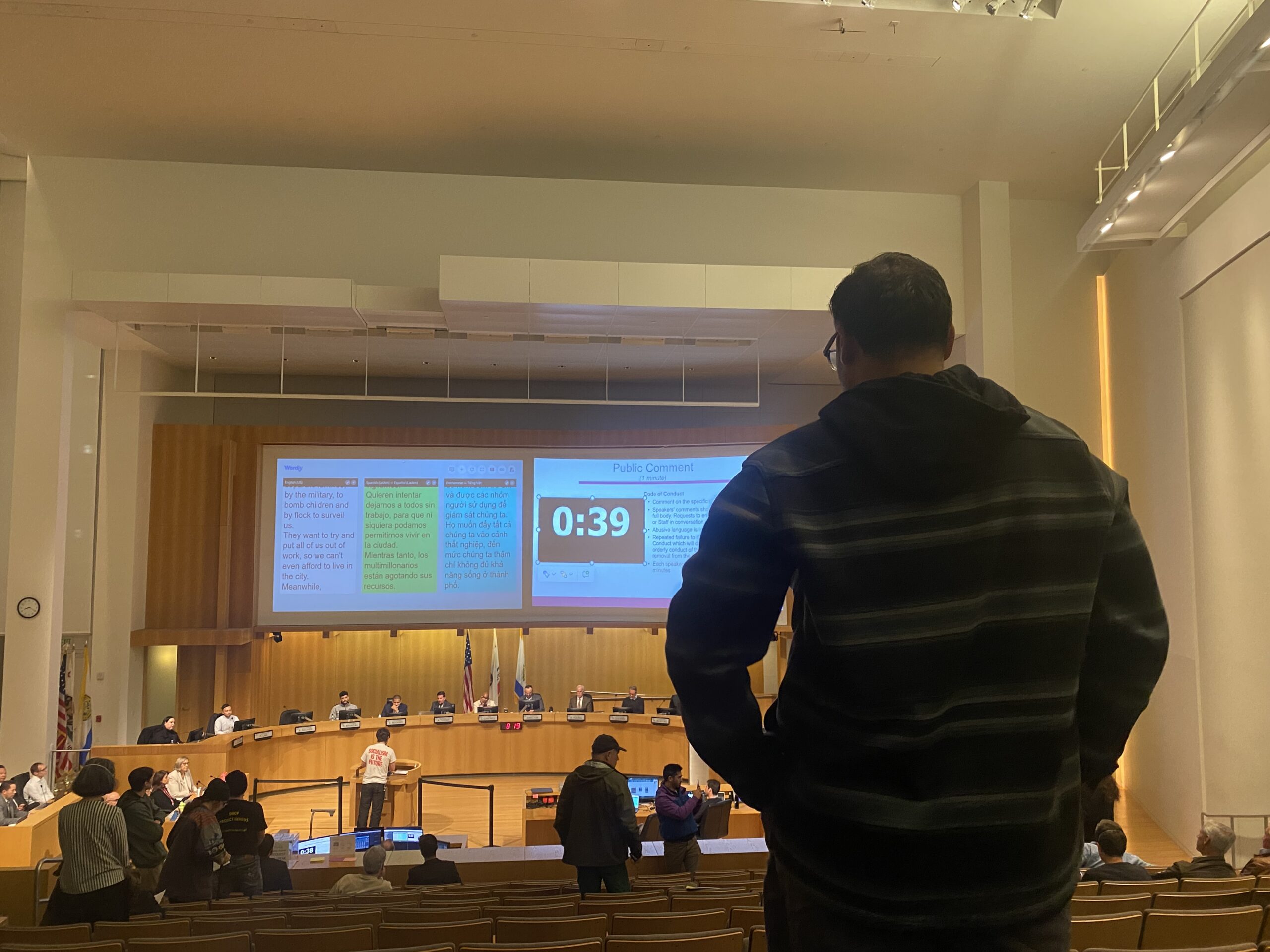
In a four-hour heated discussion, commissioners heard comments from dozens of residents—some who asked that they delay approving the standards to provide more time to incorporate community input, and others who urged them to move forward— as they sought clarity from city staff on standards that would limit pollution, water usage and more.
Over the course of several months, city staff have engaged with stakeholders, data center developers, union members, environmental advocates and residents to draft the standards.
However, Planning Chair Chuck Cantrell expressed disappointment in the lack of outreach to those most vulnerable to the environmental and health impacts of data centers— particularly the Black community.
“This report doesn’t seem to ever have asked who carries the risk and who receives the benefit,” Cantrell said at the meeting. “Once again, equity is a missing word in all of this.”
Multiple speakers also noted that the standards around data centers, which will impact communities for decades to come needs further discussion.
“We believe the updated standards do not include many of the suggestions since the Oct. 15 presentation that the standards need to be more specific and detailed, so that developers know what they need to achieve,” Bob Ruff, former assistant director for the San Jose Redevelopment Agency, said at the meeting. “They’re too weak right now. We need a 90-day plus extension to interact with staff to detail the standards for a win-win situation in the future.”
Requests from the community to do a study on the cumulative health impacts of having a cluster of data centers were not carried out, nor has the city studied concerns about the effects infrasound on the brain and body.
“The uncertainty about what those specific health impacts are does cause concern,” District 1 Commissioner Daniel Cao said at the meeting. “I don’t think anybody here knows what the cumulative health impacts are.”
Deputy City Manager Manuel Pineda, who has taken the lead on data center projects, said they are meeting all the necessary requirements.
“(The California Environmental Quality Act) is the most stringent environmental analysis in the entire nation,” he said at the meeting. “There currently is no threshold for infrasound. If at some point the state develops that threshold, we will incorporate it.”
Fees and community benefits
Data centers will be required to pay an affordable housing fee, or commercial linkage fee, of $5.20 per square foot. For a 500,000 square feet building, the city would collect $2.6 million.
Developers would also pay a new energy reliability fee to make up for increased demand, at $50,000 per megawatt. About one-third of revenues generated from the fee would be reserved for the council district where the data center is built for the first three years.
But the city’s ability to require developers to fund services like education, police and improvements to community facilities would be limited.
Each data center could generate around $3.4 to $6.8 million in annual revenue, according to city estimates, or up to $75 million annually if the city were to approve all data centers in its pipeline.

San Jose Silicon Valley Chamber of Commerce CEO Leah Toeniskoetter said this would bring necessary revenue and jobs to the city but cautioned against setting fees too high, making San Jose less competitive.
“Each project also brings hundreds of prevailing-wage construction jobs, followed by permanent skilled careers in electrical, mechanical, controls and security work,” Toeniskoetter wrote in a letter to the Planning Commission. “We support paying our fair share. However, the Commercial Linkage Fee and Energy Reliability Fee would be layered on top of the costs state law already assigns to large loads.”
Contact Joyce Chu at [email protected] or @joyce_speaks on X.

Leave a Reply
You must be logged in to post a comment.