

|
Getting your Trinity Audio player ready...
|
A growing coalition of San Jose residents has banded together to preserve the city’s last remaining railroad trestle, after the century-old structure’s future was thrown into doubt by a trail expansion project.
Supporters of the Coyote Creek Trestle — a decommissioned timber railroad bridge north of Kelley Park — launched the preservation campaign after San Jose officials suggested it could be demolished and replaced by a steel bridge to serve as a crossing along the planned Five Wounds Trail expansion. Since then, these advocates have written letters, presented at public meetings and circulated a petition in an effort that has already won support from several neighborhood groups and at least one councilmember.
However, while officials with the Parks, Recreation and Neighborhood Services Department previously signaled the agency strongly favored demolition, the city appears to be softening its line following the outpouring of support for the trestle.
Parks Department spokesperson Ed Bautista clarified the city is still reviewing several options — including preserving the trestle and building a new bridge nearby — as it continues to consult with outside experts and draw input from residents.
“No decisions have been made, and all decisions are still on the table,” Bautista told San José Spotlight.
This latest trestle showdown comes nearly six years after preservationists failed to stop the demolition of the Willow Glen Trestle, which had spanned the Los Gatos Creek for nearly 100 years. Now, advocates say the city can’t afford to lose another vital piece of its history.
“San Jose was an agricultural wonderland,” Larry Ames, a longtime preservation advocate and member of a committee formed to protect the Coyote Creek Trestle, told San José Spotlight. “They called it the Valley of Heart’s Delight, and most of it has been paved over and turned into high tech now. But this is a connection to our past.”
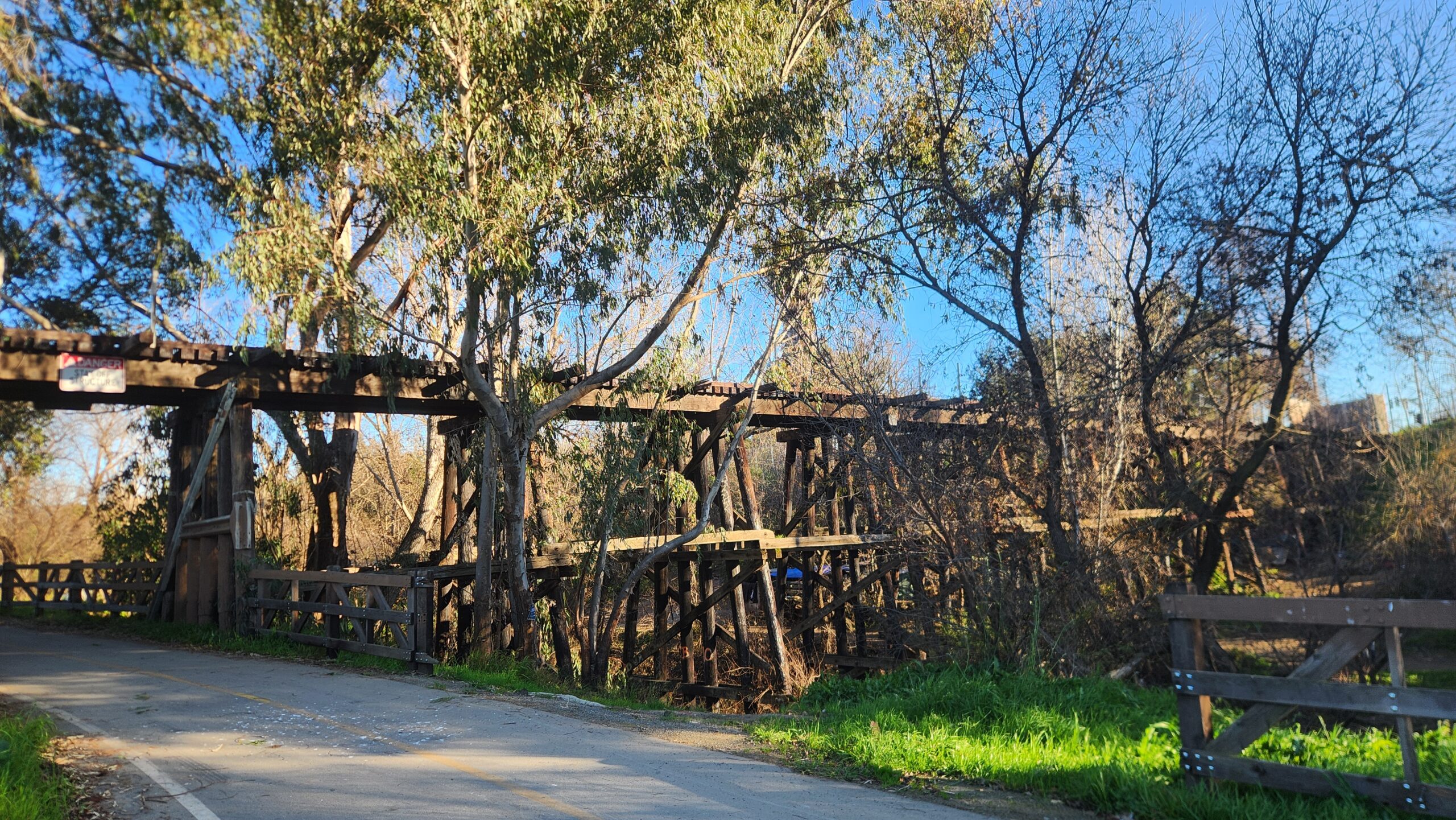
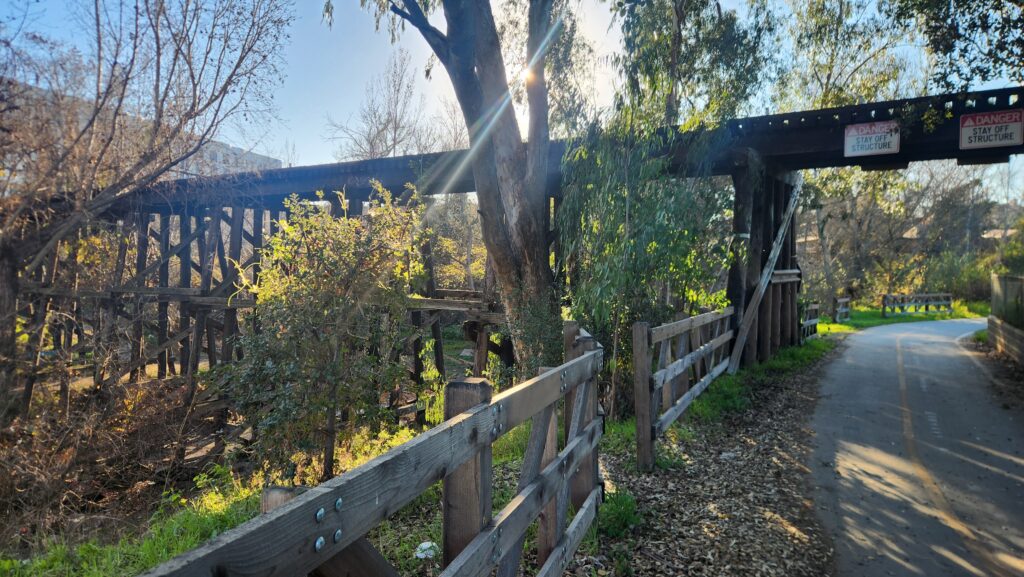
The Coyote Creek Trestle, a 250-foot-long structure that bridges the creek, was built in 1922 by Western Pacific Railroad. The city acquired the trestle in 2012, more than a decade after it fell out of use, as part of a larger purchase of a 9-acre rail corridor.
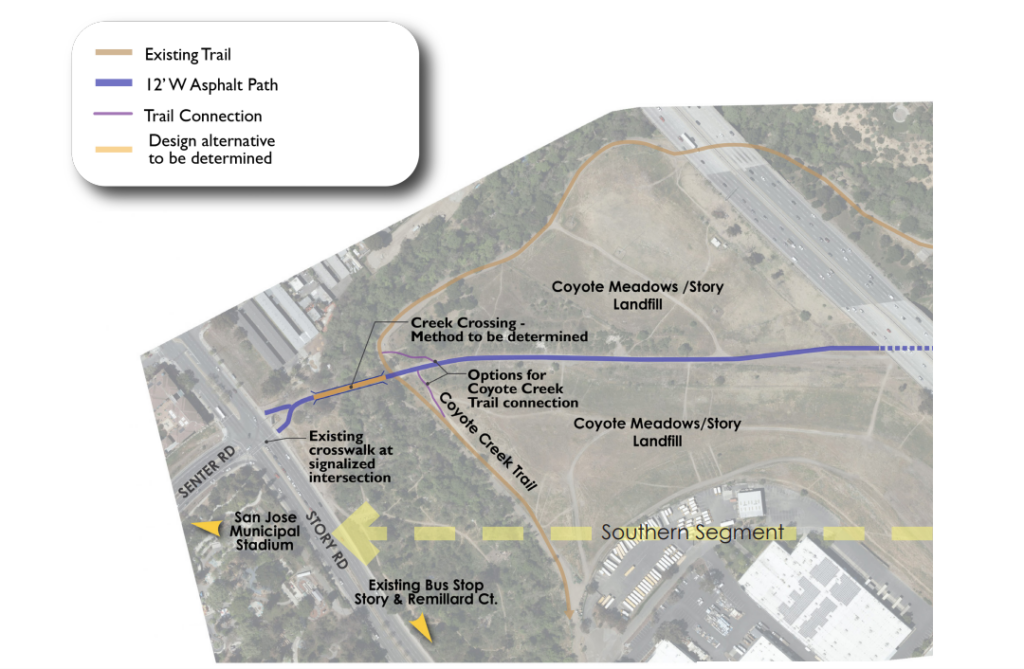
Its location just north of the Senter Road and Keyes Street intersection puts it right next to a proposed trailhead for the planned Five Wounds Trail expansion, which is set to run north for two miles, terminating near Watson Park.
Rather than demolishing the trestle, advocates have voiced support for an alternative plan that would see the trestle structurally reinforced, while the city builds a new bridge for the trail at a nearby location.
But parks officials have warned such an approach would put the city on the hook for significant ongoing maintenance costs. In a March presentation to the Historic Landmarks Commission, they noted that outside experts examining the trestle found it had suffered serious structural damage, including from a major 2021 fire, that has raised the possibility that even a moderate earthquake could cause it to collapse.
They also warn keeping the trestle in place risks future trail closures if the structure is damaged further. The city notes the trestle is built in an area where fires are a regular occurrence.
The trestle’s supporters argue the fire risks have been overblown. They also counter that an evaluation commissioned by the city comparing the demolition and preservation options found that keeping the trestle in place would actually entail lower construction costs and take less time to complete. However, the report also found under the preservation scenario, the city would face higher costs associated with staff time and ongoing maintenance of the structure.
The preservation campaign has drawn support from several prominent local organizations, including the D7 Leadership Group and the All District Leadership Group. Meanwhile, District 7 Councilmember Bien Doan, whose district includes the trestle, has also thrown his support behind preservation.
“Coyote Creek Trestle is a piece of San Jose’s history that cannot be replaced. We have a responsibility to preserve it for future generations,” Doan told San José Spotlight. “We can build a safe, modern trail crossing without tearing down what makes this place unique.”

As momentum behind the preservation campaign picks up, Keith Ball, a key organizer behind the effort and a board member for the Save Our Trails advocacy group, said he believes the city is feeling the pressure.
“The more public support we have, the more indications that the city receives from the local neighborhoods and the local people, as well as from other advocacy groups — I think they will change their approach,” Ball told San José Spotlight.
Contact Keith Menconi at [email protected] or @KeithMenconi on X.
Leave a Reply
You must be logged in to post a comment.