

|
Getting your Trinity Audio player ready...
|
Santa Clara County is charting how it plans to tackle homelessness over the next five years in one of its most challenging periods.
The county’s next iteration of its Community Plan to End Homelessness, a template to guide its priorities through 2030, will focus on four key strategies: homelessness prevention, housing retention, increasing services for people on the streets and investing in those with lived experience.
Building on what the county has accomplished over the past five years in housing nearly 21,000 people, officials want to help 15,000 more people obtain permanent housing by 2030. They also want to increase aid to help residents avoid being evicted by providing rental assistance to 3,000 households annually.
The Santa Clara County Board of Supervisors on Tuesday unanimously approved the plan, and asked for periodic updates on how it is being implemented, as well as how each part of the county will tackle homelessness.
“We have so many proof points that the model works, it is simply not at scale,” District 4 Supervisor Susan Ellenberg said at the meeting. “Being able to continue along the same path is very critical … and extraordinarily more challenging right now.”
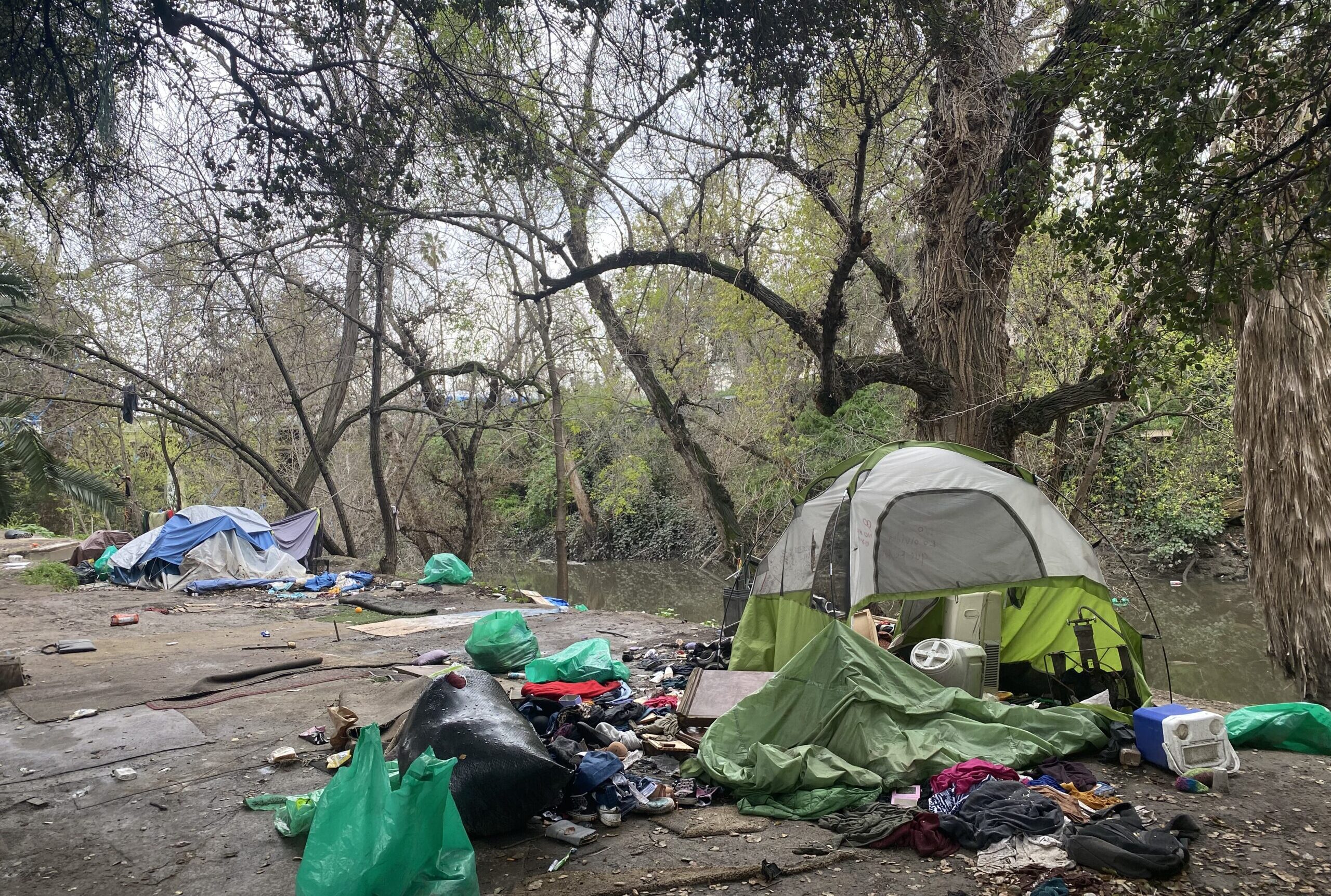
The county is facing unprecedented headwinds in its efforts to reduce homelessness. In addition to having a record population of approximately 10,700 homeless people, the county is facing budgetary challenges due to federal cuts — and shifting attitudes toward homelessness and what constitutes best-practice solutions.
President Donald Trump’s administration has made a marked shift on where it wants federal funding to go, with a focus on temporary housing that’s tied to requirements such as work, sobriety or how often someone must see a case manager. The county is involved in a legal battle to preserve federal Continuum of Care grants for affordable housing rather than temporary solutions.
The 2024 U.S. Supreme Court ruling in Grants Pass v. Johnson opened the door for homelessness to be criminalized, including San Jose’s bevy of policies that increased sweeps, RV bans, citations and arrests for people who refuse offers of shelter and more.
On top of that, the county’s funds for Measure A, approved by voters in 2016 to inject $950 million into affordable housing, has dried up. Some developments that received funds have yet to come online, but county officials are looking for how they will continue to fund affordable housing.
With limited funding, the county wants to hone in on preventing homelessness before it starts by providing rental assistance — a cost-effective model that limits the impacts homelessness can have on an individual, Ray Bramson, chief operating officer at nonprofit Destination: Home and a San José Spotlight columnist, said.
“People are facing severe economic hardships,” Bramson, who served on the steering committee for the community plan, told San José Spotlight. “Homelessness prevention is all about trying to provide people the support they need as quickly as possible to keep them in their homes. We have to make sure that our community is stable and strong in the months and years ahead, and we have to make sure that fewer people become homeless in the first place.”
Santa Clara County provided more than 38,000 people with homelessness prevention assistance from 2020 to 2025. It is a system that served about 2,700 households last year, providing an average of $7,000 per household.
A randomized control trial found 90% of people who received this assistance in the county remained housed two years later, according to data collected by the University of Notre Dame’s Wilson Sheehan Lab for Economic Opportunities.
The county wants to lean further into creating private and philanthropic partnerships to fund these efforts.
One new component is that each region will come up with an individualized plan to meet the needs of its homeless residents. There will be four regional plans submitted in September: one that encompasses North County, where places such as Mountain View are dealing with a large RV homeless population; South County, which grapples with high poverty rates; West Valley, which has a dearth of services; and San Jose, which has the largest homeless population at 6,503 residents, according to a 2025 point-in-time count.
The county will work with city staff from each region to come up with the individualized plans. The county will ask cities to sign onto the general community plan starting in the fall.
“Having a community-wide approach to addressing and ending homelessness is critical to help cities, the county and other entities in our community align limited resources and scale up proven strategies across our community,” Kathryn Kaminski, director of the county Office of Supportive Housing, told San José Spotlight. “The community plan serves as our North Star and blueprint for ending homelessness.”

At the meeting, Ellenberg and District 1 Supervisor Sylvia Arenas questioned if there was a way to keep cities accountable to follow through on the community plan, especially if an approach differs from the county’s focus on permanent housing.
Kaminski said at the meeting that while the county facilitates the plan, it is still up to cities to determine how they want to implement their own plans.
Debra Townley, who serves on the community plan’s steering committee and previously experienced homelessness, said this iteration’s focus on centering programs on people’s lived experiences and investment in formerly homeless people is pivotal.
“We can create systems and change policies all day long, and if we’re not listening to the people about what they need and how to deliver it in a way that is helpful to them, we’re spinning our wheels,” Townley told San José Spotlight.
While the county has permanently housed tens of thousands of people over the last decade, and thousands of shelter beds have come online, she said there’s still more needed.
“What we’re doing right now isn’t working — the criminalization of homelessness, the constant sweeps, the police chasing people off of benches,” Townley said. “I think we haven’t done due diligence on making housing affordable here, and it’s a much bigger problem than the community plan to end homelessness addresses because we don’t even have data on that because people are having to hide. This touches on what we can see, but it is the tip of the iceberg right now.”
Contact Joyce Chu at [email protected] or @joyce_speaks on X.

Leave a Reply
You must be logged in to post a comment.