


|
Obteniendo su trinidad de audio jugador listo...
|
The recent San José Spotlight article “El plan para personas sin hogar de Gilroy carece de detalles sobre los próximos pasos.” offers a limited and misleading account of Gilroy’s efforts to address homelessness.
It overlooks important history and fails to explain the purpose of the Homelessness Ad Hoc Committee. Critical journalism is important, but criticism without an accurate understanding of the issues does a disservice to readers.
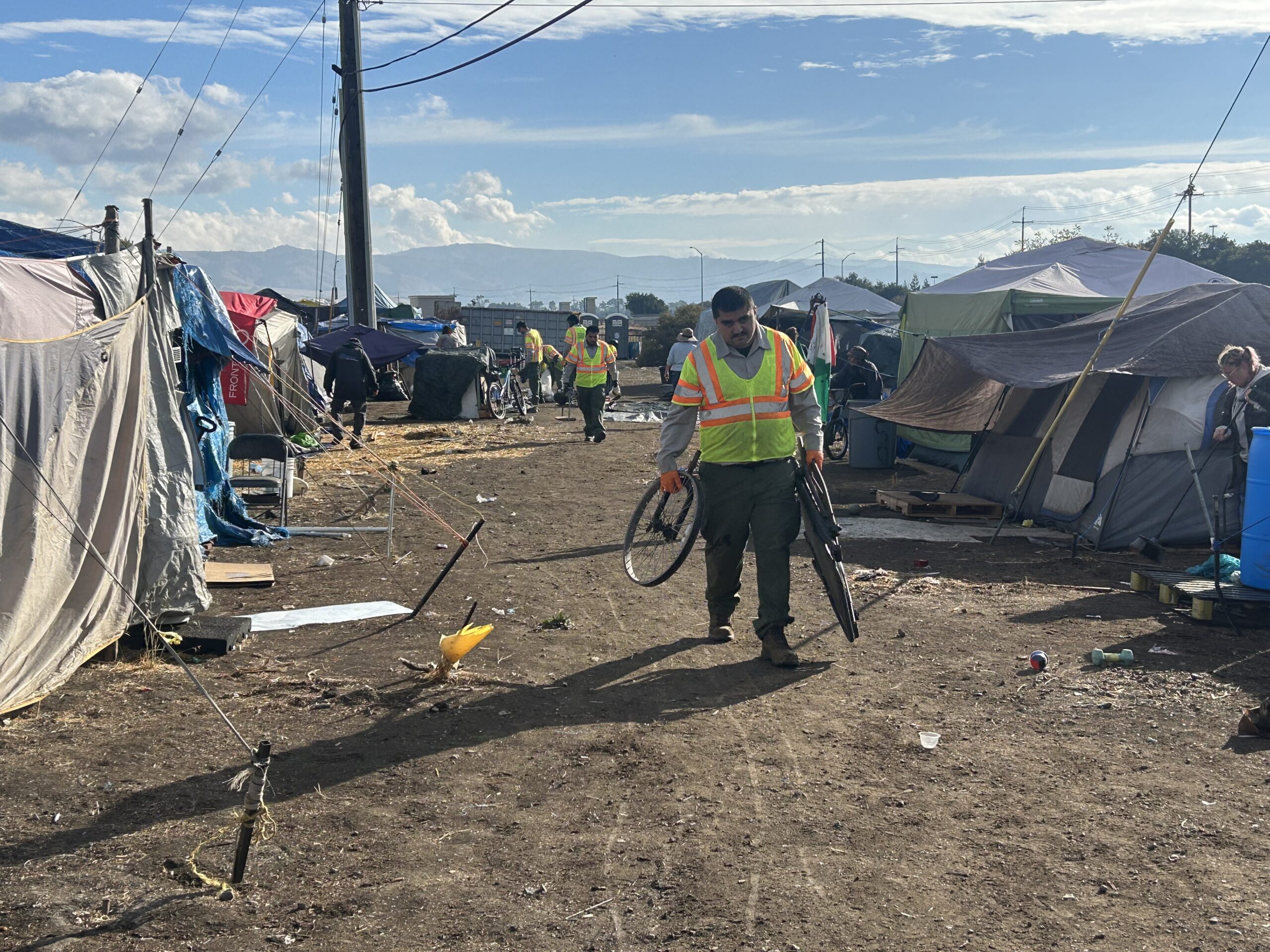
The article fails to distinguish between the Sixth Street encampment, also known as Campamento de esperanza, and the Homelessness Ad Hoc Committee. Although both involve the broader challenges of homelessness, they have different histories and purposes. While I and two other councilmembers, all of whom serve on the ad hoc committee, voted to keep the site open, suggesting that the council majority’s decision to close the encampment was a consequence of the committee’s work is simply inaccurate.
The encampment’s future had been under council discussion for nearly a year, entirely separate from the committee’s work. Importantly, the council unanimously expressed interest in advancing the conversation about a managed site somewhere in Gilroy — one that is better managed, has agreed-upon outcomes and complies with the law. That distinction is significant, yet the article largely overlooks it.
The Sixth Street encampment’s history also deserved attention. Its residents had previously been displaced from another jurisdiction’s property. When they relocated to city-owned property near Sixth Street, the city chose to work with them rather than immediately displace them again. The original intent was to allow people to temporarily self-manage the site while the city and service providers offered outreach, sanitation and connections to services. The council majority extended the arrangement multiple times, but the site was always intended to be temporary. This history is essential to understanding the council’s decisions.
Perhaps most concerning is the unrealistic expectation the article places on the Homelessness Ad Hoc Committee. Criticizing the committee for not producing a detailed solution at its first update to council demonstrates a fundamental misunderstanding of its assignment and the complexity of homelessness.
California and its counties have invested billions of dollars in programas para personas sin hogar, housing initiatives and supportive services. Despite these substantial investments, personas sin hogar remains one of our state’s most difficult public policy challenges. If decades of programs and billions in public spending have yet to produce a comprehensive solution, it is unreasonable to expect a local ad hoc committee to deliver one in just seven months.
Gilroy cannot solve a regional and statewide crisis alone, nor was that the committee’s assignment. Its purpose was to bring together elected officials, businesses, property owners, service providers, advocates and people with lived experience to examine our existing approach, learn from other communities and identify opportunities for improvement.
The Nov. 2 City Council meeting was intended to provide an update on the committee’s progress and obtain further council direction — not present a final, fully funded solution. The committee considered approaches used by other communities and explored the possibility of a managed location. Council unanimously directed the committee to explore this idea further. That is progress, not failure.
I welcome scrutiny of our decisions and expect our efforts to be measured by results. But I also expect journalism to get the facts right, understand the history and fairly represent our work. Readers deserve more than a headline suggesting failure because the committee has not immediately solved a problem that has challenged governments for decades.
Gilroy deserves a thoughtful, realistic and collaborative strategy to address homelessness. That work is ongoing and should be evaluated on its purpose, progress and results — not on expectations presented by San José Spotlight that were never part of the committee’s assignment.
Greg Bozzo is the mayor of Gilroy.

Deje un comentario
Debes iniciar sesión para publicar un comentario.