


|
Getting your Trinity Audio player ready...
|
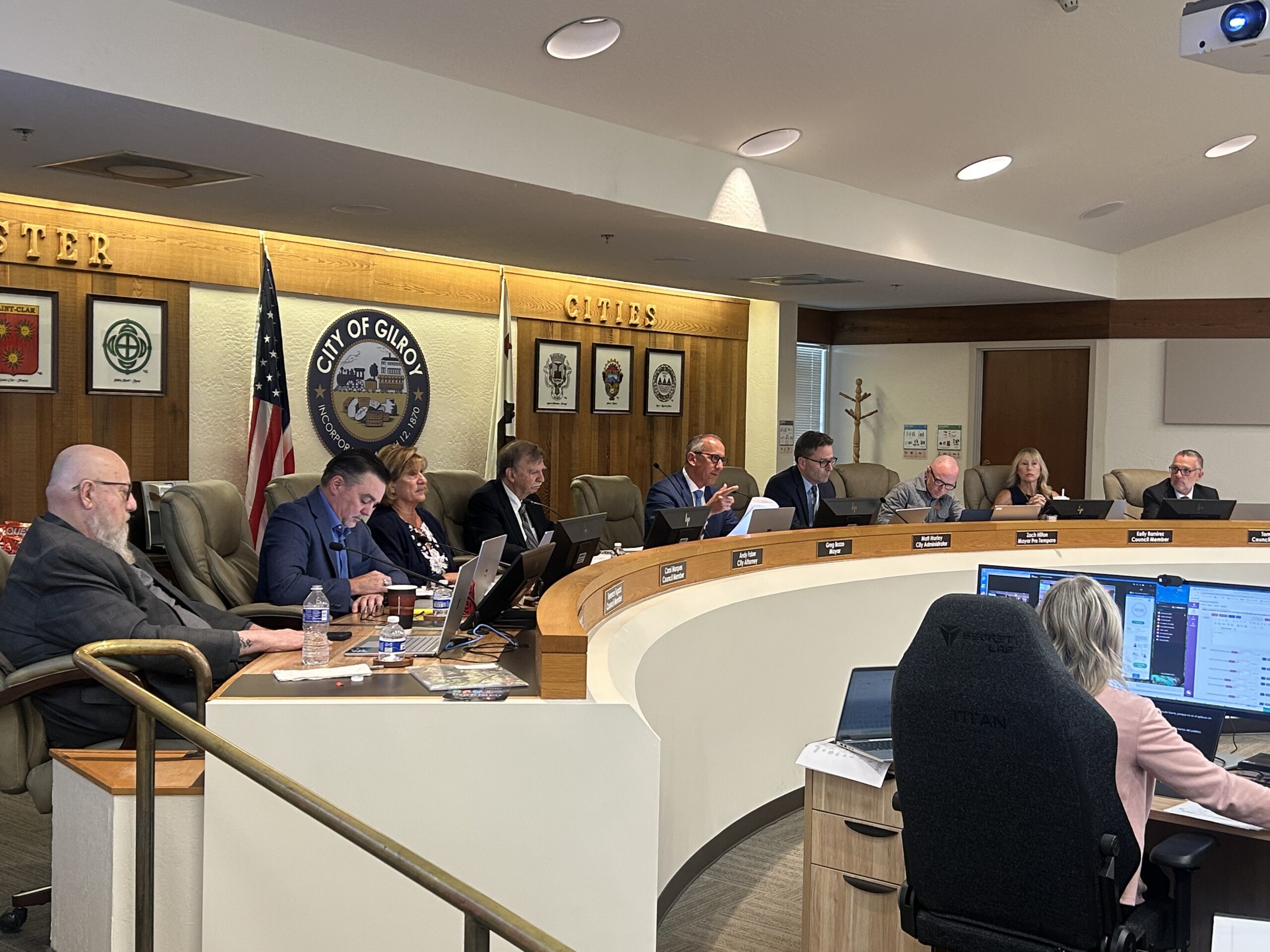
Gilroy is working to rectify a process that allowed an Amazon data center to pass through without public input, with officials adopting a temporary ban on new projects.
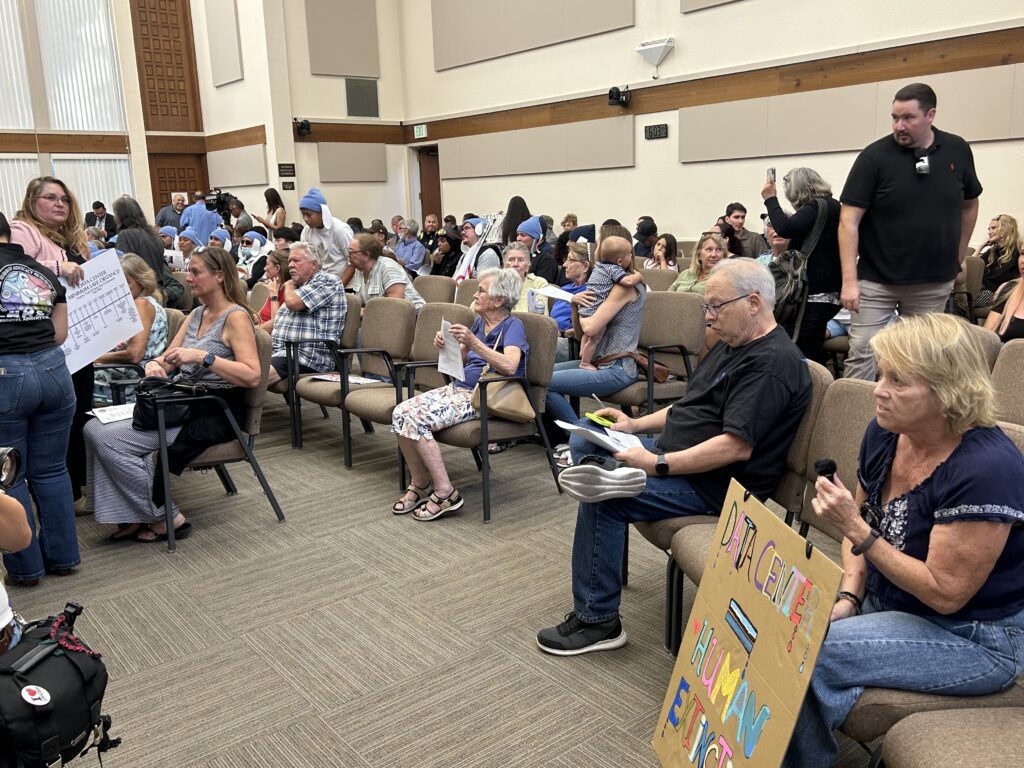
The Gilroy City Council on Monday unanimously approved a temporary 45-day moratorium on new data center development, giving city staff less than two months to return with objective zoning, development and operational standards. The moratorium expires Oct. 29, but can be extended for a total of two years, with residents and local advocacy groups pushing for the full extension.
The temporary ban doesn’t apply to the Amazon data center under construction on a 56-acre site at 8050 Camino Arroyo. But it does halt a second data center project at Highway 152 and Camino Arroyo, currently in the pre-application process, because the city has not received a formal application.
Mayor Greg Bozzo said the moratorium and creation of development standards for data centers is in line with other nearby cities, as well as cities throughout the state and country. While neighboring San Jose is working to create uniform standards, a moratorium appears off the table despite resident concerns.
“(Gilroy) residents have asked for more engagement to review the approval, and the council is taking those concerns seriously and this was another step in that direction,” Bozzo told San José Spotlight. “By tapping the brakes and slowing the process of future data center applications, we’ll be better tasked to do that.”
The moratorium comes less than a month after the city faced outcry from residents who alleged the land where the Amazon data center is being developed violated the California Subdivision Map Act prior to Amazon taking ownership. City officials have said they’ve looked into the claim and found no violation.
Still, the lack of public input on the data center prompted city officials to change how large projects are approved. Bozzo detailed some of those changes approved by the council last month, which include requiring community meetings with developers for new commercial projects 15,000 square feet or larger and mailing notices to residents within 1,000 feet of these types of projects. Any project that requires an environmental impact report will come before the Planning Commission and residents will be notified of the public hearing.
The city doesn’t define data center as a distinct land use, nor does it contain certain development standards that address impacts such as water consumption, electrical grid capacity and demand, backup generator emissions and more. City staff expects to use the moratorium to study and adopt data center-specific zoning and development standards to address these impacts.
“The overall hope is that this class of industrial use gets reviewed with adequate care and diligence,” Councilmember Terence Fugazzi told San José Spotlight. “Any reasonable and workable standards that can be established are put forward and placed into the city code.”
Amazon representatives have said the company is investing in local land conservation and water replenishment projects, using 100% carbon-free energy to power the data center, committing to using 100% recycled water by 2030 and covering all infrastructure costs so residents aren’t footing the bill.

Britt Smith is the founder of grassroots community advocacy group Gilroy Community Action, which has opposed projects like the Amazon data center — as well as the proposed federal immigration facility just outside city limits. She said her group is going to continue to demand the moratorium be extended for the full two years.
“As this data center is getting constructed, we are looking to ensure that there is independent and public oversight to make sure that Amazon is keeping true on the promises they’ve made,” Smith told San José Spotlight. “We’re also working on a ballot initiative that would bring the decision for any industrial facility that uses a disproportionate amount of public resources to the public vote.”
While the residents in attendance seemed happy with the outcome, it’s just the first part in what they hope is a wave of moves to prevent — or make difficult — future data centers from coming to town. Ashley Antonich Sarabia, a San Jose resident who attended the meeting to support Gilroy residents, is not convinced by the council’s actions.
“Honestly a lot of the verbiage I heard from council sounds like NDA speak,” she told San José Spotlight. “Maybe it’s time that Gilroy takes a stance on whether or not their public officials can sign NDAs so we actually know what they’re doing behind the scenes that makes them so supportive of data centers.”
Contact Giovanni Albanese Jr. at [email protected].
Leave a Reply
You must be logged in to post a comment.