


|
Getting your Trinity Audio player ready...
|
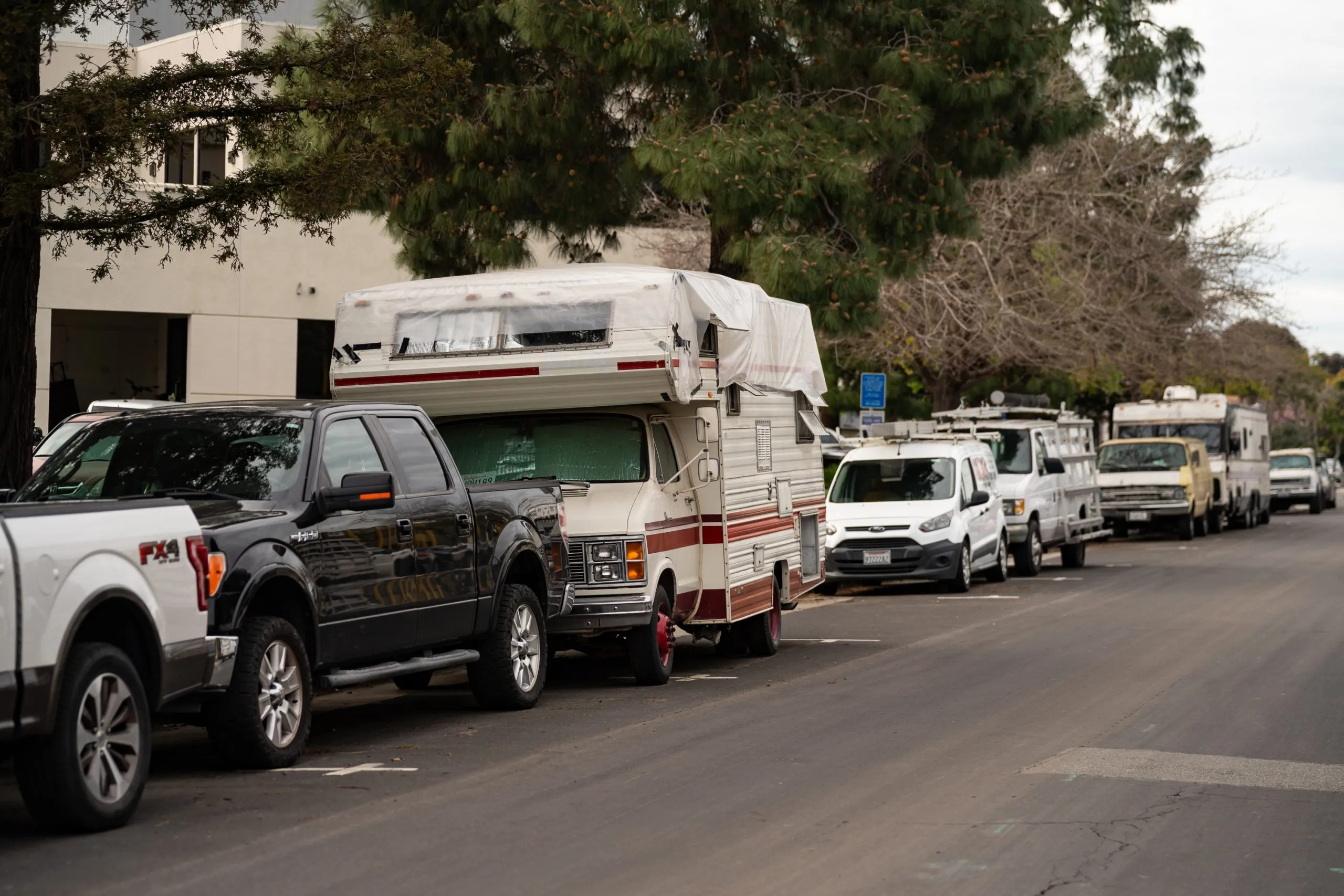
Palo Alto took a measured step last month toward addressing the recent influx of oversized vehicles on local streets when it designated two streets for long-term RV parking next March as part of a new permit pilot program.
But based on numbers from city staff and residents, that would still leave around 100 RVs on the streets without a permit. Neighbors incensed by the growing number of RVs parked near their homes and businesses have been calling for an outright ban, and now some city officials appear open to exploring that option.
Councilmember Ed Lauing first broached the topic at the Aug. 24 City Council meeting as officials debated other parking restriction measures, including the permit pilot. He suggested that the city put a cap on the number of permits for oversized vehicles.
“So it’s (oversized vehicles) in a parking permit, or else there’s no parking,” Lauing said. “That puts a cap at the top and keeps the spillage from happening.”
In an interview this week, Lauing expanded on his council comments about the RV parking cap. A key consideration for him and other city officials is determining who is a “deserving” RV dweller, someone who has no other option but to live in their vehicle, and a “bad actor” who stays in Palo Alto overnight for work or school but has another permanent home.
The new proposal follows an uproar from residents over a prior plan that would have allowed RVs to remain parked on one side of the street on selected blocks in south Palo Alto. Under the pilot program, the vehicles would move to the other side after six months.
Councilmembers rejected that plan after significant pushback from residents. They did, however, approve a pilot program allowing RVs to park on segments of Embarcadero Road and Coyote Hill Road. Collectively, these two segments would have space for about 37 oversized vehicles, while leaving more than 100 on the streets without a permit.
“The idea would be that we would ask these folks to apply, if they’re needy, for the 37 units, but we would not automatically permit the rest just because they’re here and want to park here,” Lauing told Palo Alto Weekly.
The idea is similar to one that San Francisco implemented last year: Low-income people living in RVs can apply for a six-month permit to park on city streets, provided they agree to work with city case managers to secure permanent housing.
Those without a permit can only park in one spot for two hours — or risk being towed.
Where Palo Alto’s program will have an income threshold for permit seekers, San Francisco requires that people be certified as homeless by the city in order to qualify.
So far, San Francisco has not faced litigation challenging this policy. A 2024 U.S. Supreme Court ruling in the case of Grants Pass v. Johnson set a precedent that “limits the city’s obligation to provide shelter almost whenever it displaces an unsheltered resident,” Palo Alto City Attorney Chris Jensen told the council on Aug. 24.
However, an ongoing case out of Berkeley is being litigated in the Ninth U.S. District Court of Appeals. Berkeley, which does not have an overnight camping ban on the books, was blocked from sweeping a homeless encampment after residents of the encampment sued. Two weeks ago, a federal judge ordered the city to consider alternative streets for the residents who would be displaced by the sweep.
“Cities that have been successful in implementing these programs do have support and resources made available to transition people out of (oversized vehicles) so it looks like you’re trying to solve the problem, rather than target people,” Jensen said.
Another case, also in the Ninth District Court of Appeals, challenged Sebastopol’s citywide parking ban for any vehicles that are being used for habitation.
Jensen said the outcome of these cases could impact Palo Alto’s ability to cap RV parking, and until there is a ruling, they present a legal uncertainty.
As for demonstrating that the city is trying to solve the problem, as Jensen noted, Lauing pointed to the Geng Road safe parking site and the Homekey Palo Alto transitional housing project, which opened its doors earlier this year. Geng Road has room for 22 vehicles, and Homekey has 88 apartments, which in theory could accommodate the remaining 100 RVs on city streets once the permit pilot is filled.
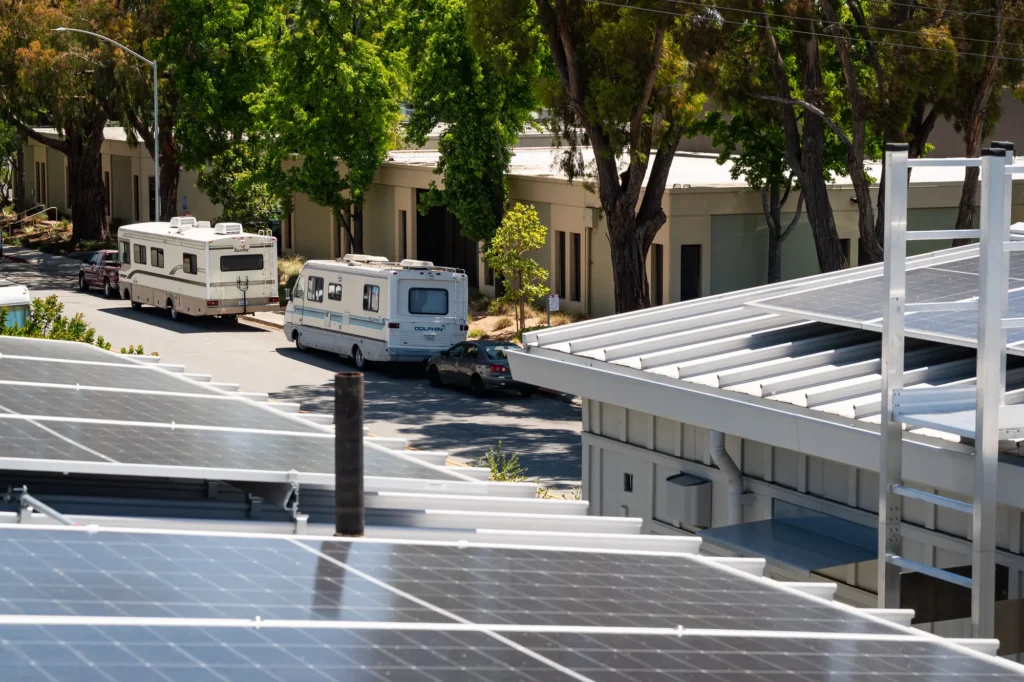
However, turnover at the Geng Road site is slow: The average stay is over a year, and many of the people who do exit the program end up homeless or couch-surfing. It’s too soon to tell whether turnover at Homekey will be faster.
Lauing also told Palo Alto Weekly that he was open to the idea of restricting RV parking to permit holders before the 37 permit spots open on Coyote Hill Road and Embarcadero Road, relying on other programs such as Geng Road and Homekey to cover the gap.
While Lauing did not use the word “ban,” restricting oversized vehicles to the permit program and not allowing RV parking anywhere else in the city could be seen as such. By highlighting the various housing services that the city is now pursuing, Lauing hopes Palo Alto could withstand the legal scrutiny.
While the council has yet to discuss the broader restrictions, Lauing’s colleagues appear united on the issue of removing RV dwellers who have other housing options.
“In my view, the city’s obligation is to those who are truly unhoused,” Councilmember Julie Lythcott-Haims told Palo Alto Weekly. “We do not have a similar obligation to those who have other other places to live, but are choosing to stay in a vehicle on our streets.”
Until the permit pilot begins in March next year, Lythcott-Haims said the city should focus on other aspects of RV parking. For example, the city already prohibits overnight RV parking in residential areas, but there are many parts of the city where residential areas are listed as “planned home zoning” and do not fall under the zoning categories where the prohibition is effective.
The council vote on Aug. 24 directed staff to return with policy changes to expand the prohibition to other residential areas that may not be zoned as such. Staff were also instructed to pursue more detailed data collection in the hope of identifying RV dwellers who have a permanent home.
“I think of it as a three-part plan, which is none in residential, none as second homes and then I think we’re likely to have enough space (in the permit pilot), especially if we can get some more lots,” Mayor Vicki Veenker told Palo Alto Weekly.
City officials are also engaging at the county level to find new sites for oversized vehicle parking, whether it be safe parking or an expansion of the permit pilot. On Coyote Hill Road, for example, the pilot only applies to one side of the street because the city needs county approval to add RV parking spaces on the other side.
Lauing, Lythcott-Haims and Veenker said they are all optimistic about the possibility of expanding the Coyote Hill Road pilot, which could bring the program’s capacity closer to 60 vehicles.
“Each city finding one-off solutions is not the most efficient or effective way to handle a systemic problem,” Lythcott-Haims said. “I continue to be interested in our city or a coalition of municipalities acquiring a larger swath of land on which to build spots for hundreds of oversized vehicles until we have enough shelter beds and permanent supportive housing.”
This story originally appeared in Palo Alto Weekly. Riley Cooke is a reporter at Palo Alto Weekly and Palo Alto Online focusing on city government.

Leave a Reply
You must be logged in to post a comment.