

|
Lấy Âm thanh Trinity Người chơi đã sẵn sàng...
|
San Jose’s experiment with autonomous food delivery robots is entering a new phase as the city prepares to roll out rules governing their use, including operating fees as well as fines for companies that run afoul of the new standards.
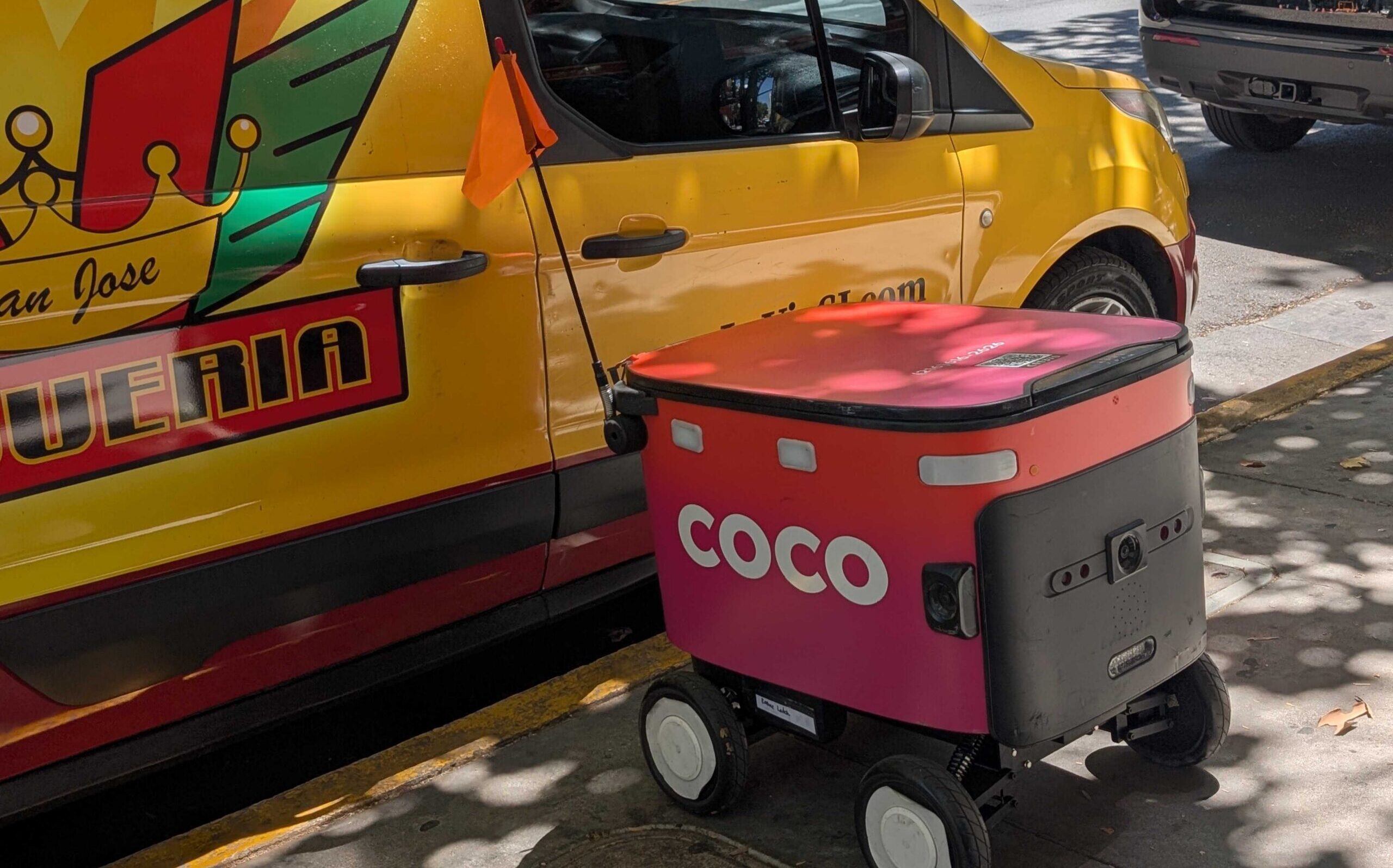
The City Council greenlit a regulatory package Tuesday that will not only set the rules of the road for the two companies already operating cooler-sized delivery robots — now a common sight on downtown sidewalks — it will also launch a pilot program allowing larger robots to travel through the city’s bike lanes.
The package received unanimous support, with Councilmembers Peter Ortiz and Domingo Candelas absent. Still, several officials said they remain worried about potential pitfalls.
“While this opportunity has a potentially positive environmental impact, I am very concerned about the congestion that will result on our sidewalks,” Vice Mayor Pam Foley said during the meeting.
City officials have highlighted the benefits of embracing the all-electric delivery technology, including the possibility it could help cut down on car trips, thereby reducing traffic congestion and fossil fuel emissions. But the proliferation of the rolling food delivery robots has alarmed some residents, who fear further expansion could clog up sidewalks and bike paths, impede the movement of wheelchair users and eliminate delivery jobs.
quy định mới are intended to give San Jose more control over the rollout of the rapidly expanding autonomous delivery industry. Prior to Tuesday’s vote, the city had no codified rules governing delivery robots, despite the fact they have been operating in the city’s downtown since April.
The two companies operating in San Jose — Coco Robotics and Serve Robotics — have 35 bots between them, officials said.
Meanwhile, officials also said DoorDash, a giant in the food delivery sector, has expressed interest in deploying its own delivery robot. Known as Dot, the device stands nearly 5 feet tall and is designed to travel at rates of up to 20 miles per hour in bikeways.
Following Tuesday’s vote, industry representatives applauded the decision, lauding the new program as an opportunity to support local commerce and drive innovation.
“At Serve, we don’t take the privilege of operating on the city’s sidewalks for granted,” Vignesh Ram, Serve Robotics’ vice president of public policy, told San José Spotlight. “From San Pedro Square to Willow Glen, we know that trust must be earned through safe operations, responsiveness and being a good neighbor.”
The new regulations would require operators of the smaller robots to obtain a $200 annual permit for each device.
Among the rules imposed under the new permitting program, all devices traveling on sidewalks, pedestrian pathways and crosswalks will be subject to a 5 mph speed limit. In addition, smaller devices will need to equip visibility flags, and companies will be responsible for removing devices that freeze up and block public areas within 30 minutes.
The pilot program covering larger, faster delivery robots also imposes an annual permit requirement with a charge of $250 per device. The rules for such devices include a requirement that delivery robots match the speed of slower cyclists traveling ahead of them, and yield to faster cyclists approaching from behind.
Following a nine-month evaluation period, staff will make recommendations to councilmembers about the program’s future.
Companies that violate the rules could face fines or even see their permits revoked. Such fines will increase with each violation, with a first offense costing $100, a second offense costing $200 and a third offense costing $500.
Foley expressed doubts about the fine scheme, warning that if the city is too lenient it may fail to deter activity that poses serious harms to residents with disabilities.
“If someone is in a wheelchair or using a cane, and they can’t walk down the curb because it’s being blocked by one of these devices, that’s going to affect them a lot more than $100 for the first offense,” Foley said. “So I have real concerns.”
For the time being, the regulations do not place a specific limit on the number of delivery bots allowed to operate. And while robots’ service area in San Jose has so far remained within the downtown core, the new regulations include no geographic limits on their operations. In Chicago, Illinois, a deployment error caused a Coco robot pileup on the sidewalk.
However, should problems arise, the package grants San Jose’s Department of Transportation the authority to revise the program’s rules, including setting new operational restrictions or terminating it entirely.
Officials estimate the program will likely see 70 smaller robots and 30 larger devices enter operation in the city.

The plan places San Jose among the ranks of a small group of early adopters for the budding autonomous delivery technology. So far, three other Bay Area cities — Fremont, San Ramon and Dublin — have already authorized roadway delivery robots, according to a staff report.
Jordan Moldow, chair of San Jose’s Bicycle and Pedestrian Advisory Committee, said he’s encouraged to see the city has adopted many of the recommendations residents have raised during recent public meetings on the regulations. As the program unfolds, he said what’s needed most from the city is continued vigilance.
“The concerns about potential negative consequences are real concerns,” Moldow told San José Spotlight. “And if they occur, we do need to be quick about shutting down any negative activities that are occurring.”
Liên hệ với Keith Menconi qua địa chỉ email [email protected] hoặc @KeithMenconi trên X.
Bình luận
Bạn phải đăng nhập để bình luận.